
RFP Automation: 5 Benefits That Cut Response Time
RFP automation is technology that helps proposal, sales, and marketing teams create and manage RFP responses faster and with fewer errors. Every RFP, RFI, or security questionnaire is technically unique, but most of them ask overlapping questions and need overlapping data. RFP automation software finds those overlaps and handles them for you, instead of leaving a person to retype the same answer for the twentieth time.
Below is a look at what RFP automation actually does, who benefits most, and the five concrete improvements teams see after adopting it.
What Is RFP Automation?
RFP automation uses a centralized content library and AI driven search to match incoming RFP questions with previously approved answers, then suggests or auto inserts a response. Instead of a proposal manager scrolling through last year's submissions to find the right paragraph, the system surfaces it directly. Subject matter experts review and approve content once, and that content becomes reusable across every future response.
This matters because RFP work is repetitive by nature. A 2024 industry survey found that proposal teams spend a significant share of their week on content retrieval rather than original writing, which is exactly the bottleneck automation is built to remove.
Who Needs RFP Automation?
Any organization responding to a high volume of RFPs, RFIs, or vendor questionnaires will see time savings. The need becomes more pressing in regulated industries like financial services, healthcare, and life sciences, where responses must reflect current regulatory language and cannot rely on stale or unverified information.
Centralizing responses in one content library makes it far easier to keep that information accurate and compliant, since there is a single source to update rather than dozens of scattered documents.
5 RFP Automation Benefits
Here is a quick comparison of the core benefits before the detailed breakdown below.
| BENEFIT | PRIMARY IMPACT | WHO IT HELPS MOST |
|---|---|---|
| Autofill | Faster first drafts | Proposal managers under deadline pressure |
| Accuracy | Fewer outdated or incorrect answers | Compliance and risk teams |
| Central content repository | One source of truth | Distributed or remote teams |
| SME collaboration | Less duplicate work for experts | Subject matter experts |
| Approval workflows | Built in accountability | Team leads and reviewers |
1. Increase Speed With Autofill
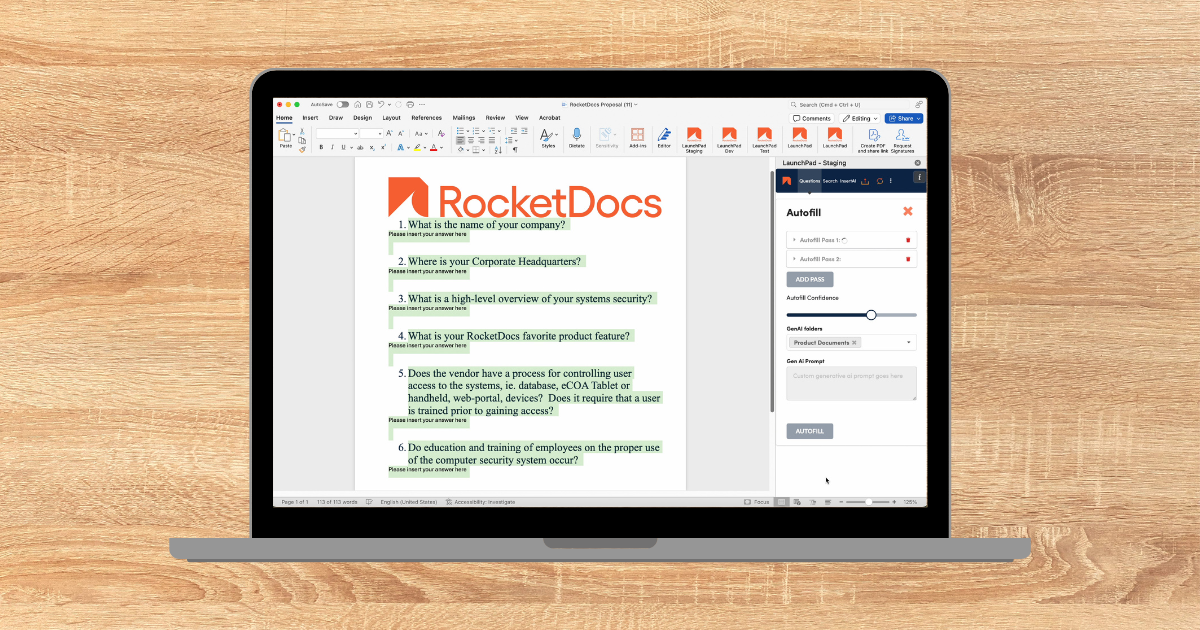
The autofill feature analyzes incoming RFP questions and automatically populates the best matching response from your content library. Instead of writing answers from scratch for every submission, your team starts from a draft that is already close to final, then edits for context. This is usually where teams see the largest drop in turnaround time, often moving from hours per response down to minutes.
2. Improve Accuracy of Responses
Deadline pressure is when mistakes happen. Automation pulls from pre approved, vetted content, which removes a lot of the risk of manual error and keeps responses consistent across reviewers. It also solves a quieter problem: information that was accurate last quarter can quietly go stale. A centralized library makes outdated answers easy to flag and update everywhere at once, rather than hunting through old files.
3. Central Content Repository
RFP automation depends on having one nominated location where all approved content lives. Building that repository takes some upfront process change, but it becomes the backbone of every future response your team writes. Beyond saving time, it shifts your team's energy away from repetitive lookup work and toward proactive business development.
4. Seamless SME Collaboration
Automation does not just help your proposal team. It frees up subject matter experts too. Rather than fielding the same question from five different proposal writers in a month, SMEs update their section in the content library once, and every future autofill draws from that single update. That gives experts more room for higher value, collaborative work instead of repetitive answer requests.
5. Approval Workflows
Approval workflows make sure the right people review and sign off on RFP responses before they go out. Multi step workflows are simple to configure, and every step is logged automatically, so a team lead does not have to manually chase down sign offs. That gives the whole organization a clear, auditable trail showing exactly who approved what.

How RocketDocs Supports RFP Automation
RocketDocs combines a searchable content library, one click autofill, SME workflows, and approval tracking in a single platform built for high volume proposal teams. If your team is evaluating RFP automation software, our RFP response solution page walks through how the autofill and content library work together, and our content library overview covers how teams keep answers current across departments.
For a broader view of how proposal teams measure success, the APMP body of knowledge is a useful external reference point on proposal management standards, and G2's RFP software category is a good place to compare vendor reviews when you are building a shortlist.
Looking for the platform behind this? See the RocketDocs platform or book a demo.


