
Proposal templates are pre-built document structures that give a response team a consistent outline, standard sections, and approved starting language for each type of proposal. They cut setup time, keep formatting and messaging consistent, and let writers spend their effort tailoring content to each buyer instead of rebuilding the document from scratch.
Most teams already own a folder full of old proposals. A good template turns that folder into a repeatable asset. This guide covers the main types of proposal templates, the sections each one needs, where templates go wrong, and how to build a set your team keeps using. If you need structures built for formal solicitations, see our RFP response templates and examples.
Proposal Templates by Type
Not every pursuit needs the same document. Match the template to the buying situation before you open a blank file. The table below compares the five types most teams keep on hand.
| TEMPLATE TYPE | BEST FOR | CORE SECTIONS | COMMON RISK |
|---|---|---|---|
| Sales proposal | Direct sales to a single buyer | Executive summary, problem, solution, pricing, next steps | Reads like a brochure |
| RFP response | Formal solicitations with scoring | Compliance matrix, requirement answers, pricing, references | Ignores the issuer's format rules |
| Public sector bid | Procurements with strict rules | Cover letter, technical approach, past performance, pricing forms | Missing a mandatory form |
| Renewal or expansion proposal | Existing customers | Results to date, proposed scope, updated pricing | Assumes the buyer remembers the value |
| Services proposal | Project-based engagements | Scope, deliverables, timeline, assumptions | Vague scope that causes disputes later |
What Every Proposal Template Should Include
Whatever the type, a dependable template carries the same backbone. Order matters because evaluators scan for specific answers, and our guide to the proposal outline shows how to sequence sections so they are easy to score. At minimum, include:
- An executive summary that states the buyer's problem, your solution, and the expected outcome.
- A section that shows you understand the buyer's situation, written in their language.
- Your proposed approach, deliverables, and timeline with clear milestones.
- Team members, qualifications, and relevant experience.
- Pricing, along with the assumptions and exclusions that shape it.
- References, case examples, and other proof points.
- Terms, appendices, and any required forms.
Keep the structure fixed and the content flexible. The headings and order stay the same from bid to bid, while the language inside them changes to fit the buyer.
Where Proposal Templates Go Wrong
They hardcode generic language
A template full of finished paragraphs invites copy and paste. Buyers notice when a response describes someone else's problem, and evaluators cannot score language that never addresses their stated requirements. Use prompts and placeholders in the places where tailoring matters most.
They go stale
Old product names, retired services, outdated references, and expired certifications are the most common template defects. A single wrong detail in a submitted proposal can undermine trust in everything around it.
They have no owner
When nobody owns a template, everyone edits their own copy and the master version drifts. Name an owner for every template and every reusable section, and decide who approves changes.
How to Build Proposal Templates Your Team Will Use
- Pull your last several submitted proposals, wins and losses alike, and mark the sections that repeat.
- Separate structure from content. The template holds headings, order, and formatting; the content lives in reusable blocks.
- Break content into modular blocks such as company overview, security summary, implementation approach, and team bios.
- Assign an owner and a review date to each block.
- Add placeholders that force tailoring, such as the buyer's name and their top stated priority.
- Retire blocks that no longer apply, and record what changed so the next writer can trust the current version.

Pair Proposal Templates With a Content Library
A template supplies the skeleton. A content library supplies the approved answers that fill it. The Consortium for Service Innovation's Knowledge-Centered Success methodology treats reuse as part of everyday work: capture knowledge as you do the job, structure it so others can find it, reuse it, and improve it each time. The KCS library is a useful reference for proposal teams that want the same habit.
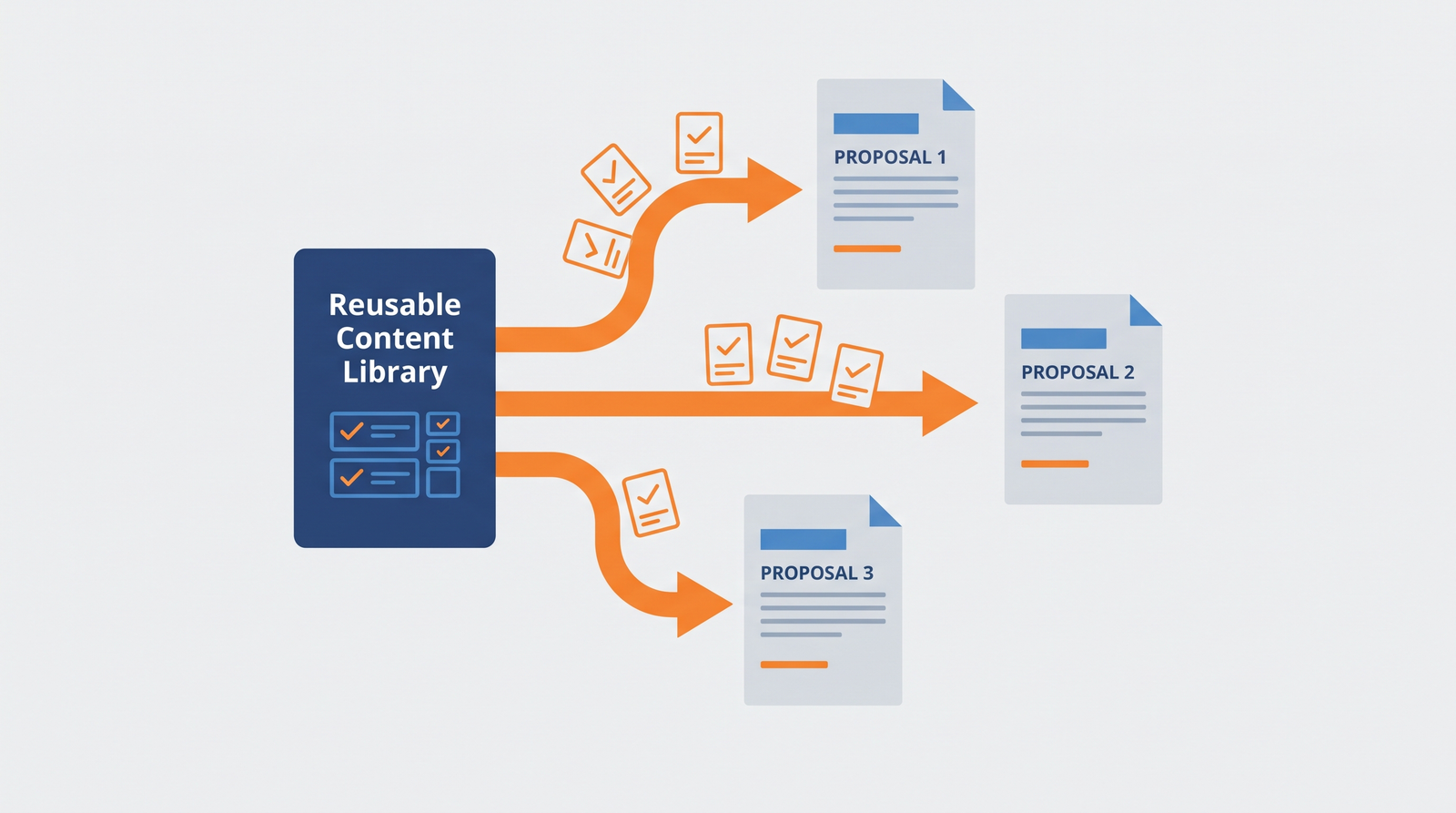
RocketDocs connects the two. Teams draft from an approved content library and can work in familiar tools such as Microsoft Word, so the template and the answers stay in step. For the library side of the equation, read our guide to building an RFP content library that wins.
Tailor Proposal Templates to Each Buyer
A template is a starting point, not a finished response. The Association of Proposal Management Professionals is the professional body for proposal teams and a good place to find training and shared standards. Whatever standard you follow, run the same short check before every submission: rewrite the executive summary around the buyer's stated priorities, swap in the most relevant references, confirm pricing and assumptions, and verify that every section answers a requirement the buyer actually listed.
If your team is rebuilding the same proposal from scratch every time, see how RocketDocs links templates to a governed content library. You can book a demo and walk through your own proposal workflow.
Looking for the platform behind this? See the RocketDocs platform or book a demo.


