
How RFP Teams Utilize AI in Proposal Development with RocketDocs
Proposal teams have always faced the same tension: the volume of RFPs coming in versus the time and expertise required to respond well. AI is shifting that balance. At RocketDocs, we have spent years building AI capabilities specifically for proposal and response management, shaped by direct feedback from the teams using the platform every day.
The result is a dual-layer AI approach, combining autofill AI with generative AI, that handles the repetitive work without removing human judgment from the equation.
How AI Autofill Changes the RFP Workflow
The core problem AI autofill solves is redundancy. Most RFPs ask overlapping questions: about your security posture, your implementation process, your team structure, your pricing model. For proposal teams handling dozens of these a year, answering the same question slightly differently each time is both inefficient and risky. Inconsistencies slip through, outdated content gets reused, and reviewers spend time checking things that should already be correct.
RocketDocs AI autofill addresses this by pulling from your Content Library, the structured knowledge base that stores your organization's approved, up-to-date answers. Rather than searching for a prior response or rewriting from memory, the AI identifies the relevant content and populates the RFP field with it directly. The team member reviews it, approves or adjusts it, and moves on.
This matters for a few reasons beyond speed. First, every autofill suggestion draws from the same source of truth, so responses stay consistent across documents and team members. Second, because the AI is surfacing content rather than generating it from scratch, the outputs are grounded in what your organization has actually approved. Third, the review step stays in place: all AI-filled answers, whether autofill or generative, pass through a human review before submission.
Practical Steps for Getting the Most Out of AI Autofill
The quality of AI autofill output depends heavily on the quality of what it draws from. These practices help teams get consistent, accurate results.
Standardize how content is structured
When the same type of information is formatted consistently across your library, the AI has an easier time recognizing and retrieving it. Standardization also supports brand consistency in final proposals.
Keep the content library current
The AI pulls from what is in your database. If a product has changed, a certification has expired, or a policy has been updated, those updates need to be reflected in the library. In fast-moving industries, this is not a one-time task.
Customize for your use case
RocketDocs allows teams to configure autofill preferences based on the type of RFP or the client context. Taking time to set those preferences reduces the number of suggestions that need manual correction.
Build a review process and keep it
Even highly accurate AI output benefits from a review step. A quick human check catches edge cases and ensures the proposal reflects the nuances of a specific opportunity.
Train the team, not just the tool
The teams that get the most value from AI autofill are the ones that understand how it works. Onboarding time spent on the AI features pays back quickly in adoption and output quality.
The Generative AI Layer: Where Creativity Comes In
Autofill handles the structured, repeatable portions of a proposal. Generative AI handles something different: the sections that require inference, original framing, or language tailored to a specific client.
RocketDocs built its generative AI layer in-house rather than wrapping a generic model. That distinction matters. A purpose-built system integrates directly with the RocketDocs product ecosystem, understands the context of a proposal in progress, and produces output that fits the structure and tone of your existing content rather than working against it.
This layer is not switched on by default. It assists when asked to, which means teams retain control over where AI-generated language appears in a proposal. For executive summaries, value proposition sections, or narrative responses that benefit from original language, the generative layer can produce a strong draft. Teams then refine it.
The combination of autofill for structured content and generative AI for original content covers the full range of what a proposal requires without creating a situation where every section has to be reviewed for accuracy from scratch.
AI as a Collaboration Tool, Not a Replacement
One of the less obvious benefits of AI in proposal development is what it does to team dynamics. When AI handles the repeatable work, proposal managers, subject matter experts, and sales team members spend less time on data entry and more time on the parts of a proposal where their expertise actually matters.
A few practices that support this:
Build around a shared content library
When every team member draws from the same approved content, the risk of version conflicts and inconsistent messaging drops significantly. The RocketDocs Content Library serves as that centralized source.
Assign AI tasks by role
Technical contributors can focus on sections requiring deep domain knowledge, while sales team members focus on client fit and value positioning. Autofill handles the overlap so neither group is duplicating the other's work.
Use freed-up time for real-time refinement
When routine questions are handled automatically, teams can spend review sessions on the strategic sections: competitive differentiation, executive summaries, pricing narratives. That is where wins are made.
Close the feedback loop
Teams that flag AI suggestions that missed the mark contribute to a better system over time. Building that feedback culture is worth the small overhead.
Where AI in RFP Management Is Headed
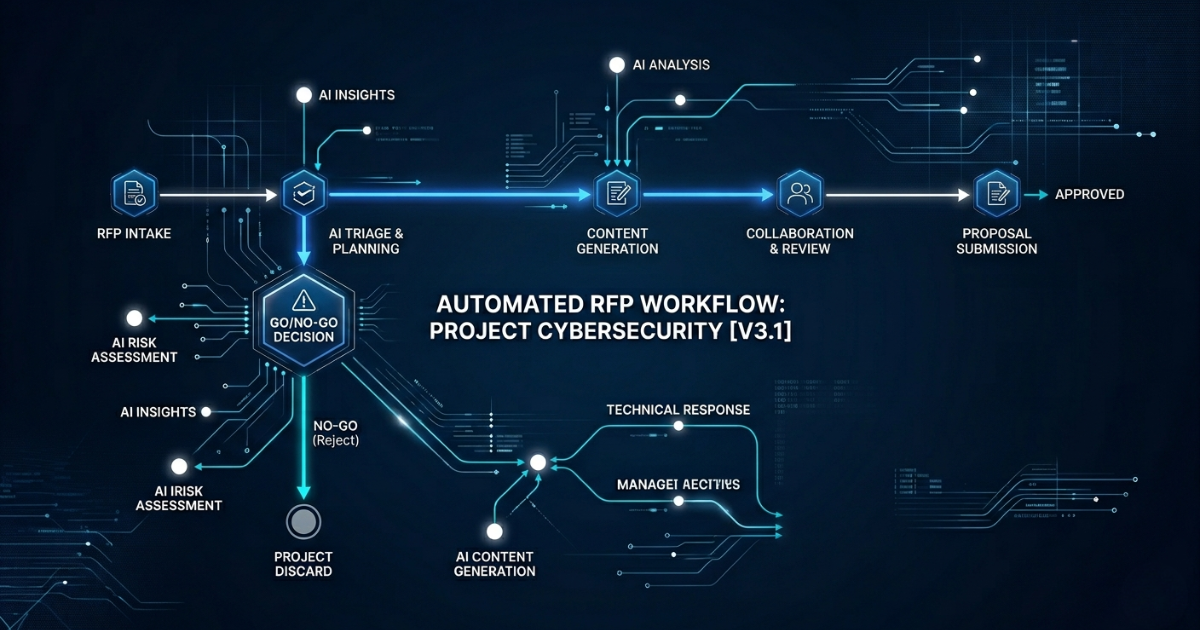
The current generation of AI in proposals automates what is already known. The next generation will start to work with what is anticipated.
Predictive analytics could allow teams to see patterns across historical RFPs and proactively address questions that tend to appear in a given industry or client segment. Personalization at the response level could tailor language not just to a generic prospect profile but to the specific organization and the priorities they have signaled. Collaboration tooling could surface suggestions during the drafting process rather than only before or after.
These are not distant possibilities. They are the direction the market is moving, and teams investing in structured, well-maintained content libraries now are positioning themselves to benefit from those advances as they arrive.
External research from Gartner on generative AI in business workflows and Forrester on AI-driven sales enablement both point to the same pattern: organizations that integrate AI into structured processes see compounding efficiency gains over time, while those using AI ad hoc see marginal ones.
For a closer look at how RocketDocs handles the security and compliance requirements that regulated industries bring to this conversation, see the RocketDocs Security page and the Private AI overview.
Looking for the platform behind this? See the RocketDocs platform or book a demo.


