
A trust center is a web page or portal where a vendor publishes its security certifications, audit reports, policies, and standard questionnaire responses so buyers can review them on demand. It gives procurement and security reviewers one current source of evidence, with sensitive documents released only after an NDA or approval.
Security reviews are a routine step in many B2B purchases, and most of them ask for the same things: your latest SOC 2 report, your ISO certificate, your encryption details, your sub-processor list. A trust center puts those answers in one place before anyone asks. It shortens the back and forth, but it only works if the content behind it is accurate, and it rarely removes the questionnaire entirely.
Trust center vs security questionnaire vs security page
Teams often use these terms loosely. They solve different problems, and many vendors selling to regulated buyers end up needing all three. The comparison below shows where each one fits.
| DIMENSION | TRUST CENTER | SECURITY QUESTIONNAIRE | SECURITY PAGE |
|---|---|---|---|
| Who starts it | The vendor publishes it | The buyer sends it | The vendor publishes it |
| Format | Portal of documents and answers | Spreadsheet or online form | Marketing web page |
| Access | Public, NDA-gated, or customer-only | Private to one buyer | Public |
| Depth | Evidence: reports, policies, standard responses | Detailed control-by-control answers | High-level summary |
| Tailored to the buyer | No | Yes | No |
| Update rhythm | Continuous, as evidence changes | Once per review | Occasional |
| Main job | Self-service evidence for many reviewers | Formal risk assessment for one deal | Awareness and positioning |
A trust center sits between the other two. It is deeper than a marketing page, because it holds real evidence, but it is not tailored to any single buyer the way a questionnaire is.
What a trust center includes
Contents vary by company and industry, but most trust centers carry a similar core set of documents:
- Certifications and attestations, such as a SOC 2 Type II report and an ISO/IEC 27001 certificate.
- Penetration test summaries and vulnerability management documentation.
- Core security policies, including access control, encryption, incident response, and business continuity.
- Privacy and data handling documents, such as a data processing addendum, a sub-processor list, and data residency details.
- Standard questionnaire responses, most often a completed SIG or CAIQ.
- AI documentation, if the product uses AI: how customer data flows, whether it trains models, and what human review applies.
- A contact route for questions the published material does not answer.
AI documentation is a newer addition. If your product touches AI, publishing a clear description of how customer data flows answers questions reviewers would otherwise send one by one.
Public, NDA-gated, and customer-only access
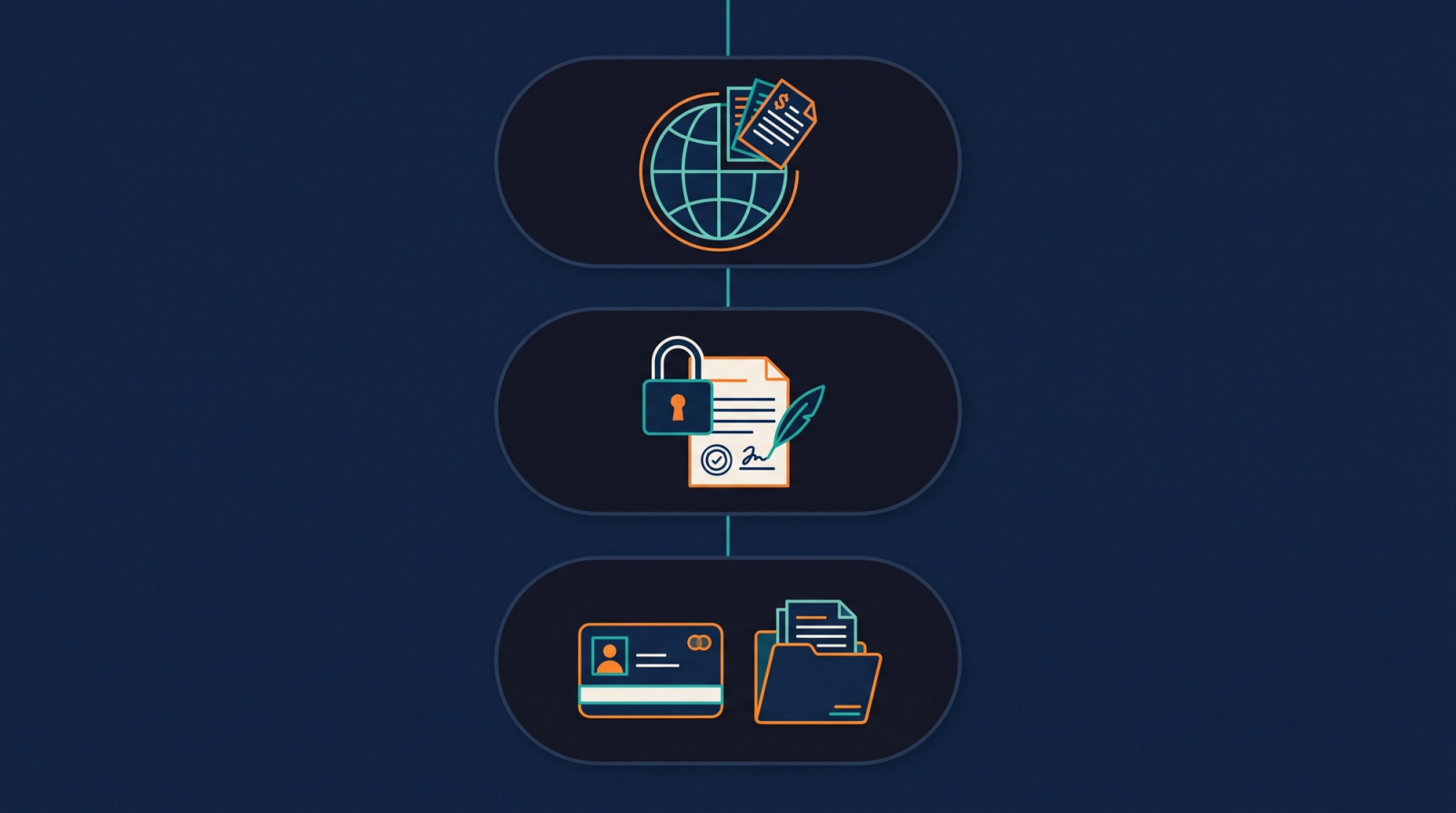
Not every document belongs on the open internet. Many trust centers sort content into tiers. Public documents include certificates, policies, and standard questionnaire responses. NDA-gated documents include the full SOC 2 report and detailed penetration test results, released after the requester accepts terms. Customer-only documents cover deployment-specific details and incident notifications for active accounts.
The RocketDocs Trust Center follows this model: most certifications, policies, and standardized responses are open without login, while confidential audit reports such as the full SOC 2 Type II report are available under NDA.
Why a trust center does not replace security questionnaires
A trust center reduces questionnaire work. It does not end it. Many buyers run their own risk frameworks and still send their own questionnaire, even after reviewing your published evidence. The trust center then becomes the source you answer from, and a way to point reviewers to evidence they would otherwise request one file at a time.
Public assurance registries show the same pattern at industry scale. The Cloud Security Alliance STAR Registry is a public listing where organizations publish security assurance information, and its Level 1 is a self-assessment built on the CAIQ. Level 2 adds third-party assurance, such as an ISO/IEC 27001 certification or a SOC 2 attestation, combined with a CAIQ submission. Publishing a completed CAIQ lets reviewers start from your answers, but buyers can still ask for more.
The real risk is a mismatch. If the trust center says one thing and a questionnaire answer says another, reviewers notice, and the deal slows down while you explain the gap.
How to build a trust center that stays accurate
The hard part of a trust center is not the page. It is keeping every document and answer current. A simple build sequence keeps that manageable:
- Inventory your evidence. List every report, certificate, policy, and standard response you share today, with its owner and expiry date.
- Set access tiers. Decide what is public, what needs an NDA, and what is customer-only before anything goes live.
- Assign owners and review dates. Each document needs one accountable owner and a scheduled review, not an annual scramble.
- Publish standard responses from one source. Your public SIG or CAIQ should come from the same approved answers your team uses in live questionnaires.
- Track what reviewers ask next. Questions that keep arriving after someone has read the trust center point to gaps in what you publish.
This is a knowledge management problem as much as a security one. The Consortium for Service Innovation, a nonprofit alliance of service and support organizations, maintains the Knowledge-Centered Success (KCS) methodology, which names better knowledge sharing as a key benefit and includes guidance on measuring self-service success. A trust center is self-service for security reviewers, and the same principle applies: shared knowledge earns trust only when it is kept current.
Connect your trust center to your answer library
A trust center and a questionnaire workflow should draw from the same governed content. When a control changes, the update should flow to both the published evidence and the answer your team uses in the next SIG, so neither one goes stale on its own.
A content library with owners, review cycles, and expiration status makes that possible. Expired answers drop out of circulation, and every response has a traceable approval. For background on the two most common standard responses, see our guides to the SIG questionnaire and the CAIQ questionnaire.

RocketDocs uses its own platform to maintain the security responses published on its Trust Center, and the same workflow supports customers answering security questionnaires, including multi-tab Excel formats such as SIG and CAIQ. If your team answers security reviews every week, see how RocketDocs handles security questionnaires, or book a demo to walk through it with your own documents.
Looking for the platform behind this? See the RocketDocs platform or book a demo.


