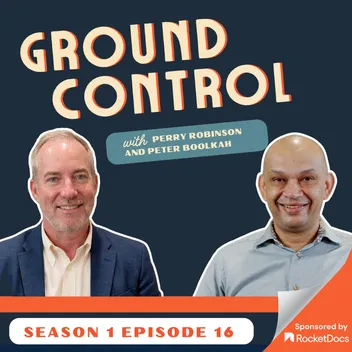
Most founders are not building a business from day one - they are building a prison. In this episode of Ground Control, the podcast on AI, proposals, and governance sponsored by RocketDocs, host Perry Robinson talks with Peter Boolkah, award-winning business coach, creator of The Hamster Wheel Trap, and author of Your Business Sucks. After 15 years climbing the ladder at McDonald's and more than 50,000 hours coaching business owners, Peter's core lesson is simple: there is no work-life balance, only balance, and it comes from competency and structure. Peter and Perry cover why year five is when founders have the most to lose, what McDonald's systemization teaches about SOPs, how to use ChatGPT or Claude to document how your business runs, why company knowledge matters through turnover, and what Pep Guardiola teaches about building a team. His closing line: the more you learn, the more you earn.
Connect with Peter Boolkah
Work with Peter: https://www.boolkah.com/
LinkedIn: https://www.linkedin.com/in/boolkah/
Get the book (Your Business Sucks): https://shop.boolkah.com/product/your-business-sucks/
Find Ground Control
Apple Podcasts: https://podcasts.apple.com/us/podcast/ground-control-sponsored-by-rocketdocs/id1896052098
Spotify: https://open.spotify.com/show/00xAPsKE61ff5X5YC4ndRA
YouTube: https://www.youtube.com/@rocketdocs6075
All episodes: https://rocketdocs.com/resources/podcast
Find RocketDocs
The response management platform built for regulated industries - trusted since 1994.
Website: https://rocketdocs.com
Book a demo: https://rocketdocs.com/demo
Show transcript
Perry: All right, folks. Welcome to Ground Control. I'm really excited today. We've got Peter Boolkah He is the author of Your Business Sucks. Build a Business That Works Without Destroying Your Life. Wow. Peter, welcome to Ground Control. Thank you so much for joining us. so got so glad to have you. Peter Boolkah: Perry, I'm so excited to be here. And thank you so much for having me on your show today. Perry: Absolutely. yeah, folks, I gotta tell you, like, so so Peter's got an interesting background. He's not only an author, he's a he's a coach, he's got 50,000 hours inside of businesses, if I forgot this correct. you know, Peter has figured out a way, I'm I'm hoping, to tell us a secret today of how to get full enjoyment out of life entirely while working. I think since my transliteration of his title, but but Peter it really. Tell us a little bit about your background and and and let us know a little bit about how you got to the point of of being able to help guide folks in in you know really achieving better business outcomes. Peter Boolkah: Well, think I did that most people, a lot of people actually take. I did the school college university when I was actually at college. I was working full time at McDonald's. Graduated. I actually ended up staying in McDonald's for 15 years, working my way up. Now, you've seen the film, have you seen the film Maverick? Perry: Yeah. Peter Boolkah: Yeah, unfortunately, you know, like Mav is good at pissing off the Admiral. Perry: Ha ha ha. Peter Boolkah: I did exactly the same thing. So then I had to go find a different career pathway and ended up falling into coaching. So I bought an Italian restaurant, it for a year, realized that actually I didn't quite like my business partner as much as I thought I might, sold it. And then Perry: Mm-hmm. Okay. Peter Boolkah: I fell into coaching. I literally was in between my next corporate gig and an organization back then approached me, would I be interested? And I wasn't really, but I thought, me just be curious. And sometimes people come into your life. for the right time and the right reason. And my then business partner I met, I really was excited with what he was gonna do. So I committed to becoming a coach and we spent 15 years together. Perry: Okay. That's fantastic. Yeah. Yeah. you know, it's interesting. You say that it's it's kind of a a more traditional trajectory, but but you know, there aren't a lot of people, I think, that that may get through 15 years at McDonald's working their way up the ladder. that must have built Peter Boolkah: No Perry: a lot of a lot of experience for you, giving you a lot of opportunity to to see not only a lot of different types of roles, but you know, McDonald's, I think a lot of people don't realize these are Each independent store is actually the size of a full small business in and of itself. Peter Boolkah: Correct. And you know, I took it for granted and I was really lucky. So I worked in McDonald's during its huge expansion phase where it wasn't uncommon for us to be opening 150 restaurants in a year. But that was crazy. So for me, I learned a lot, benefited a lot. It really was a good grounding. Perry: Okay. Well, you know, you gotta imagine that you started to see patterns emerge in terms of of working behaviors for yourself and for other people. I mean, a hundred 150 stores being opened up, that's a tremendous amount of work. you know, Peter Boolkah: Carnage. Perry: it carnage, yeah. Okay, that's a that's a good that's a good descriptive way to put it, but probably pretty accurate too, right? We're talking about Peter Boolkah: Okay, what? Perry: having people working, you know. their fingers to the bone to get these things done under tight deadlines. critical activities that have to be performed. I'm guessing there wasn't a lot of work life balance along the way. Peter Boolkah: No, and I think here's the crazy thing for you. Yeah, no, especially when you move up in McDonald's, the higher up you go, the less work-life balance you have. Yeah, they pay you, but you are a slave Perry: Mm-hmm. Peter Boolkah: to the system. And I bought the restaurant, that was really hard work. And I did think Perry: Yeah. Peter Boolkah: that, but when I became a coach, that perhaps there'd be more of work-life balance. And the one thing of pattern I've noticed is it's not such thing when you're a business owner, there is only balance. There is no work life balance. There is just Perry: There's only galaxy. Peter Boolkah: balance. And the balance you Perry: That's great. Peter Boolkah: get will be determined by your competency and your structure. Perry: competency and structure. Okay. All right. so you got this concept of the hamster wheel trap. You wanna tell Peter Boolkah: Yeah! Perry: us a little bit about that? Peter Boolkah: Considering the game you're in, think about it. Every single business out there, they start a business. Most people start a business by themselves. By themselves, not even as a partnership. There are some that start a partnership, but in reality, most start by themselves. And in the UK, we've got 5.7 small to medium-sized privately owned businesses, of which 4.3 million are sole openers. When you think about it, from day one, you start your business. You are head of sales, of marketing, head of finance, head of operations, head of HR in case you need to discipline yourself, head of everything. Perry: Yeah. Peter Boolkah: From the second that you start your business, you're not building a business from day one, you're building a prison. You're building the trap. Perry: Okay. There's the trap part. Okay. So Peter Boolkah: From day one. Perry: yeah, yeah, well it's it's interesting because I think that's you know, it's interesting you mentioned that. I went to I went to we've we've got a a small conference going on in the area and there was a discussion yesterday about solopreneurs. and the individual person who was speaking, I only got a chance to hear part of it, but she did a great job, I think, of talking to a group of folks about Becoming solopreneurs for the first time and about what life as a solopreneur looks like. it seems to me like, you know, part of the reason why you wrote your book is is also to provide guidance like that speaker was, to help people think through some of the things they're going to be coming across. but is is part of the idea as well to to provide people a guide on on how not to get stuck in the hamster wheel trap and to get, you know. put into that prison of being a solopreneur Peter Boolkah: Yeah, I think it's a little bit, I think it's even more different to that. If you are a Perry: Okay. Peter Boolkah: solo opener, the chances are you are always going to be imprisoned because there are going to be jobs that always need to be done. And if you don't hire Perry: Okay. Peter Boolkah: somebody, then you've got to do it. Perry: Yeah. Peter Boolkah: where it becomes a trap is in year one, in year zero, you've got absolutely nothing to lose. Blood, sweat and tears, you may ruin a few relationships along the way. The interesting thing is approximately 11,000 businesses start up around the world every hour, of which 80 % of them do not make it to year five. So 80 % of businesses will fail in the first five years. So if you are lucky enough, solopreneur or whatever and you get to year five, you're doing something good. You are literally making money. You've survived. Fantastic. Here's the challenge. Now you've got everything to lose. And after all those years of sacrifice, what you probably will find that people have done, they may have bought a house, upgraded a house, bought a car, upgraded a car, maybe started a family. At this point, 90 % of income that's coming through the business is still coming through the founder. 90 % plus, 100 % plus if it's the actual founder themselves, if they're a solopreneur. Now you're screwed because as soon as you stop, you take your foot off the gas, guess what happens? The actual revenue stops coming. You can't meet your financial commitments. Then what? You're in trouble. And that's the trap. look, it's okay to build a prison, but you don't want to stay in prison. There's the difference. At least get day release. Perry: At least get day release. So you've got the okay, this is this is good. We're gonna dig into this a little bit more. So so tell me though, like you know, the book is it would you say it's written for for founders or operators, or would you say it's for both? Because there is, I think if you if I'm getting this right, right, getting day release means bringing in additional people, bringing in those other team members, which is another Peter Boolkah: Yes. Perry: Great. It's the same type of commitment as you're making with the upgrade to the house or the car or the having the family. You've got other people relying on you. but yeah, are are we are we targeting here founders? Are we targeting operators? Is it a book that guides both? How does how does that look? Peter Boolkah: It's interesting you should, so interesting you say that. So when I first wrote the book, it's for business owners, founders and operators. Because it's the same, it is literally the same thing. it's, but what has been really interesting is that lot of people that have bought the book and read the book, they've then given the book or bought the additional copies for their leadership team. So that their leadership team understands actually what's going on. Perry: Mm-hmm. Peter Boolkah: So there's been a lot of unintended benefits of the book that I see coming. Perry: that's great. Well, then you did something right on that side, right? It's it's it's translating out. I think it it makes sense to me when I think about the way you know, when a bus business is growing, right, and you're bringing on the right people, each one of those folks that you have that's leading a department or an effort, it's kind of like they have their own business that they're running on their side, right? and so Peter Boolkah: 100 percent. Perry: maybe the the same the same guidance that you've provided translates to them as well. Peter Boolkah: So yeah, and also the book is a 20 year research project. So I waited till I got to the 50,000 hours before I wrote the Perry: you wrote it. Yeah, a lot of people only Peter Boolkah: Because Perry: go to ten thousand hours. You went you went five times that, right? Really having having the the deep amount of of research and knowledge go into it. Peter Boolkah: And the reason I did that, I love Jim Collins' work, Good to Great. Perry: Mm-hmm. Peter Boolkah: And I love the research that was done into that book. And actually, Jim's work has stood the test Perry: Yeah. Peter Boolkah: of time. So I really wanted my book to stand the test of time. Perry: I love that. let's dig in a little bit further. So, okay, so 16 years of McDonald's, you know, basically 21 years, coaching, give or take, you know, literally tens of thousands of hours just for this book itself. You know, for me, you know, I have to wonder, like, what would you say? Like, let's just start with the McDonald's part. What you say that McDonald's specifically taught you about businesses that entrepreneurs need to learn? I'm sure there's tons of things that you learned. along the way. But for entrepreneurs, what would be the biggest business lesson from your time with McDonald's that you would say is one they need to know about? Peter Boolkah: McDonald's is one of the best businesses I've seen on the planet when it comes to systemisation and process. Perry: Okay, why? Peter Boolkah: because they've got everything documented to the nth degree. There Perry: Okay. Peter Boolkah: is absolutely no room forever. They've made it absolutely stupid Perry: Mm. Yeah. Peter Boolkah: proof. Perry: This is the drop Peter Boolkah: Yeah Perry: the frozen fries, the buzzer goes off, right? Yeah. Peter Boolkah: 100 % to that level, wash your hands. There is nothing they've left out. And if anyone that hasn't watched The Founder that's in business, watch The Founder, one of the best films that will illustrate this. And the reality is when I, I didn't realize this until I became a coach. Most of the businesses I go into are unstructured, undocumented, and they're recruiting people into their chaos and then expecting them to win. Perry: Mm-hmm. Peter Boolkah: Whereas they're setting them up to fail. Yes, sir. Perry: Okay. Yeah. Yeah, I'm following you. Yeah, it's it's a it's it's funny because I think about I think about the way a McDonald's runs as I know it, right? And I think, wow, you know, it it's great. And and even in you know to your point, you say, look, you can take a 21-year-old, right, and you have them running a three million pound a year annual, you know, turnover business, right, at McDonald's, right? And the Peter Boolkah: No, we did. Perry: reason why they're able to do it, you know. Is that they have all these procedures and guidelines. Peter Boolkah: 100 % and you know what the really strange thing is? The irony is I would trust a 20 year old with a three to five million pound turnover business but I couldn't trust them with a company car because while Perry: Yeah. Peter Boolkah: the restaurant was systemized and processed as soon as they left the building the 20 year old idiot with hormones came out. Perry: Mm-hmm. Peter Boolkah: And I cannot begin to tell you how many cars were written off due to stupidity. Perry: From somebody getting into it, it's the lack of that structure and controls. That's actually Peter Boolkah: Right. Perry: I bring that up. This is the part that for me has been something that's just been like I'm thinking about it and going, you know, like there's a part to me as an entrepreneur, right? that is naturally drawn to having a little bit of the chaos that comes with the start of getting a business off the ground. And And there's a part to me that remembers times where I've been in larger organizations and ones that are very heavily regulated, where following SOP, standard operating practices, right? Standard operating procedures and following policy was a critical component to be able to get the job done right. And it's on the one hand, the strictures and and the guidance and the steps to take and how to follow it. And on the other hand, It's little bit of a cowboy up and figure out how to make things happen. From your time both in McDonald's and then working with so many businesses as a coach, have you found that there's a place where there's a balance between the two? Right? Because in those very earliest days, it's hard to know what the SOP is. Right? McDonald's has the benefit of literally decades and decades of of having perfected processes over time. They also have a founder who at the beginning was was. exceptionally focused on doing things in a very particular way. And so it's a little bit, you know, different now in that sense. But but I'd I'd love to know your thoughts. Like, you know, is it is it the cowboy up and go and just get things done? Or should founders really be trying to figure out ways to implement SOPs and standardized practices earlier in their business? Peter Boolkah: I think if you want to be a solo opener, then go ahead and enjoy your chaos. Nothing's wrong with that. you want to, because it's your chaos, you're not bringing anybody else in. But as soon as you want to start Perry: Okay. Peter Boolkah: bringing in team members, then you really got to look at, okay, you've got to start having some order in your business. You've got to start thinking, okay, you need to set them up to win, not to fail. So I think that becomes very different. So I do think at that point, systemization and process is really important. Now back in the days in McDonald's, was all a manual process. With a lot of my clients today, I tell them, start recording, whether you're using a Pro device or whatever, record your entire day, everything you speak, everything you say. Then after sort of three weeks of having all of that stuff in place, put it into chat GPT or Claude and start getting it to understand what you do in your business, how you do it. and start creating sort of SLPs per roll and things like that. And you can do that today. So I think today we're in an easier market than ever to actually do all of this stuff. So we're very fortunate. Perry: We we are, we are indeed. I think I think today, you know, you know, from from our side, we we think about this all the time, right? you know, there's so much opportunity out there in terms of the capability to leverage new AI technologies, but the power in it, right, is being able to harness the knowledge that you or your business has and being able to deploy that. And for us at you know, on the rocket dock side, we'll see that. You know, businesses are deploying that information in the pursuit of revenue, right? So they're answering RFPs, RFQs, they're doing vendor qualification questionnaires, right? They're building proposals. But they had to have a starting point of saying, I'm going to take this information and I'm going to put it someplace intentionally for me to be able to use it, but also for my other teammates to be able to make use of it. And then and then for us, we've also focused in on the part that goes into how do you keep that information up to date? So, you know, I I know that there for the lot of folks that that with coaches, they they they go, Well, has he ever run a business? And I'm like, Well, coaching isn't running a business. You know, you have to run a business Peter Boolkah: that the odds was Perry: with it. Yeah. Then you got the McDonald's time. You know, can you tell us a little bit about, you know, what your thoughts are on the importance of a business taking the time to figure out ways to actually maintain its own company knowledge, the information about standard operating procedures or practices, and to be able to prepare Peter Boolkah: Nice critic. Perry: those for other people to use them down the line. Peter Boolkah: It's 100 % critical. But here's the problem. Founders hire people when they can't cope no more. And they bring people Perry: Mm-hmm. Peter Boolkah: in. And that person then does work. Maybe 30%, 40 % of their capability. Founder still doesn't have time. And they're stuck in that trap where they keep hiring badly. They keep adding. But there's no benefit a lot of the time. Some get it right. Don't get me wrong. Some do a really good job. But the ones that don't, they just keep themselves in this prison, in this trap. Whereas if you, I mean, I love the saying, sometimes you need to slow down to speed up. Perry: Is it? Peter Boolkah: And I wish that more founders took the time to slow down, to put this stuff in place, because although it's not revenue generating today, it's going to allow them to build better wealth long term. Perry: Yeah. Yeah. Yeah. The slowdown to s to speed up, right? That's it in inside of some of our other guests, we had one talk about slow is smooth, smooth is fast, right? And and Peter Boolkah: Right. Perry: really the message in both of those is taking the time to do things the right way, which sometimes means taking the time to make sure that you're structuring your business for the future, even in the chaos. And the funny thing is the guest that mentioned that, this is a guy who's talking about warfare. Literally going in, and it's the slowest, smooth, smoothest fast. When you're entering into a life-threatening situation with people firing guns at you, you have to slow down in order to carry out what you need to do the right way and to do it quickly. Peter Boolkah: And that is so wise. That is so, wise. Perry: Yeah. yeah, go ahead. Peter Boolkah: And Jim Rowan really put it beautifully. When you talk about slowing down, he always said, work harder on yourself than you do on your business. Never wish for less problems, wish for better solutions. You can only slow down to get that stuff. And I wish that your listeners, those that find themselves caught in a trap, Perry: Mm-hmm. Peter Boolkah: find the space to slow down. Make the space to slow down. Perry: Making a space to slow down. Yeah, let's let's let's talk about that a little bit. So there's there's a there's a part to the running of the business where you you talk about tests that people can take to figure out whether whether you've done that effectively, right? And and so I I'm just trying to get to the place where you talk about really you know taking care of yourself. The ability to do that means that you need to structure the business so that you can leave it even for a short period of time and walk back to the business still running and running well. And when you do this well, you improve both your personal life, your life as an individual person, and the operation of the business itself. Peter Boolkah: 100%. Perry: So how? How do we tell people like you've I know like it's it's like it's well Perry, it's in the book, right? Read the book and and and that's the way you find out the whole thing. But if you're to pull out a couple of salient points that you think help to express what people need to be doing in order to have that occur, what would you say those are? Peter Boolkah: Well, I'll give you the link to the hamster wheel assessment. I'll put that into the chat. Take the hamster wheel assessment and find out where you are today. Give yourself a starting point. Because if you don't have a starting point, you can't make a change. And the first element of change is going to be actually acknowledging where you are. Because you can't fix what you don't know. And then start working through it. And here's the interesting thing. We talk about 2004, prior to 2004, it was what we called the industrial age. The whole era was the industrial age. Then circa 2004, we had a big change where we went into the digital age, the knowledge worker age. You and I both know that the last six years have been probably the biggest amount of crazy I've known since the Cold War. I mean, Perry: Yeah. Yeah. Peter Boolkah: let's look at the stupid shit going on out there. We had COVID, we had the global supply chain crisis, we had hyperinflation, we've had a war in Ukraine. War in Palestine and Israel, war in Iran, and notwithstanding all the rubbish that's going on between all the major nations. Perry: Yeah. Peter Boolkah: I mean, you think about it, 40 years ago, you could have been dumb in business, but there was no email, it was so slow, you could make money. Today, maybe even a year plan is too long, because you're have to learn how to pivot on a pin. Well, you cannot pivot if you don't have the knowledge. And today we're in a knowledge worker age. You've got to be a much more professional business owner, founder than you've ever been. And you know what I love about the economy, is it's neither sexist, racist, doesn't care about Perry: Yeah. Peter Boolkah: your religion. It only realizes two states. Either you're competent or you're incompetent. If you're competent, you get rewarded. But if you're incompetent, you're going to get punished. Perry: Isn't that the truth? Isn't that the truth? It's Is interesting how how much has changed in the last you know six years, 10 years, right? and how many challenges, even the benefits of AI, right, are just starting to create some of the biggest challenges that we could possibly experience, which are are literally, you know, information overload, right? We have access to almost everything via the internet. We've had that for a while now. but but before we were kind of limited to to Google searches and reading through those results. Now we have these these AI machines that people will just enter in, you know, prompt and then something gets done with it. A lot of it is output of what are exceptionally long, exceptionally long answers or long, you know, papers. you know, I I heard a story. In which, you know, a teacher was saying that they could tell, you know, that AI was being used. And I automatically was thinking, this person's talking about the fact that you can identify the writing style of Claude or Chat GBT, or there's some other indicator is too perfect. But the students were at this point far enough in that they had they had adapted their use of AI to make sure that it wrote a little bit more like them. And she said, the problem I knew was that. They were getting too much done in too short a period of time. They're able to produce a 15-page paper, 15-page essay, right? In time that it would have been difficult for them to do a three to five-page essay. Right. And then she goes, but the the key issue is, she goes, I said, okay, well, let's just go ahead and keep on going with it. But now what I'm going to have them do is I'm going to to take each one of those 15-page papers, and when they get to four, make them synthesize. all four of them down into a three page paper, which is a challenge. And so much of what people are dealing with today is this information overload. So I have a question for you out of all this, right? Peter Boolkah: for it. Perry: So you've been coaching all of these businesses for all these years, right? For the businesses that you're working with, how are they anticipating, based on you know, working in these close relationships, how are they anticipating working inside of what's not the end of the six-year challenge, right? But the beginning of the way things are going forward, with so much additional information out there that To your point, you know, in the old days of mail, maybe the incompetence could have been hidden for a little while. In today's AI, it's thirty seconds. Peter Boolkah: Yeah, so the younger ones, the younger ones are adopting a lot quicker. They're adopting Perry: Okay. All right. Peter Boolkah: a lot quicker and they're, I mean, look, they're building apps in their business where before you would have an ERP system, they're all the micro different elements for the ERP. They don't need to go for an ERP. The older ones are a little bit more stuck in their ways. It's a much slower pace. And then some industries, they'll get away with it. in other industries or not. And I think we're now at the next stage of the evolution cycle. And I can see a lot of people struggling to make that transition. It's a bit like making the transition from being going on the yellow pages to the internet. Some people just never ever made that transition. The difference is this transition is on steroids and actually makes Moore's law look like a really small three legged race. This is going at a speed. And I think the ones that can keep up with this transition, with the speed of change, there is a lot of wealth to be created. And those who do not will eventually, like the dinosaurs, become extinct. And I don't think there's going to be a middle ground. I do not think the robots are going to replace us. Because I think there's plenty that we can do. Jobs will change. How we interact Perry: Mm-hmm. Yeah. Peter Boolkah: with humanity will change. But I do Perry: Yeah. Peter Boolkah: think that AI will absolutely destroy the lazy. Perry: It's gonna surface a lot of the lazy for sure. I think that it's Peter Boolkah: 100. Perry: it's easy to find places where people are doing that. It's yeah, it's totally agreement with you, right? the world's changing. it's not gonna replace everybody's jobs, but because humans still need to to guide, make decisions, they need to be in control, they need to review. AI net will never be so good as to turn over control completely. It would make no sense to do so. okay so. Quick switch. So so when you and I started, I told I'm be going out to the UK where you reside in a little bit. we talked about the fact that I'll be staying out in Richmond. You brought up Ted Lasso. but you've got this Peter Boolkah: Love. Perry: concept of the talent book, right? and that's really builds on on sports teams and and looking at players. I'm kind of trying to think, you know, did any of that actually come up in any of the Ted Lasso series those are looking through? But I know that in any circumstance, whether it's a business owner. or sports team manager, right? We have to be able to know what our team members are able to do and do well in order but in order to be able to to you know get the best value from them and to provide them with the most rewarding experiences as contributors. So tell us a little bit more about your talent book concept. Peter Boolkah: Yeah, and this is where I say that sports teams, especially football, not soccer, but our football, especially like in football and everything where you're moving between the different leagues, they've got no choice but to get rid of players. Players that do not have the talent to help them get promoted or keep them in the division. They need to go. Unfortunately, most entrepreneurs, never ever sack people unless they steal from them. They will never let a good, a nice person go. That's not good enough. I don't know, do you follow football at all? Our football? Perry: Not not as closely as I'd like, but I I I do I I know just that just enough to be dangerous, Peter. Just enough to be dangerous. Peter Boolkah: Have you ever heard of Pep Guardiola? Perry: Say again? Peter Boolkah: Have you ever heard of Pep Guardiola? Perry: see see you caught me. I don't I don't follow it well enough. Okay, so you have to you're have to educate Peter Boolkah: But he's one of the greatest football managers of all time. And at one period, he was at Barcelona. And he presided over Barcelona's best 10-year ever. And normally you have 11 players on the team squad, and then you've got the rest of the squad. Pep had a start in 22 years. 22 of the best players in the world. You have people willing to sit on the bench. because they wanted to be part of the greatest squad ever. He created an absolute monster squad. Businesses don't do that. Businesses have a few A players, a couple of B players, a number of C players. And there is the challenge. If people upgraded their, if companies upgraded their people, like they upgraded their mobile devices, their business would be in much stronger place. Perry: Wow, that's a pretty dramatic statement. Peter Boolkah: But it's the truth, you can't scale the business. Perry: People upgraded their team members like they do their mobile devices, right? Okay. So so running the analogy as the mobile device starts to perform, you know, I I would say as Apple makes the device perform as designed, which is less optimal year after year, right? And we talk about that. I've definitely heard folks that have have talked about the need to make sure that you've got the right people. at the right time based on the changes in the business. Tell us a little bit more though about about when you're operating a business, right? And you're needing to do that. It's it's the the the concept that comes in other things like making sure you have the right people on the bus. You know, there's all sorts of different ways to talk about it. You know, and you know Netflix, right? Like we we Peter Boolkah: Yep. Perry: make it to where people choose to be, you know, with us or not by having it to where they do it. And then we're ruthless in having people leave, but we give them an incredible package to go. Right. in small businesses, is it really the same? Is it as easy as having it be a this person is like a five year old Apple iPhone that's been dropped a couple times. I'm just gonna go and trade it in. Peter Boolkah: I'm going to give you a, okay, let me give you a different viewpoint on it. Right now we're up against one of the biggest changes ever with AI. And companies have got to learn to migrate to this new technology evolve as the competition does. I cannot begin to tell you how many people out there are spending time and resource fighting the founders and everything saying, well, I'm not learning this, I'm not learning that and putting the business at a disadvantage. Why would you want to keep on fighting against somebody and weaken in your position in the marketplace? Sometimes you've got to make the tough calls. If you want to go on the journey, go on the journey. If you don't want to go on the journey, well, that's down to you. But don't expect to be on my bus if you are going to be putting me at a disadvantage. And that's not being horrible or anything about it. It's fact. Perry: Interesting. Okay. So let's take that and then let's talk about real quick you know turnover and the impact of turnover to information that Peter Boolkah: Okay. Perry: the company has, right? So do you see any issues? So I'm just gonna try to bring a connector in here, which is that before you talked about taking the time to write out procedures to to make sure you recorded the business's practices as best as possible. Is that Part of the reason why that's such an incredibly important point is that you need to have the capability to have a task or a responsibility transition from one person Peter Boolkah: What? Perry: who's outperforming to another person that you're bringing in or that you're promoting. Peter Boolkah: Yeah, 100 % more than ever. More than ever. Perry: That's great. So so Peter, we're we're getting to the point where we're running to the end of our time. So I've got two things I want to finish with you. So the first one is you know, how do people find you? You mentioned, you mentioned having a link. We'll go ahead and make sure that we've got that out there, right, for the hamster wheel trap for anybody Peter Boolkah: Yep. Perry: who's who's listening. What's the other best way for people to reach you if they want to to buy your book, if they want to engage you for coaching? How should they reach out to you? Peter Boolkah: I made it really super simple. Go to Amazon, type in your business sucks. You'll find my book. It's an audio paperback hardback Kindle. Good news for you that love Kindle. It's 99 cents in the US right now. So there's no excuse not to have it. Affordability isn't an excuse. If you want to find me online, just type in my name, Peter Borka. I'm on LinkedIn, got my website, got my podcast channel, got my YouTube channel, got my Insta, got my Facebook, got my X channel, TikTok, choose your poison. Perry: Peter's covering it all, folks, but you can find them no matter what. All right. So Peter closing it out. Last point you want to give, you've got our audience, you know, what is it that you think would be the most beneficial thing for them to know, or the thing that you just want them to hear from you as we wrap it up? Peter Boolkah: The more you learn, the more you earn. We're in the knowledge worker age. Go get knowledge. Perry: I love it. That's great, great guidance. So folks, Peter Bolka, Peter, thank you so much for spending the time with us on ground control today. I really appreciate it. yeah, folks, like the the book is designed for you if you're running a business, I think probably of pretty much of any size, whether you're an operator, founder, CEO, solopreneur. you know, the idea is there are guides in here on ways for you to figure out where you're at inside your business, how you can get back some of the time. to have for either your personal life or if you just want to spend more time that you reinvest back into the business. But there are a lot of great guides in there. I definitely recommend getting Peter's book. So thank you, Peter. Peter Boolkah: Thank you so much for having me, Perry's been such a blast, great conversation. Perry: Great conversation.
Listen elsewhere