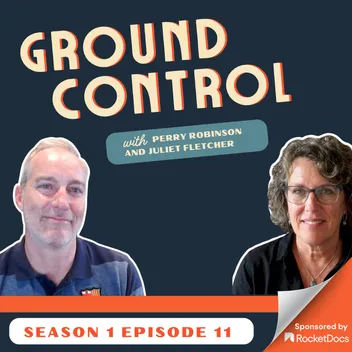
Juliet Fletcher has spent nearly 40 years in proposals and helped her clients win more than $1 billion in awards, but the experience that shaped everything came before she ever wrote one. As an intern for the Florida Division of Cultural Affairs, she reviewed proposals for compliance and sat through panel hearings all the way through award. That reviewer's seat is her secret sauce: design your document so the evaluator can instantly find what they need, because if they have to hunt for it, they start to like you less. She and host Perry Robinson get into her "human discernment enforcer" mindset, why evidence beats AI-generated narrative, why a strong proposal writer is a persuasive communicator rather than a technical writer, and the bid/no-bid discipline that keeps you from chasing what you can't win. Her mantra: persuasive communication is never about you, it is about them - write without fear, edit without mercy.
Episode Chapters
00:00 Introduction to Juliet Fletcher and her expertise
01:13 Juliet's background in proposal review and compliance
03:01 Designing proposals for reviewer ease
06:06 The human discernment enforcer mindset
07:47 The importance of evidence and proof points
11:07 Organizing proposal content as a database
14:35 Using AI tools for proposal drafting
19:00 Persuasive communication and storytelling
23:28 Challenges with AI-generated content
28:02 Engaging SMEs and making them feel valued
33:47 Starting early and learning from past proposals
39:11 Best practices for post-proposal analysis
44:11 Evaluating AI tools and competitive intelligence reports
51:20 Final advice and how to connect with Juliet
Connect with Juliet Fletcher
Work with Juliet: https://writingiseasy.com
LinkedIn: https://www.linkedin.com/in/julietfletcherwritingiseasy/
Find Ground Control
Apple Podcasts: https://podcasts.apple.com/us/podcast/ground-control-sponsored-by-rocketdocs/id1896052098
Spotify: https://open.spotify.com/show/00xAPsKE61ff5X5YC4ndRA
YouTube: https://www.youtube.com/@rocketdocs6075
All episodes: https://rocketdocs.com/resources/podcast
Find RocketDocs
The response management platform built for regulated industries - trusted since 1994.
Website: https://rocketdocs.com
Book a demo: https://rocketdocs.com/demo
LinkedIn: https://www.linkedin.com/company/rocketdocs
Show transcript
Perry: All right. Hey everybody, welcome to Ground Control. I'd like to welcome our guest today. It's Juliet Fletcher. Juliet is a CEO and she is an amazing writer and a trainer. One of the things that I think is most interesting I've learned about Juliet so far is that Juliet's been in the business for 35 years, right? And so she's had a tremendous amount of experience helping folks out. and has has won over a billion dollars with her clients on proposals and RFPs and opportunities. And so she's she is a person to to know and a person to listen to. So we're gonna ask her some questions today. and we're gonna talk a little bit, have some conversation about some of the things she's learned along the way. Juliet, welcome to Ground Control and thank you for joining us. Juliet Fletcher: Thank you. Well, I don't know. I I can live up to everything that you just said. The matter Perry: Right. Juliet Fletcher: and it's really been I'd afraid to say probably forty years in proposals, including nonprofit. And I think one of the most valuable experiences I've had that has informed every single thing that I've done is sitting on the other side of the table as a Perry: Hmm. Okay. Yeah. Juliet Fletcher: That that's the secret sauce right there, right up front. anybody can go up my LinkedIn profile and see it and you know read all that stuff like you did and look at my website. But the reality is that my first experience in proposals was not writing proposals, it was reviewing them for compliance as an intern. And then later Perry: As an intern. Juliet Fletcher: on for yeah, yes. and then later for award. This was in the state of Florida for the Division of Cultural Affairs, which is the state art agency of Florida. I was getting my master's in public administration at Florida State. Go knows. And I needed I had to have two, I don't know if we were on quarters or semesters then, it doesn't matter. Two terms of Perry: Mm-hmm. Juliet Fletcher: internship. And there the division of cultural affairs grant cycle was coming up. So I entered with the community arts coordinator and reviewed proposals for compliance first and then sat through all of the panel hearings all the way through award by the Florida Arts Council. So when I graduated and ran the little Montecala Opera House in Monticello, Florida, 30 miles east of Tallahassee at the intersection of US 90 and 99, just to say, beautiful old building, gorgeous building, wonderful facility. I turned all that knowledge back in and was a hundred Perry: Mm-hmm. Juliet Fletcher: percent on every single grant I wrote and stayed that way for a very long time and was invited to sit on the performing arts panel to review proposals Perry: Yeah. Juliet Fletcher: for awards. So and then I I've done that all sorts of places and the latest I did it was for the Department of Commerce for Perry: Okay. Juliet Fletcher: what were those economic development Perry: Yeah. Juliet Fletcher: proposals and I'll tell you what, man, I learned That reinforced how important it is to design your document so that the reviewer can find the stuff they're looking for. If I have to go look for it, I just don't like you as much. It is an emotional Perry: Mm-hmm. Juliet Fletcher: decision. We are humans. You have to fight it. But really and truly, that reviewer experience is is my secret sauce because that's the way I'm always thinking. I am the very specific. detailed reviewer person who brought the box of proposals with me with a cover sh I mean, I still I haven't changed any of that. So I went off on a tangent, but that those years are part of all of that and and and inform every single thing I do. Perry: It's pretty amazing stuff because, you know, if if you look at Juliet's LinkedIn profile, you see on some of the posts, right? She's already sharing some of these little details that people who come from that reviewer background are are looking for, right? And that that could be, you know, just you know, are you making it easy for the reviewer to find the information they need, right? You know, are you spending time and investing? in this application or did you just throw it into AI and have Claude or Chat GPT write something for you? Right. There's telltale signs, right? And then there's a part two where there are people that are earnestly working on this. They're trying to get it right, but sometimes you just need to have a better understanding of what people are looking for. And I know you had reposted, you know, a current, you know, contracting officer for the United States government talking about some of the things recently that he had said, you know, like, hey, if you're just starting off with innovative, right? Like I'm already like turned off. And and Juliet, how much is it that the reviewer's job is actually just to say, like, I need some reason to put this into the not moving forward pile? Right. They're looking for the the the right winning proposal, but also as part of that, they're having to figure out ways to just have some of the people not make it to the next step. Juliet Fletcher: Yeah, you know, so I'm I'm a Pollyanna optimist. I'm also a Perry: Okay. Juliet Fletcher: subscriber to Simon Sinek's a bit of optimism, which I love to listen to. Perry: Mm-hmm. Yeah. Juliet Fletcher: and I'll say this, as from my experience as a reviewer, I want each proposal that I review to be good and to Perry: Mm. Juliet Fletcher: be valid. And to be awardable. That's what I want. So I start the review with expecting to to say you're compliant, you're awardable. You've got my one, you gotta convince Perry: Mm-hmm. Juliet Fletcher: me you're not. I I and and so Perry: Yeah. Okay. Juliet Fletcher: often they convince me that they're not so quickly. Now Perry: Mm-hmm. Juliet Fletcher: I take that same thing to narrative that Perry: Mm-hmm. Juliet Fletcher: my clients give me. Perry: Yeah. Juliet Fletcher: just well I had a text exchange with a friend of mine, a brilliant young woman. and I and through the text I came up with a GovCon superhero which is the what what did I call it? The human discernment enforcer. I need an illustrator. So the I've trademarking this right here, right now. This is mine. We buy still, Perry: Yeah. That's yours. Juliet Fletcher: but I would love to see a graphic novel starting with the proposal Perry: Ha ha ha. Juliet Fletcher: reading the proposal I was reading the last week that I could tell was AI generated, going, My God, I'm trying to help you and I can't even get through this. How would a reviewer? So I I bring when my clients send me stuff, my my Approach is I expect to see brilliance that's going to Perry: Mm-hmm. Juliet Fletcher: need very little assistance from me. Of course, if that were true, I wouldn't have a business if everybody did that. But I I do look at it from that point Perry: Yeah. Juliet Fletcher: of view. Convince me to not pick you Perry: Yeah. Juliet Fletcher: when I'm a reviewer. So my point of view when I take work on a response is we need to convince me. Perry: Mm-hmm. Juliet Fletcher: Me, the writer, and your sort of writer-reviewer, you know, human discernment enforcer, that you really know what you're doing. If I can't tell that you know what you're doing from what you've given me, then you're gonna have to talk to me. We're gonna have to talk about this. You're gonna have to give me your your not just your features, but your proof points. And I want quotes, I want metrics. So you were talking a before we started about companies getting awards. Perry: Mm-hmm. Juliet Fletcher: Well, there's a piece to execution that is recording your performance, whether it's deliverables that you have to are required to provide, like Perry: Mm-hmm. Juliet Fletcher: metrics and all that kind of stuff, let's say on a call center, you know, everybody kind Perry: Yeah. Juliet Fletcher: of knows that. or or staffing, but what do you need to record internally as a program manager so that you can hand that off for the recompete or for other opportunities? I can't tell you how many times I asked for that stuff and they have to go back in. well they don't work for us anymore. Maybe we can go look in the content library, which no one could find anything Perry: my god. Juliet Fletcher: in, and find it. So, you know, it's a very interesting and I'll tell you what, man, the bells and whistles go off when we've got somebody who has it. we've got that. I've got a quota. I can send you a whole bunch of them. Well, don't overload me. Just send me the ones that really apply. Let's get those metrics. It's amazing. It's amazing. It makes our life so easy and we feel so good about the work that we're doing when that happens. Otherwise, it's a taffy pulling process or tooth pulling, whatever you prefer. Perry: Well, taffy pulling's a little bit less painful than the tooth pulling, but Juliet Fletcher: Yeah, well I don't know, it's probably more like pulling teeth. Perry: Yeah. You know, it's it's interesting because, you know, what you're saying is is something that we talk with folks a lot about, which is knowledge is a competitive advantage, right? And and the knowledge we're talking about is really the capability to go and and find information. but you make the point which is really interesting about making sure to record it in the first place. You know, when you talk to clients about, you know, about how, you know, the best practices really for for for you know for maintaining you know, all this important information, what do you tell them that helps them to figure out how to, you know, build, organize, and operationalize that knowledge and that information? you mentioned something about like going and pulling it from, you know, one place to the other, but certainly past employees and trying to call them up and see if they'll if they'll tell you something is not is not the best practice. Yeah, what are the best practices for maintaining, you know, company knowledge and and maintaining a knowledge base that you can use to draw on for winning respect? Juliet Fletcher: Well okay, so I I know that you all have a tool that helps to manage that. and I think I'm gonna roll back a little bit because I've been doing this a long time. You know, we start off with file folders, right? Yeah, right? we start Perry: Yeah. Mm hmm. That's right. Juliet Fletcher: off, we we we move into things like Excel and Access as databases, right? I used to create fundraising databases. I created a database to track all of our grants to the college I work for. all just all sorts of stuff so we wouldn't could go back and look. then we have then we roll forward into these content libraries and AI. So this may be too simplistic but that's where my mind goes to simplicity. I think about all of that rich information, regardless of how well or badly it's organized, as a untapped database. Perry: Okay. Juliet Fletcher: That we can use an AI tool to access the information we need. But like any other database, if you've ever built one, whether my first one I was in File Express, and we don't need to talk about what year that was. But I I Perry: Yeah. Juliet Fletcher: I was working for a nonprofit and I impressed my little capital campaign committee because they said, well, how many donations do we have? How no, how many pledges do we have? How many Pledges are paid and how much is still due. And I said, give me a minute. I went over to my little compact portable computer the bank president had given me to use because he was finished with it. And I said, Well, we got this, this, this thing. How'd you do that? And I said, technology. I was in my 20s. Perry: Yeah. Juliet Fletcher: Anyway, so I think about that. It you can have the most amazing tool in the world, but if you're pointing it at crap, you're gonna get crap. Perry: That's true. Juliet Fletcher: Plain and simple. So one of the things, I'm not selling our services right here, but of course I always am, but subliminally. But the one of the things we do is help small businesses get themselves organized. You need the Perry: Mm-hmm. Juliet Fletcher: tools, you need the tools to be more efficient and more effective and more consistent in your messaging and to collect the information that you need to produce competitive proposals. Okay. Perry: Yeah. Juliet Fletcher: So one of those is a template. A word template that has all the styles that you need to do, then you all to use, and then you also need to know how to use it. The other piece, and most people don't, so therefore we get to do that work. The other is to have this standardized content that you use on a regular basis to introduce your company, to call out your advantages, your win themes, whatever. And it's really easy if you're sort of a single line of business business. Perry: Mm-hmm. Yeah. Juliet Fletcher: If you're like an 8A ANC, it's a nightmare. Perry: Mm-hmm. Juliet Fletcher: So many subsidiaries. But Perry: Yeah. Juliet Fletcher: and lines of this, but we actually did that at 8A ANC. We had a literal Word document that was in the styles of the proposal that was c we vetted it every year. somebody I got balloons. I made balloons go up. That's hilarious. Perry: Blue. That's great. Juliet Fletcher: what else can we do? Anyway, So what we would my our proposal manager would have to turn these things really quickly because we got direct awards eight ANC direct awards like crazy Wednesday, it's a couple million dollars. The response is due Tues the next Tuesday or next Wednesday. So we had a a template. She'd go grab the stuff, drop it in, do a find and replace pull out the retention figures that we needed, pull out whatever figures we needed, fix it all up. real nicely, hand off the text section to the Smeeze, come back, hand it all to me, I edit, I dress it up, I ask the questions, boom, boom, boom, boom. We submit. There's not that's a very analog process to a certain degree, but it's really Perry: Is it? Juliet Fletcher: not because we're using a document that we're we're taking in and we're using find and replace, we're using human discernment at being the human discernment enforcer that I am. But you know, to use AI to do that, you've got to be able to point that tool at Perry: Is it? Juliet Fletcher: vetted, strong, compelling, responsive, compliant. Narrative. Going to Claude, creating a project in Claude, dropping in the RFP, asking it to create an outline for you, asking it to create and maybe drop some client reference documents in it or project reference documents in it, and Perry: Yeah. Juliet Fletcher: asking to write it. That's what I was editing that prompted my human discernment enforcer idea. I just Perry: Mm-hmm. Yeah. Juliet Fletcher: this Perry: Doesn't work. Juliet Fletcher: No, it doesn't. So it's just like when you create a database, you've got to think of we used to call it use cases, but you have to think of all of the use cases. We would say applications or Perry: Mm-hmm. Juliet Fletcher: fields you need to create to pull that information from. So if you're gonna write a letter that says, Dear Juliet, you have to have a field that is the first name. Perry: Right. Juliet Fletcher: You can't do Juliet. So, you know, i it's that kind of thinking and I'm not seeing that happening yet in my small little universe. I'm not seeing it happen yet. Yet. Emphasizing Perry: Yes. Juliet Fletcher: the yet. Perry: Yeah, th well it's things are changing quickly. That being said, you know, you know, you've you've had an eighty percent, you know, plus or minus win rate with clients, right? And and so think the the value of of your insight is in being able to you know know what actually does work right and regardless of changes in technology you know you there's there's a lot of technology may be changing left and right but you know winning you know proposals has a lot of what I would imagine are similar characteristics that are agnostic of technology altogether. Juliet Fletcher: The basic tenets of good persuasive communication. Perry: Yeah. Juliet Fletcher: What we do is I I don't really like to be called a technical writer because I am not technical, ask anybody. I am a persuasive technical writer because that's what a proposal Perry: Mm-hmm. Juliet Fletcher: is. I take that technical knowledge. molded into persuasive communication. That's what a good proposal writer does. A good proposal writer is a persuasive communicator. Period. Understanding Perry: Yeah. Yeah. Juliet Fletcher: I love Robert Cialdini's elements of persuasion. Because we talk Perry: Mm-hmm. Juliet Fletcher: about those I can't bring all of them up right now, but some of them are like whatever the social one is you know like other people your neighbors your neighbors bought this vacuum cleaner. kind thing. So so Perry: You should do. Juliet Fletcher: or that aluminum siding, right? So Perry: Mm-hmm. Juliet Fletcher: the the the pr the social thing in in a pr a proposal is a quote. It's a Perry: Yeah. Juliet Fletcher: quote with the name of the person, their position and the agency and the program Perry: Mm-hmm. Juliet Fletcher: past performance. Perry: Yeah. Juliet Fletcher: That's showing metrics that you delivered on that. That's how that's sort I don't know what you call it. It's sort of It it's like the it's the persuasive element in proposal writing. So, you know, what are there there's so many others, there's so many others that we use, that's a big one that we use all the time. you know, having an ISO certification, having a JCO certification, having all the other ones, the NIST and the CMMC, Perry: Mm-hmm. Juliet Fletcher: that's authority. That's the authority persuasive stamp. Perry: Yeah. Juliet Fletcher: You know, when you go to a physician, you want to make sure they're board certified. Boom, stamp authority. That that endorsement, that authoritative endorsement. So, you know, unless you're folding that into your narratives that Perry: Mm-hmm. Juliet Fletcher: you're pointing your tool at or you're going searching for. You have to add it in when you build the proposal. Perry: You have to add it in. Yeah. Yeah, it's it's it's the the persuasiveness, the storytelling, right? Is is kind of taking all of that information, all the details of what you're doing, what your capabilities are, why you know you're an authority in the space, why you should be selected, and and it's and it's To your point. It's just good communication, right? And that's one of the things that that we continue asking, you know, folks that you know come to ground control is this is, you know, in this changing time of generative AI, right? you know, one of the things that we see as as one of the greatest limitations of AI is that it tends to tell things pretty much the same way. It's always a little bit different. But always very much the Juliet Fletcher: So what we're talking about is Perry: same voice. Juliet Fletcher: Yeah, you're talking about vanilla vacuous I have a whole list here. What did I say? Vanilla vacuous Perry: Yeah, your vanilla vacuous. Yeah, bring that up. That's a great one. Juliet Fletcher: Non specific, no value, no benefit, no clarity, no customer understanding. Perry: It and why does AI not have it? I mean, I think we all can Juliet Fletcher: That is not gonna win you a contra. Perry: get it. Not gonna win it. No. The biggest parts that is missing are Juliet Fletcher: Nope. No, it's it's not gonna Perry: what? so I think it's it's the you know, what is it that actually is missing, you know, that's making it to where AI can't do this from your perspective. And I think that's where you're this the vanilla vacuous. It's it kind of seems to us as though it's the fact that AI is just assembly machine. It's an assembly machine of things that have already been said someplace else and put together, but it does it in a way that just runs the exact same approach. Regardless of who the company is that's writing a bid. And so while there are places where each one of those is going to be unique and different because it generates a new different thing each time, the style between two people that are putting an the same RFP into Claude is probably gonna come out to your point, vanilla and vacuous. Juliet Fletcher: Yep. So here's the thing. As a freelancer, and I wrote down some of the challenges because I'm a freelancer, right? Perry: Yeah. Juliet Fletcher: I am agnostic, procurement vehicle agnostic, in the RSA industry. I'm I'm agnostic. because Perry: Mm-hmm. Juliet Fletcher: the tools and the processes and the things that we deliver and contribute. and contributing and delivering are two different things, are are universal. But Perry: This is Juliet Fletcher: there's some challenges that we are facing. One big one is the CUI enclave. Perry: Okay. Juliet Fletcher: Where everything is contained. So let's say I want to work with a a cli a client wants to work with me. Let's put it the other way around. I don't want to work with everything. the client Perry: Mm-hmm. Juliet Fletcher: wants to work, but they're in a C this this is a C UI thing where it is in their enclave. How do I get into that enclave? How do I get access? They can't even email it to me. I have to be in it. Do I get a laptop from them that sits here that I connect to my monitor so I can actually see what I'm doing? Perry: Mm-hmm. Juliet Fletcher: how's that gonna work? That's a huge problem that has yet to be solved. Although a really wonderful person I've worked with, Jamie Miller with Mission Multiplier, hasn't come back to me yet. But he said that there is an affordable way, and like, all right, let I wanna hear this. I'm gonna have to poke him again about that. But the the other issue is is that so many environments are these enter I'm gonna call them enterprise environments. We struggle with like we're given a link to SharePoint Perry: Mm-hmm. Juliet Fletcher: in an enterprise, not CUI, but just in a Teams, Microsoft enterprise environment. And Perry: Yeah. Juliet Fletcher: it screws up constantly. They don't want us to download onto our computer, but yet I can't. It's not saving. I'm losing. my God. It only happens on Sunday afternoons after I've worked for about six hours. Does it go away? Perry: Mm-hmm. Juliet Fletcher: And I have to call my daughter and go, my God, I lost it. Just hold on. Don't close yet. Hold on. Maybe you can, you know, look so good God. So these we can't the thing we as freelancers are dependent on our clients to have strong content libraries and an Perry: Mm-hmm. Yeah. Juliet Fletcher: effective AI tool that they're gonna create these b these proposal responses with and spit back and I'm going, this is vanilla and vacuous and doesn't have any meaning. Where's the value? So One of the that's a big challenge, I think, for for us. And I know I've looked at a lot of AI solutions. Perry: Mm-hmm. Juliet Fletcher: None of them really work for a freelancer because there's the proprietary aspect. I mean, I basically have a Dropbox content library that probably has fifty to a hundred clients stuff in it that I firewall Perry: Really. Juliet Fletcher: through my own ethical. practices, right? So Perry: Yeah. Yeah. Juliet Fletcher: and and and there all of us do that out here. Do not be fooled. But it's it's up to our own ethical practices and our own standards to not go in and say, my God, we just wrote that for those people. We can't use that. But what I can use is what I learned from it. I can use what I learned from it. So I I'm kind of going around w these are some of the challenges though that really make it hard sometimes. It's Perry: Okay. Juliet Fletcher: not really secure to email documents back and forth. Perry: Mm-hmm. Juliet Fletcher: and it's not really secure. It's might be a little more secure to for us to provide a Dropbox link, Perry: Mm-hmm. Juliet Fletcher: but Dropbox can be funky too, you know, if they're you can't Perry: Can, yeah. Juliet Fletcher: only one person can be editing in it. More people can be looking, but only one person can edit. My daughter and I vibe, boy, have we had trouble with that. Conflicted I thought you were out. I am now. now we have a conflicted. So I tell her, go figure that out and tell me which version I'm supposed to be looking at. Perry: Yeah. Juliet Fletcher: So these complexities of just getting the work done, I would Perry: Yeah. Juliet Fletcher: love to see a way that would make it easier. And and this doesn't just apply to freelancers, it applies to subcontractors and teaming partners on on contracts, firewalling stuff, really working in a collaborative environment it's just hard. It's just hard. Perry: It is. It's it's it's hard and it's well, it's been hard for quite a while, but we're finding that there's more and more, you know, diverse tools that people are using as well. And so I mean it's it's maybe different in the CUI, you know, instances in which there's more and more specific controls about information, but Otherwise, you know, we find that that you know you'll have people that are bringing in seven or eight different places where they're drawing information from. And that could be because you know it's a it's a subject matter expert's in SME, right? It's a tool that they use. it could be that it's it's your business development person, they're using a different tool entirely, even though the opportunities for them, right? but as a as a whole, right? I guess you're seeing the same things that we're seeing, which is that there are significant challenges that relate to organizing the information and making it available to the people who are the critical members of that proposal response team. And in in your case with the freelancers, I guess it's even harder because you sit outside of those corporate walls. And so you're you're having to rely on on you yet again other other solutions. when you get to that that type of situation, right, and and particularly thinking about like the subject matter experts, it's always been my experience that the SMEs have their own jobs, right? They have their day jobs. And we always hear a similar refrain from you know, customers and people that we talk to about this stuff, which is that gosh, getting it to where the SMEs are involved in the right way and and making information available and also, you know, approving content before it goes in or participating in the writing process is a huge challenge. but everybody also has their own experiences with it. I'm wondering for you, like is it is it a truism for you as well that that SMEs are are a challenging area to work with? And then what do you find, if it is the case that it's challenging, helps the most to bring them into the process and and to really drive towards a very effective proposal that wins? Juliet Fletcher: So this is gonna sound really well you can take it for what it's worth. I don't have as big a problem with that as a lot of people do. Perry: Okay. Juliet Fletcher: And one of the reasons is that I make sure that the SMEs understand that I am their tool. Perry: Mm. Juliet Fletcher: I'm not here to make them do something that they don't want to do. Perry: It's just something that they don't want to do. Juliet Fletcher: I'm here to make something that they have to do easier. Because that's what I am. Perry: That's yeah. Juliet Fletcher: I'm a tool. I'm a human tool. Perry: Mm-hmm. Juliet Fletcher: And so when I wor case in point, resumes, key personnel Perry: Mm-hmm. Juliet Fletcher: resumes when I have to get on the phone or I've got three to send out at some point this week to the the the candidates to get their juice back, right? I'm gonna write an email that's gonna say I've gone as far as I can. This is exactly what I need from you. So we can show your brilliant brilliance, your accomplishments, how well suited you are for this position. So you can get the job, hint hint. Perry: Mm-hmm. Juliet Fletcher: And I've put comments in here to nudge you. If I do an interview with them, it's all about them. I I'll never forget an interview that I did, I can't remember his name. It was for the future attack reconnaissance aircraft for the army, little tiny helicopter that could carried little small special obscure. It died. Perry: Okay. Juliet Fletcher: And this is pre-drone, okay? So Perry: Yeah. Juliet Fletcher: they were talking fly by wire and all this kind of stuff. Anyway, I interviewed this guy who was on the team. It was an amazing design team. And like the guy who ran the company, he was on the Huey helicopter design team. Okay, so this is who we're talking about. So this guy we go through his resume and I'm trying to squeeze all the juice I can out of him and we're having a conversation. I found out To ride bikes, I like to ride bikes, blah blah blah blah blah. I just changed the diet to plant-based, you know. We're having a great time. And we're going through his resume. I always start at the first job, so we warm up to the more complex. His first job, I'm like, so what is this? You're straight out of MIT. What is this? Can you just explain it to me? And he goes, Yeah, I was basically counting calculating the descent for the land lunar lander on the moon. I'm like, dude. Does anybody around here know that? That's like the coolest thing. He goes, no, and I said, and because so it's that it's building that kind of relationship that Perry: Yeah. Juliet Fletcher: you get all of that wonderful stuff. So like Perry: Mm-hmm. Juliet Fletcher: I I remember being on a call with some IT folks. So this is about three years ago in June. my god, we were on the phone for 16 hours with very, very heavy accented subject matter experts, IT subject matter experts speaking very quickly. Perry: Mm-hmm. Juliet Fletcher: and and and every other word was leverage and utilize. So catch the big eye roll. So Perry: Yeah. Juliet Fletcher: he started stuttering on l l leverage and he'd say use and utilize. He'd he'd fix that too. So he would rattle off all the stuff. And I'd say, Well, that's all fine and dandy, but why does your customer care about this? So what I tell my SMEs who are struggling Perry: Mm-hmm. Juliet Fletcher: is I say to them, okay, if you know enough to do this work and to solve this customer's problem, you know enough to sit on the other side of the table and be a reviewer. Now let's write which Perry: Yeah. Juliet Fletcher: you would need to pick you. well, we can delete all that stuff because it's just yeah, right. So let's talk about why they Perry: What is it? Juliet Fletcher: should pick you. Let's put that right up front. What does this deliver? Okay, now what features do we need to leave in here? And and do you guys got some proof points for this stuff? Perry: Yeah. Juliet Fletcher: It's a conversation. Perry: That's great. Juliet Fletcher: I'd really love doing that too. It's really fun. It's a lot of fun. And then if I can have the document up on screen, extremely analog, Perry: Yeah. Juliet Fletcher: document up on the screen. Okay, okay, pause. Hold on a minute. Let me write that. Well, let me flip that, flip that. And I'll okay, now we're gonna move this up here. And how's that? that's great. Let's add this in. Okay. It becomes a collaborative process. You don't always have time to do that. You don't it's Perry: No, yeah. Juliet Fletcher: a luxury, but When I work with a lot of small businesses, emerging businesses who don't have an in-house proposal team or they have a couple people Perry: Yeah. Right. Juliet Fletcher: who are kind of wet behind the ears a little bit, trying to learn. Perry: Mm-hmm. Yeah. Juliet Fletcher: So we come in and we help them with all this stuff and we show them how to do it. And we help them win because it's a it's a collaborative process. If you're a proposal writer and you're not a collaborator, if you're a proposal professional and you're not a collaborator first, you're Perry: Mm. Yeah. Juliet Fletcher: Be successful. And and you have to be a gracious collaborator with firm, fixed ideas, honestly, and functionality and and processes to get Perry: Mm-mm. Juliet Fletcher: from start to finish. And I real I just did a post about this. I've I've done this a couple of times of starting slow and starting smart. I spent Sunday doing an outline for a proposal so that I could hand it off to my client. We got on the phone Monday. We went through it. She goes, okay, put these notes in here for me and then hand it back to me. Okay. So now she wrote outside of the document. I guess the document was frustrating her. This is gonna be fun. So I gotta figure out what hopefully it's in order. But you know, we'll come back together again. I'm not gonna sit there, we're not gonna submit without rolling through it. And making sure that we're conveying Perry: Mm-hmm. Yeah. Juliet Fletcher: the message that they know the customer needs to see. From that whole exercise, she came up with a brand new framework of how they deliver their solutions. Perry: Wow. Juliet Fletcher: I like well, after this proposal, after we finish this and submit it, hopefully Friday, not Monday when it's due, let's let's do a thing. Let's do a design document where we can pull these elements out, these graphics out, and this stuff out so quickly. We don't have to do this again. So, Perry: Right. Juliet Fletcher: you know, there's I don't know if what everybody else does. but this is how I do it, and it works. Perry: Mm-hmm. Yeah. Juliet Fletcher: And it and it's working. It's working. It's working really well. You know? I think I'm not saying anything that other proposal folks don't know or don't do. It maybe it's the way we approach it. We WIE writing is easy. We came up with that on on Perry: huh. Juliet Fletcher: some some army dudes who kept putting us in their SharePoint as we W I E. So we started calling ourselves we and it was just me and a and a few other ten ninety nines, you know, that I need Perry: Yeah. Juliet Fletcher: that I pull up. But What I want subject matter experts to feel is I want them to feel like they're experts and Perry: Mm-hmm. Juliet Fletcher: feel valued. Perry: Mm. Yeah. Yeah. Juliet Fletcher: And and to feel like they are contributing something meaningful. And appreciated. Perry: It's an important component. I love that I love that you thought about how to bring them in. I love that you described also told us about how, you know, in in this project, you get to the end and you go, there's things that we learned from this that we need to take a moment and get them put into position for us to make use of them again. Because sometimes you do have the luxury of time, rarely. on these proposals and you know, all lots of different reasons. A lot of folks end up having very short time frames to answer opportunities or they feel like they do. but Juliet Fletcher: Or they wait too long or they wait too long. Just saying, you know. They they don't Perry: Yeah. Well it's Juliet Fletcher: know about Trinity and they wait too long. Perry: I was trying not to get to the point of of placing blame, but the reality Juliet Fletcher: What? Perry: is that they sit there and then they get to the point where you start doing it. Yeah. It's it's it's that part that maybe those are two of the biggest challenges that people create for themselves or for their businesses is by not starting early enough and start slow, like you were saying, right? And really put a plan together, but also not taking the time. In between projects to actually work on the information and content that you're going to need for the next time around. Like learning lessons from the last response and putting information together that you can use the next time around. You already talked about the advantages that can come from you know thinking about how we can reuse this and where can we place it. I'd love to hear your thoughts about how people should think about. the learning lessons of why a particular proposal did well or did poorly, and how they can know that a particular paragraph or a section of a proposal caused them to win or lose, or in the actual question and answer part of an RFP, you know, knowing that certain answers to questions that they have are either moving them forward or they're knocking them out. Right. most people just say, we got it done, the pain's over, it's submitted, wait for the response. It comes in, they win, they're like, great. They lose, they go and they cry. Right. But few folks are actually thinking about how do we measure what it is that makes us win versus what it is that makes us lose. And how do we make it to where we're able to put our best foot forward the next go round by learning lessons? I've imagined that that you've thought about this over. over the time you spent on it. So share with us some of your ideas on best practices for people to implement that whether it's following the you just won the award, right? Or we've decided to go a different direction, that people can figure out how to better curate information or or promote winning responses or whatever it is that you think the best practices are. Juliet Fletcher: All right, this is for all the proposal professionals out there in the universe listening. If you would just listen to us when we ask the questions of do you have the past performance, do you have the key personnel? Do you actually have the solution architected? Are we going to be doing that while we're writing? Do you actually go to the customer and you talk to us about what the challenges are? Do you actually have competitive intelligence? Do you have any of that stuff? Okay, so you may not have competitive intelligence, but you've been in this industry a while and you know what the struggles are for, let's say, medical staffing. you know, recruiting retention. You know the issues in PERSEC, personal security with retaining people through the background screening and the lie detector tests and all the other stuff that they have to do. You know what those are. Everybody's got that. All right, how do you make it better? How do you retain people? Let's talk about that. That's a secret sauce. So I would say that if you're if you're a if you're a capture person, a BD person or you're an in an organizational management. Hopefully you're a leader and not a manager. And if you're a leader, you're gonna think about this. Are we giving our proposal team what they need to help us win? And when they do win, are we giving them the credit? Now I'm gonna point to this little thing that came with some champagne and snacks. And I have some champagne down in my tiny wine cellar and From another win from that company, who also, just as a freelancer for all the freelancers out there, pays within hours. Perry: That's great. Juliet Fletcher: So you know, there are lots of things here, the truly, truly instincts, instincts of people who have been doing this a while and have the experience and are looking across all these different opportunities and all these different responses that they've done. They know where the weakness is. I I remember writing a s a solution that one of our vice presidents had just kind of made up, and I'm like, dude, where's the evidence that this even works, that they even want this? I'm like I I just so I put it in an email because I wanted it on record that I'm like, dude. No. Perry: What are you thinking? Juliet Fletcher: Now then again I, you know, I've I've talked clients out of efforts. Perry: Really? Okay. Juliet Fletcher: Yes. One way is with an expedited rate. So Perry: Mm-hmm. Juliet Fletcher: it's gonna cost you a lot more. And it's my discretion to charge or not. Perry: Yeah. Juliet Fletcher: if you come to me at the last minute and we gotta turn this fist fr fast. I gotta turn my world upside down, I don't get to go to go to yoga, I don't get to go for my walk, I gotta sit here and do this for you because you were late to the game. All right, Perry: Yeah. Juliet Fletcher: the other the is that I literally look at the opportunity and this is happening about three or four times in the last year on cooperative agreements, which are a whole nother ball game where you really can't have a net profit. You're not supposed to have a net profit. So why are you doing? and also are you do you actually do you understand fund accounting? Do you understand how this works? You don't. Do you have a person who does? No. Okay. You don't need to be doing this. Let's put together a capability statement. Perry: Mm-hmm. Juliet Fletcher: That you can hand off to people who are priming it so you can sub it and get that past performance and get in there and show yourself to this customer and to this prime and get that exposure and that experience. Let's do that instead. And I'm not a BD person. That is that Perry: Mm-hmm. Juliet Fletcher: is not what I am. I'm trying to serve my customers. I customers, clients, they have customers, I have clients. I'm serving my clients in the best way I can because I don't want to loss either. Perry: Right, right. Yeah. The Juliet Fletcher: You know, you know, I don't wanna leave either. Perry: hell down. Juliet Fletcher: Yeah, we want to win. We want to get champagne. We want ribbons. That was wrapped around the box. It was just so cute. Perry: Right. Thanks for your That's great. Juliet Fletcher: Any anyway, so the the point I'm making is is that what are the best practices? Listen to your proposal people. Perry: Yeah. Juliet Fletcher: When they say, when they start asking all these questions, you need to think twice. Don't dismiss it. Don't poo-poo it. Don't just throw past performance contracts in there. You think are a good fit. This is what I asked for. I asked for the sour the PWS for that past performance. Because I'm going to do a keyword search in it. Right? Using my little Perry: Mm-hmm. Juliet Fletcher: word document. Or Adobe. I'm gonna do a keyword search and find where those words are. And if those words aren't in there that align with this effort, do they really align? Perry: got one follow-up Juliet Fletcher: Yeah. Perry: for you on that one, which is for the systems that are out there that are telling people that they're able to, you know, just you just load the opportunity into the system and our system will tell you whether you are likely to win it. BS or the real deal? What's the Juliet evaluation of it? Juliet Fletcher: laugh because I just had something come through in the last week where the client gave me this competitive intelligence AI generated report thing. Okay. Perry: Mm-hmm. Yeah. Juliet Fletcher: and I'd actually already asked Claude a little bit about this company and their sort of position in the market Perry: Yeah. Juliet Fletcher: and in this work and stuff. If you get a report that puts you as a minor player in the marketplace, listen to the voice. Perry: Ha ha ha. Okay. Juliet Fletcher: And don't go spend seventy-five or a hundred thousand dollars on a external proposal team Perry: Mm-hmm. Juliet Fletcher: to pull something together for you that you don't have a chance at. Perry: Uh-huh. Juliet Fletcher: Those competitive intelligence reports are fantastic if you pay attention to them. It's Perry: Yeah. Juliet Fletcher: like going to the doctor. If your A one C is in the diabetic range and you're not listening, you're gonna have trouble. Perry: Isn't that the truth? Juliet Fletcher: I mean, I don't know what to say. You know, when the check engine light goes on, don't we usually go to our car guy? Why is Perry: Yeah. Yeah. Juliet Fletcher: my check? Well, I'm on a diagnostic. When you're running that competitive intelligence, you're running a diagnostic on your position in the marketplace. And if it says, if it lists several big companies who are partnering with other people and they've only listed you because you're the one who requested it? You know, you get the dog, cockeyed dog head. I I I I don't know what to say. So I think there are people out there who Perry: Mm-hmm. Juliet Fletcher: know how to run that stuff and can also Perry: Yeah. Juliet Fletcher: help you work through it. I think there probably are good tools, but if you're using the tool and you're not paying attention to what it's telling you. Perry: Does it make? Juliet Fletcher: Only I I I what's the point? Perry: Yeah. Juliet Fletcher: But that was really negative. That was a very, very negative answer. But but I just had this experience, which is why I was laughing on like I just had this experience. I want Perry: Happens more and more. Juliet Fletcher: to hear I want to hear the conversation amongst the the BD leadership. I want to be in that call, that sort of bid no bid or kickoff right Perry: Mm-hmm. Juliet Fletcher: after bid no bid. Where let's let's go down this road a little ways and see how far we go. I I'm in those conversations. What am I picking up? I'm picking up on win themes. I'm picking up on that competitive knowledge, getting that sort of hint of a SWAT, just a little bit of SWAT in there. What do I do with that? If we decide to bid, I use that as my win themes. That's in my call-out box. Those are threads that I that I just run through the whole document. And then I ask for proof points and I ask. If you're saying this is something that you do, do we have the past performance and can we include it on this? Does it meet the requirements? This this connectivity, this is why you have to listen. And and after a while, inside the corporate mess that I'm glad to not be in anymore, you keep silencing that voice and Perry: Mm. Juliet Fletcher: you're silence that that that Whatever it is, devil on the shoulder, an angel on the shoulder, and you know, the devil's advocate person who's saying, Hold on a minute. Hold on a minute. Do we have, do we align with this? Do we actually have it? Or are we gonna be smooging it? And there's only so much smoogin a good writer can do. I mean, I can do a lot. But as a reviewer, I can see through that. Like, well, they're saying Perry: Mm-hmm. Yeah. Juliet Fletcher: this, but I don't see anything to prove it. Perry: It doesn't match up. Yeah. Doesn't work. Okay. Juliet Fletcher: So it writes really well, but there's no there's no meat behind it. Perry: Yeah, there's you can be an incredible writer. It doesn't it doesn't change the qualifications or capabilities. And you know, it's it's a great point. You know, if you're gonna invest, you know, again seventy-five to a hundred thousand dollars potentially in in outside resources or even internal resources when you start adding up the cost of everybody stepping away from the other things they're doing, right? You gotta really make sure that you're spending the time on opportunities that are worth it. Juliet Fletcher: And not to mention the morale issue. Perry: Yeah. Juliet Fletcher: So you're asking your proposal team to work nights and weekends. Perry: Yeah. Juliet Fletcher: On something they know is win. Perry: There's no chance. Yeah. That's that's a tough one to give up your nights and weekends for. All right. We've got a way that we we we finish off with the last question. It's kind of a like a wild card, right? And so we give you the opportunity to share any piece of information. But before we get to it, I want to make sure folks know how to reach you, Juliet, right? And And to engage you for your expertise and your services. So if they're looking to find you, what's the best way for them to do so? Juliet Fletcher: the easiest way is just just the the just go find my linkedin profile Juliet Fletcher Perry: Mm-hmm. Juliet Fletcher: at writing is easy and direct message me Perry: There you go. Juliet Fletcher: that's that's easiest just about everybody's on LinkedIn you know and I think if anybody's really interested they can scroll through my posts and get a sense of who I am how I approach it and How how you can utilize to use that word. How you can Perry: Yeah, you know. Juliet Fletcher: optimize make the best highest and best use of a freelancer who you're asking to support you. And to be careful who you bring in to your world. Be very careful who you bring Perry: Without a Juliet Fletcher: in. Perry: lot of folks out there. Not all of them, not all of them with with solid experience credentials and and a proven background or of capabilities like yourself. okay, so wild card question. Anything that you think that our listeners would be better off with knowing or that you just want to share with folks that are listening in today? Juliet Fletcher: I will say this, this is my mantra. If you're writing persuasively in any context, even it's just to try to talk a family member into doing something with you or for you Perry: No. Juliet Fletcher: or a friend, you have to remember that when you're communicating, if you're gonna communicate well, it is not about you, it's about them. And the second one is I found this quote. I need I need to preface all of this by saying, I was wandering around TJ Maxx and I don't know a scarcity mentality. I don't know why I didn't buy it, but they make Ray Dunn makes these little bricks with little sayings on them in this very specific little black type on white. They make like sugar containers for your refrigerator, you know, your kitchen and all the custom. But it said, write without fear, edit without mercy. I went and found who actually came up with that. and he sort of just gave it out to the world. If anybody has that brick, I can't find one. I want it. I want to sit it right here instead of the but it it's not mine, but I did sort of introduce it into this this world of proposal writing. And it's really important to remember that to write without fear, just get it down. The best Perry: Mm-hmm. Juliet Fletcher: writing is a result of merciless editing, Perry: I didn't. Juliet Fletcher: even if it's your own stuff. Why do novelists always thank their publisher and their editors? Perry: Mm. Exactly. Juliet Fletcher: That's why. So there you go. That's all I got. Perry: Team effort. Juliet Fletcher: That's my message for the day. Perry: Well folks, Juliet, thank you so much for folks that that came in to to watch or listen to her podcast. I I can't tell you enough. Juliet's really yeah, the more I've gotten to look at the work that she's done, the posts that she has on LinkedIn, I can tell you there's just an enormous amount of value in and following her on LinkedIn and and certainly if you've got opportunities out there and and you don't have the in-house expertise to get it done or you just need to expand the team's capabilities, I would reach out to Juliet, right? And if she's too busy, yeah, I'm sure she knows some folks she can send you to as well. But we'll we'll make sure that her Juliet Fletcher: I never think Perry: her top of funnel is filled up completely before she gets there. Juliet Fletcher: I never say no. we figure out a way to do it. We just figure out a way to do it. Perry: Perfect. Juliet Fletcher: I can't say no. I might talk you out of the opportunity, but I know. Perry: Without Claude. Yeah. All right. Okay, thank you, Juliette. Absolutely. Juliet Fletcher: Thank you. Thank you for all those kind word kind words, Perry. This has been fun. I had no idea what to expect. This has been a lot of fun. Perry: we've enjoyed having you on. I've enjoyed the conversation and I thank you so much for the time. I know you've got more work to do today on more proposals. So off to the races. Juliet Fletcher: I do. Yes, yes, and thank you. And Rocket Docs, I did a little homework on Rocket Docs. First of all, I love the name because I came from Brevard County, Florida, where rockets go up. Perry: Yeah. Juliet Fletcher: I've been watching them since I was a little girl. And Perry: Mm-hmm. Juliet Fletcher: I I love your idea of this ground control podcast concept. And all I can hear is ground control to Major Tom. I just can't stop. Perry: Yeah. Juliet Fletcher: my head but I love I really like this and I was looking at your transcripts and I think if if you're just starting here go back and look at the other podcasts and and absorb a lot of this rich information that is you pull out of us and we hopefully are are gr generously sharing. So this is this is really a good thing. Perry: we appreciate you saying that. Yeah, that's the whole idea is it's getting more voices, sharing more information, making a richer community for folks to be able to tap into. So anyway, thank you, Juliet. I appreciate it. Juliet Fletcher: Thank you. Thank
Listen elsewhere