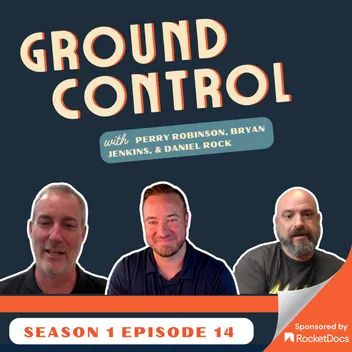
Daniel Rock did not choose sales. He was an IT manager who realized he liked the business problem more than the technology, phoned his own telecom account manager, and six weeks later was selling IT with no sales experience at all. Twenty years on he is chief revenue officer at Suite Files, and his argument is that curiosity, not polish, is what separates good sellers from replaceable ones. In this episode of Ground Control, the podcast on AI, proposals, and governance sponsored by RocketDocs, hosts Perry Robinson and Bryan Jenkins talk with Daniel about why most reps ask a list of discovery questions and never the question after that, what AI is genuinely good at versus where it quietly invents commitments your product cannot keep, the real cost of stale answer libraries and security questionnaires, and how to write a follow up that is not "just checking in." His line for the whole thing: curiosity is a salesperson's superpower.
Connect with Daniel Rock:
→ Work with Daniel: https://danielrock.co
→ LinkedIn: https://www.linkedin.com/in/danielrock/
Find Ground Control:
→ Apple Podcasts: https://podcasts.apple.com/us/podcast/ground-control-sponsored-by-rocketdocs/id1896052098
→ Spotify: https://open.spotify.com/show/00xAPsKE61ff5X5YC4ndRA
→ YouTube: https://www.youtube.com/@rocketdocs6075
→ All episodes: https://rocketdocs.com/resources/podcast
Find RocketDocs:
The response management platform built for regulated industries - trusted since 1994.
→ Website: https://rocketdocs.com
→ Book a demo: https://rocketdocs.com/demo
→ LinkedIn: https://www.linkedin.com/company/rocketdocs
Show transcript
Bryan Jenkins: Welcome to Ground Control. Today's guest is Daniel Rock. He's the chief revenue officer at Suite Files, a technology executive and revenue strategist who spent more than twenty years helping organizations build, scale, and optimize their go-to-market operations. He's got a deep expertise in SAAS, growth, leadership, sales enablement, and customer acquisition. He's passionate about turning organizational knowledge into business results, which is why we had him on. Daniel, I'm super happy to have you here. Daniel Rock: Thanks, Bryan. That's makes me sound almost like I'm actually quite good at what I do. Thank you. I'm looking forward to the conversation. Bryan Jenkins: Modest too. Yeah. Well we're excited to have you. so You got into sales, right, by ringing your account manager. I read on on your site that you were in IT, which is that's a pretty big jump and didn't seem like when you were a kid you grew up wanting to be in sales. So curious how that, you know how did it happen, how'd it come about? Daniel Rock: Yeah, it's an inter it's an interesting one. I'm not sure anyone ever chooses I don't there aren't many people I think that actually go yep I want to do sales straight out of school or uni or or something like that. It it's I think the vast majority of people I speak to and I think someone told me it's like well over 70% of people that end up in sales kind of fall into it. It's sort of something you end up doing rather than something you chose. For me it was little different in terms of I just I came out of school or college and did IT so I was IT admin, IT manager in all of that kind of stuff. Working for a reasonably small media company based in New Zealand at this point. And we we did had this big technology and business project. And what I found out is I actually enjoyed the business problem I was solving more than just playing with new techie and toys. And I liked the business problems we solve, and that was sort of interesting. I literally just rang up my telecom account manager and she said, look to her, is there anything going? Kind of this is what I'm doing. And I'd known they'd just bought two IT companies. So this was a the big New Zealand telco. At the time it's called Telecom, it's gone through a couple of different brand names since then. and they had just bought two IT companies and they kind of didn't really know what to do with them as typical telco fashion. and so I just said, hey, look, this is what I'm looking to do. I kind of want to like do the business problem solving, consultancy. And they said, actually, yeah, maybe. And then like six weeks later, I was working there as a what they called a technology manager, which was effectively a IT sales and so on. And like with no IT sales experience at all, not really a clue what I would do what what I was doing, but trying to learn very quickly. Bryan Jenkins: Okay. Perry: That's great. You know, it's it's funny. I'm gonna I'm gonna ask you something that maybe Bryan would would Bryan, don't cringe at this, right? But Daniel's got this interesting point of view, I think, about about curiosity and and you know, salespeople, the best ones, right? Or the most curious ones and the most honest people in the room. Now, I don't know if that's you know, the part so many salespeople get hit with reputations of being the opposite of that. Daniel Rock: Mm-hmm. Yep. Perry: But you're talking about the best salespeople or the most curious, right? And the most honest people in the room. Why is that? Why is it that you think that that's the case? Daniel Rock: I think there's two things. one is the way that you make the prospect feel when you're talking to them on a on a ma on a micro level. I think that when you're generally curious in people and their problems and what you're trying to fix, you get them more engaged and they feel better buying from you, they trust you more, it builds a better piece. So that's kind of the the fuzzy bit, I guess. And then you've got the sort of the more practical business bit is if you're curious, you're gonna find out more. And the what makes you good is being able to find out more and actually solve problems better. And I think one of the things that I always took, probably because of the background, was that sales is effectively problem solving. You're trying to solve a problem for a client, and if you can. And if you can't, you walk away. And I think that's something a lot of salespeople don't do. but actually, if you are curious, you're much more likely to find out what the real problem is. Often what you know it's people sometimes don't know what they don't know. And I think that comes with prospects. Now, prospects today are better informed, better researched. They come to you, you know, fur far far further along the process of their buying journey than they ever have done before. But they still don't necessarily know, they kind of know what they want. Sometimes they don't really know why they want it. And your job, if you're really, really curious, you can help them understand the why as well as you, which means you can align your problem better, you can articulate your value statement better. You can just generally be better at what you do. And you don't get that if you're only sort of ticking off a list of discovery questions, right? You've got to be genuine curious and engaged with your prospect. Perry: That's interesting. So, you know, when it comes to the the person who's who's basically been trained on how to deliver that sales pitch, they've practiced it a hundred times. If if I'm if I'm understanding you correctly, it's it's it's totally lining up with personal experience with salespeople, right? The person who's actually Daniel Rock: Hundred percent. Perry: having a conversation with you and is listening to you and listening to you identify what the challenges you're experiencing are, right, is gonna have. the best opportunity to sell something to you. Daniel Rock: Yeah, absolutely. It's like if you Yeah and you can put it into any phase of life. Obviously we're in SAS and B2B and you know it's bigger Perry: Mm-hmm. Daniel Rock: and it's more complex and you deal with multiple people and all of that stuff. But even it right down to, you know, if someone's trying trying to buy a car, you know, and you go into Perry: Yeah. Daniel Rock: the thing where they're just trying to push this and they're actually you know asking you like, well, what car do you need? What are your requirements? Do you have kids? You know, what you know, it's that basic curiosity of asking good questions and then responding to the answers. And I think that's the thing that a lot of salespeople don't do, which is where I talk about the curiosity. basis, most salespeople are really, really good at asking questions. You know, because if you if you're not, you're probably not gonna last very long. You're really good at asking a list of questions or basic discovery questions. Perry: Yeah. Daniel Rock: Where I think salespeople sometimes fall down is the next question and the next question afterwards. So I always talk to my team about it's about listening and not waiting to speak. And a lot of the time it's all right, I'm gonna listen, I'm gonna write down my answer to what you said. Right now I'm gonna ask the next question. Rather than actually taking in what they've told you and going, that was really interesting. Can you tell me more about that? Or actually, can we dig into a little bit more about this? Because that's where the nuggets really lie often. It's that that deeper dive, that next question. In that's where the real value is a lot of the time and separates you from kind of people who are just reading off a list. Perry: Like I'm getting a live training right here, Bryan, during the during the call itself. So like like, all right, Daniel, tell me, tell me more. Bryan Jenkins: Yeah. Well So Daniel Rock: Yeah. Bryan Jenkins: with Daniel, like one of the things that I I focus on I'm I'm in sales as well is when you first join like a a call or when you when you come in a lot a lot of times people are hesitant that you know like their sales barrier is up because they feel like you're gonna sell them something. Like what are your thoughts on tonality and breaking that frame? And how important is that for actually getting to the real discovery so that they can actually trust and share their problems with you. Daniel Rock: It's very important, but sometimes not as important as I think we make it out to be. And that Is gonna contradict slightly to what I what I talk about. Is I think it's interesting because one of the best salespeople I ever worked with, and he was really, really good. His customers hated him from a personality perspective for the most part. But he was really good at asking questions, really good at being curious, really good. He just he just came across quite blunt and slaved. Hating was a bit strong, but he didn't exactly create wonderful rapport. But he was really good at getting the value and providing value to them. Now That's a lot easier to do if you've built rapport and you're likable. And I think the what the thing I talk to my team about, and it it's quite interesting when you bring on a junior salesperson, because one of the first things that junior salesperson will do, you say, right, go and watch all of these videos and demos and sales calls that all of our team have done. And there's fantastic tools out there now. Like we use Grow AI, which is brilliant in terms of being able to record and train and develop our team. It's a fantastic product. And so you you throw this at all of them. And then the first thing they're doing in in every demo or call they do is try to be somebody else. They go, okay, Luke or Bob or Julian or whoever is, they're brilliant. I'm gonna try and be them and mimic their phrases. And it's awful. Because so the most important thing to do is for them to be authentic to themselves. It's their own personality, their own voice, their own yes, you you build a his topics, his the kind of the value statement, his our branding. But I think when it comes to that rapport piece, the easiest way to do that is to be authentic. And again, curiosities can't really be faked. You've generally got to be interested in somebody. Like if it if you're faking it and you're like kind of just going, I don't really care, but I'm just gonna ask these questions. The person on the other end of the call knows that. They can feel that. So it is a case of being authentic. That rapport is like genuinely taking an interest in what that person is. Perry: the same thing with with you know having to to basically step into part of the sales process now that ai's taken over a lot of the initial communications and and then it's really building that rapport and bringing authenticity back into the conversation because I mean at this point I think everybody's trying to figure out like what's the most efficient way for us to you know start engaging with prospective customers and the answer is AI. But when AI becomes that initial conversation starter, right, you literally have a machine doing the work and it doesn't have authenticity, doesn't have humanity, it doesn't have true curiosity. Daniel Rock: I'm not sure anyone's hit the best way to do that as an outreach. I think that's a really interesting thing for us. And we've done we're incredibly heavy users of AI. Perry: Yeah. Daniel Rock: What AI is brilliant at is efficiency. Where I think you have to be really careful is efficacy. Right? I think that's Perry: Mm-hmm. Daniel Rock: like it's very, very easy to turn around outbound emails, proposals, follow-up emails, all your all your HubSpot or Salesforce or CRM admin, all automating all that process. It's really, really good to do that. You've got to be careful that you don't lose. The effectiveness of it and it doesn't all become generic because it what you know Perry: No in Daniel Rock: what AI is brilliant at, and we like I say we use it heavily and I love it and we've trained stuff multiple custom things to work the way that we want it. But what you've got to be really careful at is A, like you pointed out there, you don't lose that humanity, right? And I think the best salespeople will use it to make themselves more human and more present in the room, right? And I think one of the things that I'm trying to challenge my team with at the moment is after you get off a sales call, Close the AI summary, close the note taker thing. What did the customer want? What was their need? Could you describe the prospect? How much were you listening? Or how much were you relying on the AI to do that for you? Because we can get lazy really easily, right? We can get lazy and let the AI do the work. But then it becomes very generic. And I think that don't get me wrong, I think AI is a fantastic tool for salespeople. And I think you know, one of the things I talk about in the book is it's raised the floor so much. Because the floor like the floor for salespeople, like you User just have to be competent. Well, AI can handle competence. Right? Perry: Mm-hmm. Daniel Rock: If you're only competent, AI will you you're not gonna get a job because AI, you know, you have to be at a level now, but the ceiling is where that humanity, that being ability to be curious, get involved, spot the things that AI gets wrong, you know, and really engage with your customers. And I think that There's circles, right? And you see at the moment there's a lot of kind of cold calling, human-based telephoning kind of stuff is coming back into vague vogue, sorry, because there's so much slop that is outbound AI driven that people start to ignore it. And so it's that, how do you inject humanity into that process as much as you can, but allowing AI to scale you, make you more efficient, be able to do more and do it better? Perry: Have you tried any of these tools that are or have you seen I mean I'm kind of I'm gonna rephrase that. So there I heard on a webcast like about two weeks ago, CEO talking about a pretty impressive sounding product that's also a little bit scary. And it is an AI technology that takes the place of SDRs, BDRs, AEs, and customer success managers. By using AI to deliver all those things. and then I happened to kind of end up inside of a sales situation where I think one of their AI agents was actually, you know, acting the part of a a human person on the other side of the call and doing a demo. And it looks pretty realistic, right? At the same time, no matter how realistic it can look and how well it it speaks. It's still and it's not gonna have that humanity that we're talking about. So so have you had a chance to kind of to to look at and see any of those tools and and you know, what are your thoughts on where on I mean, you've kind of said it already, but just kind of getting directly to it. When it comes to things like that, you know, are you gonna directly oppose having your company adopt that sort of thing? Are you watching to see what happens as things go further? what what's the what are the thoughts? Daniel Rock: Definitely not opposed. And I think that's one of the things I think sometimes because I talk about the humanity and curiosity that it can feel like I'm anti it and I'm not. I think that if it's done well and it can work, I'm all for it. Because I think scale and reach is one of the hardest things. I Perry: Yeah. Daniel Rock: don't think it's there yet. So there's a couple of things. I think we've tried a lot of the AI outbound email stuff. we've we do use AI chatbots on our site when people visit Perry: Yeah. Daniel Rock: us and stuff, and that actually works pretty well. Certainly from an initial, hey, you're looking at this, gonna help you, da da da. That we found works really well on sort of managing that little bit of inbound in terms of well, sort of inbound outbound. We tried a quite a few different variants of email outbound and various things like that, without a great deal of success in terms of Perry: Yeah. Daniel Rock: some of the AI SDRs. I think what I've found and what Peers have told me is it's really effective for the first week or two and then it dies. you know, uses up all the hot leads because it's it's really good at doing things quickly, but it isn't necessarily again the most effective way of doing it. And I think the AI SDR voice kind of call demo thing, I think there's places for it. Perry: Mm-hmm. Daniel Rock: I think there's some really useful CS things. There's a a tool that it can go out and do some customer interviews of people that you won a deal or lost a deal and things like that for. I think That's really appealing because that's something you can scale Perry: Yeah. Daniel Rock: quite well. It's a set interview process, it's things like that. I'm not convinced there's legalities around it being cold pooling. certainly in most regions, whether that's the EU or the US now, it's Perry: Yeah. Daniel Rock: fairly significant fines if you don't get prior consent, and you're not gonna ever get prior consent to be cold pooling from an AI. So there's a bit of a danger and risk to that. So yeah, look, I think th there's potential and I'm not anti-it if it can be done well. I think we're a very long way from it running the entire sales process. Perry: Yeah. You know, it's interesting you you said like it's not quite there yet, right? And you know, still open the idea. Bryan, yeah, I'm thinking about like, you know, completely different direction, but the not quite there yet that we were seeing months ago with you know, when AI was putting together proposals, right? Or answering RFPs of that sort of thing. Daniel, on your side, you know. Like I'm sure you've kind of run across a scenario with with your your team or just in your experience where something's gone dreadfully wrong when when Bryan Jenkins: Yeah. Daniel Rock: Mm-hmm. Perry: you know you're relying on the technology when it's not quite there yet and a person doesn't take the time to review the work beforehand. Any anything that comes to mind on your side, we love grabbing some of these stories and sharing them with folks where it's like the nightmare scenario. Daniel Rock: we've had it where at the you know, and it nearly went out. It was quarter approval stage, thankfully. where we've told people we do solve the product of our stuff it doesn't. Because the AI has gone, yeah, okay, great, yeah, I'll promise you that and you're like, Perry: Yeah. Daniel Rock: no, the solution doesn't do that. please don't say that. You Bryan Jenkins: Yeah. Daniel Rock: know, and I think it's that you know, I think one of the Perry: Okay. Daniel Rock: great things one of the things about AI right now is it's people it's a people pleaser, right? It wants to do it wants to please you, it wants to give the right result as much as want is a descrip description for a non sentient thing. But Perry: Yeah. Daniel Rock: You do have to watch that, you know, hang and catch those things. So yeah, it it's you know, it's like the old days when you used to just reuse an old proposal, right? And used to do like a find replace and you'd forget to change bits. You know, AI makes that process better and it's gonna be better in a lot of Perry: Uh-huh. Daniel Rock: ways for finding that stuff, but it's still gonna make mistakes. You still you know, you still have to read things, make sure it fits your tone, make you can build all the writing skills and tone skills and product knowledge skills you like inside of a database, there's still a level of humanity of going, yeah, let me just check that. Perry: Yeah. Yeah. Bryan, do you remember that we had we had one that we'd had somebody share with us where they basically had gone in the the like you know they had a team member, you know, I don't know, new sales guy, who knows what it is, but just decided like, you know, instead of instead of going Mea Coolpa, like I've had this sitting in my email, right? The RFP's been sitting there and you know, then and just saying, I missed it, can we go ahead and and like either decide we're not gonna answer it or get the RFP response team or somebody to go and and just do that heroic act of putting something together in a matter of hours. And instead they just threw it into Chat GPT and it looked pretty good and not even reviewed it sent it out. Now in this case, right, I think I think the scenario was that they they told us that what came back was After the deal was closed. After the deal was closed, the customer was saying, like, hey, like we haven't finished the implementation because there's all these other things you guys have to do still. And they said, We don't do that. Where'd you get that? And they're like, It's in your RFP response, right? And we built that into the contract. So it can get pretty bad. Yeah. Daniel Rock: Yeah, that's painful. Yeah. And like the the and I think that's one of the things around it is the commercial risk side of these things is really, really high. Which I think, you know, it's we want to speed things up. We do want to remove bottleheads, and I think there's great applications for it to do so bottleheads, bottlenecks, there's great applications for doing that. But there's a level of we need to check. You need to check, you need to read. And again, Perry: With you. Daniel Rock: I think that You know, AI is really good. It's a pattern recognition tool. AI still to this day is really it's very advanced, it's very clever, but it's pattern recognition. And it has a Perry: Mm-hmm. Daniel Rock: a d a huge, enormous database of patterns it's trying to recognize. But it doesn't really read emotion, it doesn't really read the body language of someone that you want to call with. And you know, you can tell sometimes that someone is excited by saying by the look that two people share across the table. Right, that's Perry: Yeah. Daniel Rock: the thing I now need to focus on. That's the thing I now need to go and sell to. Because if AI is not going to pick that up. It's not going to pick the look that people share. And I think, you know, that quite often if you've you're selling to a room of people, it's that you have to watch for. And that's where, you know, just that judgment isn't there yet. Bryan Jenkins: Daniel, I think that's such a good point. Like in in our calls, we obviously have AI note takers that are taking notes. But it's it's not to rely on those. It's to be able to look at people's expressions and do the things that I think make sales, you know, professionals that are successful successful, which is reading the room, understanding you might even see that somebody's curious or confused just based on something quickly on their eyebrows might furrow or something while you're saying something. And then you can pause and Like what are your thoughts on some of the things that you feel like AI does great and then things that you feel like it just can't it's not gonna Perry: Mm. Bryan Jenkins: replace anytime soon? Daniel Rock: it's fantastic at admin, it's fantastic at summarization. for me, some of the things, you know, I'm trying for me it's how do I automate bits of my day that I don't want to do. You know, I'm a Perry: Mm-hmm. Yeah. Daniel Rock: I'm a fairly typical salesperson, right? I'm not necessarily there's you know, I don't necessarily love admin and CRM hygiene and all the other bits that you can ever get. And it's really good at that stuff. You know, Perry: huh. Daniel Rock: it's really, really good at that. It's really good at updating the things and it's generally pretty accurate. You know, it it's generally really good at going, okay, this deal should be in this stage. Here's the notes. And it's pretty good at looking at sentiment and information and buying scores and all of that stuff. So really, really good at that stuff. It's very good at giving you the basis of the pain points and next steps that you need to build a proposal on. You know, it's very good at 90% of it. You know, that's where I think, you know, sa good salespeople can use that to go, Great, I've got this information. What am I missing? And how do I go Perry: Thank you. Daniel Rock: and get that? How do I fill in those gaps? How do I understand, hang on, that's not quite how I remembered this. And I think that's where It lacks still because it's not gonna engage it's it can't engage you in the way that a human can you know, and I bang on about the curiosity pink. AI is never gonna be curious. It's gonna it jumps to give you the answer it can give you then. Right? It wants to give you a quick and accurate answer. It isn't gonna go, Well, why have they told me that? You know, Perry: Mm-hmm. Daniel Rock: what what what What drove them to be here in the first place? And it's not going to do that piece. And I think that's where there's a huge potential in trying to harness those two pieces together. If you're really good at sales or go to market or marketing, there's a huge amount of opportunity in using AI to scale the 80% of work that can be done quickly, efficiently, with minimal input allowing you to focus on the really high value stuff. And I think that's the real key is how do I get myself doing the high value thing? You know, I know as a as a leader, like there's work now that I do what it would have been, you know, a BA or two BAs, a load of work, a load of reporting, a load of data intelligence that I, you know, would have took me three, four, five days to pull together, I can now do in a couple of hours. And pull this data together, and it's really good at that. You still have to know your data because it's still going to make mistakes. But you kind of it does allow you to be a little more strategic, even though it itself isn't strategic, because it's good, it's really good at giving you the data and the information you need to do that. And that can be both at a macro leadership level, but even as an individual salesperson within your portfolio. You know, where is it lacking? Where who hasn't been contacted? You know, what information could I be doing? Have a look at my portfolio. Hey, let me. do some lead gen and some customer insight stuff. It's brilliant at research. It's brilliant at kind of opportunity identification. So you can use that to scale and be get you know targeted really, really well. It's fantastic at that. It's adding the the emotional intelligence that it can't do. Perry: You said you love admin work so much and you love all those repetitive tasks. I'm guessing that that, you know, RFPs are another one of your favorites, right? Going through and answering, you know, three, four hundred question RFPs. It's just you wake up and you're like, my god, do I have to do this today? Yeah. Daniel Rock: Yeah. No, they're they're not top of my list. yeah, no I know Perry: Ha ha ha. Daniel Rock: your guys I know your guys' bread and butter, which I if I try and avoid Bryan Jenkins: Second. Daniel Rock: them like the plague if I can, trying to get ahead of them, but every now and then you're gonna have to do one, right? And they are They're a love-hate relationship, right? If you have a bid team, that's great. You know, if you're a large a large business, you have Perry: Yeah. Daniel Rock: a bid team who can do a lot of you know, filling a lot of that stuff and you've got a great library and information. I think for most businesses what they spend their time doing is going back looking through old ones, trying to find the answer that best fits and then trying to shoehorn it into the new one because the question's Perry: Yeah. Daniel Rock: slightly different. And I think that's that's always a painful point. Perry: That's true. That's true. You know, on that side. sorry. Yeah, on that s on that side, I you know, on the honesty part, right? That you're talking about before, you know, I'm thinking about it and I'm like, you know, you can have a completely honest salesperson, right? And Especially if again, if it's if it's like huge teams and they've got like a dedicated RFP response team or a deal desk or something like that, then the work can flow to somebody else and they're handling a lot of that. But when when people on the sales side are just trying to get these activities completed, because it's a critical part of the sales process for some of these deals, having bad information, right? Stale information can make it to where they end up giving the wrong answer. And I'm just kind of curious, like on your side, you know, you mentioned like people go out and they're just like, let's look through the past RFP responses and grab one that's the best. What do you do to make sure that you don't end up grabbing something that was great at one point in time but just isn't true anymore? Daniel Rock: Look, and I that it it's a it's a really interesting one as a process piece, right? And I think Talking to Bryan for the recording center, we're we're tangential relationships in terms of the products that we both sell, but we're in no way Perry: Yeah. Daniel Rock: competitive. But we prefer sort of similar functions in terms of hey, if the data exists, it's gotta be up to date, your version's gotta be good, you've got to have the tools to to control that information. And I Perry: Mm-hmm. Daniel Rock: think that you know that's where a lot of businesses fall down. And I think a great example for us is like we we often don't we don't do a huge amount of RFPs, but what we do do a lot of is a lot of security questions. Perry: yeah. Daniel Rock: a lot of security questions, right? Well give us this, give us that, give us this, this. And that that data changes. You know, as you know, subprocessor lists change, you know, the compliance talk information that we're working through, or we've changed a piece of infrastructure that's different. And so you've just got to make sure that data is up to date and is accurate. You know, and I think that's one of the things that really good tools, whether that's RocketDocs or that's Suite Files, you know, can help with managing that data, making sure that's in the right place, that knowledge bases are updated, you can see when they were updated, when they're you know, when they were done. But also that sometimes the AI can be a blessing and a curse with in terms of that space, because it can go and pull the latest data, but sometimes you need to double check where did you get this from? Cite your sources. You know, don't don't just put it out because it could be his foul document that was two years old and updated information from that. So yeah, it's it's a process and technology issue. Perry: Yeah. It's it's a process and a technology issue is probably the best way of hurts anybody put it for a little while. You need to have the tooling, but the tooling on its own is not enough. How much time do you think each of your sellers ends up spending each week right now, you know, finding or refining or rewriting something that, you know, has already been created? The either the company already knows or, you know, like one of the One of the folks on the like on the InfoSec questionnaire, right? They know that the the InfoSec team's already built out a great answer. It's been just even a week and a half and and it's like, where is it at? Where is that piece of information at? How much time do you think that the team's losing right now? going out and looking for things that they already know is there? Daniel Rock: Yeah, now not much. I think we've got that we're we're pretty good in terms of that piece now. And I think that's both for the templates that we use and how they're updated and the knowledge bases that we've built. That certainly wasn't always the case. That you know, Perry: Yeah. Daniel Rock: and I I think that, you know, if you were to look at where we were probably two years ago. then yeah, I would say that every time we did one of these, we would start from scratch and you'd email the product team and go, hey, I've got these questions. Can you please answer Perry: And Daniel Rock: them to me? And then the product team would get really annoyed at you because like, I answered this three weeks ago or six months ago. What do you do with those answers? So I think that building those knowledge bases, building that those, you know, that that information to hand is much more val is is done better now than it has been. Perry: Yeah. How did you guys build end up building the knowledge bases that you've got? What did you end up doing? Daniel Rock: It it's it's a mixture of places, which is probably not ideal. obviously we've got we've got some native stuff inside of Suite Files in terms of where that lives. So folder structure, tag information, you know, security questionnaires. We also use Confluence for some areas as well. Perry: Okay. Daniel Rock: which is always an interesting one 'cause the salespeople don't use Confluence. They wouldn't even know how to log into Confluence if they tried. But the product team know where it is and I get our AI talks to Confluence to bring that information in and it knows where to get it when it's updated. So yeah, there's a It's it's a mixture of things. but yes, it is that case of it's very much being built rather than stuff. And I think if we were doing, you know, a lot more sort of for structured RFQs where that information is being reused a lot, Perry: Yeah. Daniel Rock: it it would probably break. So we're Perry: Yeah. Daniel Rock: not quite there yet on that. Perry: So yeah, it's funny, salespeople in Confluence don't it's kind of oil than Bryan Jenkins: No. Perry: oil and water type thing, right? But I mean it's it's usable, right? But then even inside of that, and I know that there's like Confluence, like they've built a lot of of tools for being able to do search and stuff. For the tooling that you guys are using, like like do you find that it's easy to search through? Do you find that it's easy to find the information and and what you do to organize it to make it to where if it is easy, you know, what'd you do to make it to where that information's able to be accessed easily through a search? Daniel Rock: Yeah. We're pretty you know, in terms of our product, in terms of sweet files product, we're pretty good with that. Our search is really, really functional. it's Perry: Yeah. Yeah. Yeah. Daniel Rock: an incredibly functional sort of free text search over and above what you'd expect in a sort of standard DMS. Perry: Right. Daniel Rock: and we're then able to use a lot of dynamic filters to find the right documentation, who wrote it, where it is, and then be able to piece that together in terms of templates. So we have the ability inside the product to build some AI templates as well as some non Perry: You do? Daniel Rock: non-AI templates that can pull that data in from data sources and provide something that's coherence. So we're really fortunate in terms of the product that we've built for our customers. Now we're not sort of designed for as a sale, we're not a sales product, but we're able to make it work for us because of that. You know, we have Perry: Repurpose. Daniel Rock: the integrations with HubSpot and bring that stuff into our into our deals. So Perry: Yeah. It's it's an interesting thing 'cause like being in the space, you again, even if it's not specifically for that, like it puts you I mean, would would you say it kind of puts you guys ahead of the curve versus sales peers in other spaces that don't have that in house tooling? Daniel Rock: Yeah, I I absolutely think so. I think, you know, I think and and regardless of what industry, you know, I think one of the things that there was a I can't and I can't r I've been quoting this a little bit on sales calls recently and I can't quite remember who did it was either McKinsey or Gartner, one of the two of them. there was a report recently, the average employee in a in a office based role spends two hours a day looking for things. And like so that's da like looking for electronic data. And so I'd imagine salespeople it's worse because we're a lot more, you know, kind of information brokers like finding and giving and finding and giving. And you know, it's just such a horrible waste of time when you think about it from a leadership perspective and trying to optimize your team. If they're spending that much time looking for stuff, yeah, if you've got a business that's set up to have that stuff to hand, have that process automated, you know, bring all that stuff in from a knowledge source, you're at significant advantage in the both the efficiency and the efficacy per piece, because you're able to respond accurately quicker. You're gonna be the one that they remember because you got it right. Perry: Mm-hmm. Daniel Rock: You know, so all of those sort of things are really important. Perry: Bryan, I think you'd found some similar information about that, right? Yeah. Yeah. Bryan Jenkins: I did. I think I found the same exact article. It was like a day, I think, like a full working day that they wasted looking for information. So it's it's clearly a problem. And I think bringing it back to to curiosity, a a lot of the people that we work with are in like that are probably listening right now are in pre-sales, not necessarily sales. Daniel Rock: Mm-hmm. Perry: Mm-hmm. Bryan Jenkins: But do you feel like you're when we free up time, right? When we have an accurate source of truth for them to be able to get answers quickly right for RFPs or technical questionnaires, et cetera, like How do you think somebody that relies primarily on text to be their form of communication? Like, can they still apply any of the the rules from curiosity in a way that makes them stand out with that extra time? Daniel Rock: Absolutely. I I think the the medium is less important than the intent. and I think that it's there's a really interesting way. I think you Salespeople and I would say technical salespeople particularly can be have a tendency to ask leading questions or to structure a question or a piece information to get information in the way or the answers that they want. Right. So, you know, is it right that I should assume this? Or can you tell me more about this specific thing? Rather than actually opening up the question, say, hey, look, I'm looking for some more information. Can you share this? And that's often because we're quite literal people. You know, we want to, you know, we think in literal, logical, diagnostic terms. And pre-sales is a lot like that because pre-sales, you are trying to build a solution based on information most of the time. And look, your job perhaps isn't to find out the need and the business stuff and all that stuff. You're you've been engaged to do this stuff to to build a technical solution. But actually being curious at this point could open up so much more. It's like, well, hey, this is what we've got. Perry: Yeah. Daniel Rock: I'd like to understand a little bit more about how you're going to use this. You know, what is it you're trying to achieve and why you're trying to achieve that so I can make sure I get the right solution. Now that question could be asked in email, it could be asked in a Slack message. It doesn't matter how you ask the question. But if you ask a genuinely curious question, you're going to get a more detailed or better response in a lot of ways than you are, can you confirm that this looks right? You know, that's it's a very different. has a different mindset more than anything else. Bryan Jenkins: Kinda like the following up email, right? Like, hey, just following up. It's like that Daniel Rock: Mm-hmm. Yeah. Bryan Jenkins: doesn't help them at all. So don't Daniel Rock: No. Bryan Jenkins: send it, right? I mean Daniel Rock: Mm-hmm. Yeah, or Bryan Jenkins: Yeah. Daniel Rock: the just checking in email, which we all send sometimes. Just want to check in where you're at in your process. Yeah. Bryan Jenkins: Checking in. Yeah. How's it going? Yeah. Perry: I'm just checking in. Like, are you really just checking in? I'm do I'm doing fine. Thanks. Bryan Jenkins: Yeah, you're Daniel Rock: No, it's I and that that's the honest piece, right? And that's one of the I talk to, don't just say that's hey, look, I want to sell this to you and you're not getting back to me. What can I do? Right. It's like obviously Bryan Jenkins: Yeah. Daniel Rock: perhaps in slightly more professional language than that. But they know you're a salesperson. They your cos prospect knows that that's what your job is. Don't hide that you're doing that. But Be honest. It's like I want to help you. And unless I get this information from you, I can't help you get the best solution. And therefore we may not be the best b best option. But if you give me this information, then I can tell you if we're the best option or not. And actually genuinely I will tell you if we're not. it's that, you know, being honest and upfront with people around what our jobs are. Yeah, I think people feel sometimes a little ashamed of whether they're in sales or marketing or whatever. It's like, no, people know what your job is and they've engaged you and they still know what your job is. so it's Be honest around what you're trying to do. Bryan Jenkins: Mm-hmm. Perry: It's there's there's no reason to dodge it, right? It's it's the proposal, you know, you know, the proposal that's put together, right? That that dodges the point of like I'm actually like literally at the point where I'm trying to to sell you on on purchasing our product. That's the whole purpose of the proposal that's going out the door at that point. And it seems like you know companies are either you know, sometimes going down the path of of, you know, not being persuasive anymore, not trying to just honestly say, like, this is why you should helping helping the buyer make a decision. Right. And then and then probably even worse, you know, is is when they have it to where that task, that critical part of just saying like, this is why you should choose this, this is why you should buy my product, is going over to have AI do the work. And Daniel Rock: Yeah. Perry: what was it? I think we had one of them where it was, it wasn't plain vanilla. The person had actually brought it to a whole nother layer where it was just like noxious vanilla or something, just the removal of any difference whatsoever between different suppliers who are all relying on the same AI technology to put together that final proposal that's supposed to just say, I want to sell you this. This is why my product works for you. Based on the things that you've told me. Daniel Rock: Yeah, and I think well it's an interesting one with proposals because there's there's many schools of thought on proposals. And like in terms of they should be works of art and great big long things, or they should be, you know, to the point and I'm a big fan of proposals that are very much to the point, this is what you told me, here's the problem we're solving, this is how much it's gonna cost you. Right. Perry: Mm-hmm. Daniel Rock: And let me take you through this. It shouldn't be this great big lot. Because let's be fair, if you send someone a 25-page proposal, they're not gonna read it most of the time. They're gonna look at the exact summary and they're gonna flick to the price. Because that's what most people do. And then they're gonna go, okay, that's and first they'll look at the price and go, okay, you're within where you should be. Let me have an conversation, I'll read some of the other bits and stuff like that. But It's transparency in sales is so important. And I think, you know, again, as I sort of said at the beginning, you know, buyer journeys now are very different to what they were when I started out in sales twenty odd years ago. It's you know, back then it was as a salesperson, we really controlled that journey a lot of time back then, to a point. But you know, we you know, they came to us and we built this proposal and we had these conversations and we were the expert and we taught them what they needed and we did all of these bits. Now they've done whether the the information they've got is right or wrong. doesn't necessarily matter. But they have done a huge amount of research beforehand. They've ranked you against competitors. They've got a rough idea of how much you're going to charge them, charge you either either by looking at your website or by comparing you to competitors. So you're you have two options at that point. You're either an order taker and you hope you get the deal and you're out of control. And if that's not where you want to be, or you find new ways to add value and be curious and understand their tech their point better. Because Perry: Mm-hmm. Daniel Rock: even if you're confirming what they've told You they feel good about it because they got it right. And if you're challenging them, say, hey, actually, no, you should probably look at this, you're adding value in a positive way. So, either way, being curious and being diligent in what you're doing, and trying to be different from just being the volume player that just chucks out a standard proposal on every deal, which we've all been guilty of. We've we've been guilty of that, you know. Like, hey, here's a standard proposal, let's just get it out. It's cookie cutter, it's fine. There needs to be something in each deal that's about them. Because every sales process has to be about the customer, not what your process is, not what you're trying to do. It should be about what the customer wants, not what you want. Bryan Jenkins: Think that having knowledge that's kind of up to date, access to it to be able to get a first draft quickly allows you to be a little bit more creative as well as curious, kind of about what challenges they actually have. And then maybe maybe you have a solution that they haven't necessarily thought of, or there's a way that your technology applies to a root cause that maybe they're addressing the pain, but not necessarily what's causing the the pain. So and that often have have you run into anything like that, Daniel, where you've Dug a little deeper and found Daniel Rock: Yeah. Bryan Jenkins: more opportunity. Daniel Rock: Most powerful question in sales is is there anything else, right? Is that is there anything else I can help you with? but no, it's exactly that. And I think that's one of the things that if we use AI well, that's exactly the point, Bryan. If you use it well, it frees up time and headspace to focus on the other things. Because rather than I think, you know, if you're if I go back You know, back in the day you've got your notepad next to you and you've got a load of things and you're you're scribbling notes down, which was great because it made you remember things. I'm always a big fan of actually writing things down physically makes you Perry: Mm-hmm. Daniel Rock: remember things. But also sometimes it meant you weren't necessarily looking for the other cues and doing the other things that you should be. But also it meant you were, here's all the information I need to gather. So I'm gonna focus on gathering that information, which meant that sometimes you weren't able to relax into the call. let the conversation flow where it wanted and just steer it gently. Perry: Mm-hmm. Daniel Rock: And I think having that backup, the AI note taker, the the things that's gonna make sure that you get all the information out, you can make it a natural conversation now, rather than it being a discovery call. It can be a natural conversation in which you do discovery. but allows you to to go off on tangents and going to different places and knowing that, crud, where do I write that down in my list of things? It's all going to get itself sorted out in the back end and allows you to be a more present salesperson. Perry: It's it's interesting because yeah, I I'm I'm still like, you know, like note taker, right? Even during our conversation, I'm like jotting things down and it's it's gotten a lot better because I don't have to look where I'm writing anymore. I don't care what it looks like, I can find it. But but each one of those activities that you're having to run as a process during the sales call is potentially a risk that's gonna take you out of the actual conversation, right? It's gonna make it to where you're running a script versus being curious, you're not asking the question. Or if you are, it's just, you know, following procedure, right? You know, you know, is there anything else? And it's like you're not really asking, you're just you're just saying it because somebody told you hey, you need to say this. I'm kind of why you know it, it's I'm I'm thinking back in my head about like experiences that I've had with incredible salespeople when they're selling something to me and The point that resonates the most that you're talking about is is that it's it's when you're actually still interacting with that person. And then I was thinking about it, I think it's the same thing inside a proposal, whether it's longer or shorter, although I agree with you. Like if you write 25 page ex exposition, right, who's got the time to read it? but it's it's a when we connect with people and take the time to do it, we get better results. Is that and and s is that the thing that you see, you know, when you look at other sales teams, you look at your own sales team, do you see that people are getting better results when they're carrying out those best practices? Daniel Rock: Yeah, absolutely. I think you you you find that the people that I think the people that get the best results are the ones where A, they connect with people. And it doesn't necessarily mean they're likable, which it does Perry: Yeah. Daniel Rock: help, but that they connect with the person that they're on the call with, they they do that. But actually they've used that connection to get more information. And then they're able to articulate what they've learned. And I think that's one of the things it's it's it's slightly tangential. But when one of the things I like to ask salespeople, and I'm in what's the last thing you learn? And they explain it to me. Perry: Uh-huh. Daniel Rock: Right? And I think what people what people's way of learning. Learning is a real way that, you know, if they like to learn things and they're curious and they want to accumulate information, they're going to do that on a sales call, which then gives them more ammo. You know, and like Bryan, Perry: Yeah. Daniel Rock: to touch back on your, I'm just following up, I'm just checking in. It's the people do that when they haven't been able to understand what the value or the problem is. That's where the that, you know, if you're able to go, hey, like instead of, hey, I'm just checking in. Last time we spoke, you mentioned that you had this problem and it was costing you this and da-da-da. I would thought that's still a priority. How do we get moving on this? It's a very different follow-up email, right? Because you actually, I here's all the stuff I know that you told me is an issue. It's costing you this but that. You know, how about we make this more real? Look, is that email gonna work every time? No. You know, there's salespeople, sales coaches will tell you this is the perfect email, it's gonna work, and you still get ignored. But Bryan Jenkins: Yep. Daniel Rock: it is a case of it's certainly better than doing, hey, I'm just following up or I'm just checking in. Perry: Yeah. So one one more for you. It's it's the finding the time to do that, right? So do you feel like at this point in time the the the time that you spent, the time your company spent you know, building out those knowledge bases, right? And and putting some structure and organization around it to again, like, yeah, whether it's one day or two days that's that's being lost, it's all too much. does that buy back the time that's needed to be able to Spend meaningful time with prospects and customers to move them through that process. Daniel Rock: Yes, I think there's there's no doubt in my mind that, you know, it's it's an investment, but it it's it's not an investment that has to stop you doing other things. I think yes, there's gotta be an owner and there's gotta be some responsibilities and and on you know you're gonna get into racy matrixes and all the other stuff. But yeah, yes, I think any time you invest in the infrastructure and the plumbing, as long as you do it well and the data you put in is good, is gonna pay dividends because it's about scale. And I think AI tools will allow you to scale that, will allow you to bring that out into a productive way. You know, I think that it's no longer a case of, hey, I've now got to go and read seven 17,000 pages of documents to pull this together. It's actually give me summaries on all these, give me the best answers, da-da-da, now I'll check this. But you're able to bring that that speed to to market and speed to process much, much faster. Perry: Last one for for me, and then we'll go in and give you an opportunity to kind of finish out. But how much time does your team end up spending chasing down subject matter experts, SMEs, to get them to help provide information that your team needs to complete opportunities? Daniel Rock: In my in my team, not that much. and I and and Perry: Yeah. Why? Daniel Rock: part of that is part of that is the style of product that we sell, whereas SaaS product it's it's configurable rather than customizable. so there probably isn't as much need to do that. Like we're not a large engineering firm, we're not you know a big IT service provider where you're doing very bespoke custom solutions where you really need that SME. Perry: Yeah. Daniel Rock: But there is still a level of it, even in in for us, you know, we've got product releases coming out on a regular basis. And where's that on the roadmap? What's happening with this? How do we do that? You know, and so look, we we've built in some disciplines and processes to help us with that. And that's we have regular cadences, regular check-ins where that information is shared and updated and then stored in a central location that people can get to. That always replies on the human going and checking that place and reading that information and and doing the thing that they're supposed to do, which is always variable in its success. But look, I think we're we're better than most is the honest answer. But I there's a lot of businesses where I would say it's I have worked in previous businesses where that's really bad. Perry: Daniel, you know, we finish out ground control with every guest with the opportunity for them to share any piece of information that you'd like to share with the audience. Doesn't matter what it is. It's it's all your call. So anything that you'd like to share with with the ground control audience, please do. Daniel Rock: obviously there's the shameless plug. I'm I have a book releasing or may have released the time this comes out on the first of September, called Curiosity, how to be human when selling in the age of AI, which I think is a a really cool premise and and we've kind of covered a lot of that today, which is great. But also for me it's I think that for me it's that e I I don't really care if people buy the book. For me it's like if you're gonna do this as a living, and I think it's a really worthwhile living, people are always gonna need salespeople to do this and go to market people. You have to be curious. You really do. And I think that's that's gonna be, you know, I've always believed in it. It sounds cheesy as anything, but s curiosity is a salesperson superpower because it's what's gonna stand you apart from anybody else. The ability to to really dig in and understand and kind of work out what makes people tick is is a huge part of what we need to do. Perry: Well, I'll I'll double up your shameless plug, right? and and say that just having gotten a chance to get to know you just a little bit and hear some of the ideas, I think this is something that is going to be tremendously helpful for anybody to read. So yes, you should go out and and and buy Daniel's book. and and definitely, you know, I think give it a read. The concepts of curiosity in the age of AI really are going to be the thing that carries through that humanity that we've talked about so many times during our discussion today. it's it's not enough to just have it to where, you know, you just show up and and to Daniel's points earlier, you know, you're just waiting for your opportunity just to say something next and and show that you have that human connection. It's it's being curious and actually wanting to know more about your customer, about them personally, about what's going on with challenges inside of their experience at work, why their company is doing well or struggling. Right. And then helping to solve those problems. like those are critical components. I'm very, very excited you know, for the opportunity to read it myself. and and so yeah, I think, I think definitely people should go out there. if you're in the space of sales, it's gonna be something that's applicable to you based on the stuff that Daniel has been telling us today. I can tell you, even if you're not, it's still gonna be a beneficial read. So Daniel, is it gonna be an audio book as well? or are we printing a Daniel Rock: H haven't planned on the audio book yet. I might well do that. It's at the moment it's Kindle and paperback, so it'll be available on Amazon. And if people want to look, it's DanielRock dot co, so just my name dot co and there'll be a link on there to be able to go and buy that as well. Perry: All right. Yeah. Yeah. Well, Daniel, when you get it out on on the audiobook side, you've got a great voice. I think you should definitely be the one who reads it. I've heard it's a ton of work, but well Daniel Rock: Okay. Perry: worth it. Let us know and we'll go ahead and and do an update on the podcast recording so that people can know where to find the audio book as well. Bryan Jenkins: Awesome. Daniel Rock: Thank you guys, much appreciated.
Listen elsewhere