
A best and final offer (BAFO) is a procurement buyer's formal request for shortlisted vendors to submit one last, improved proposal, usually revised pricing plus final clarifications, before a contract is awarded. Issued after initial evaluation and negotiations, a BAFO lets buyers compare finalists on equal terms and secure their strongest possible deal.
For the vendor on the other side of that request, a BAFO is both an opportunity and a trap. It signals you have made the shortlist, but it also invites a reflexive price cut that can erode margin without improving your odds. Winning the BAFO round is about responding with discipline: understanding what the buyer is really asking for, and revising the right things rather than simply dropping your number.
What does best and final offer (BAFO) mean?
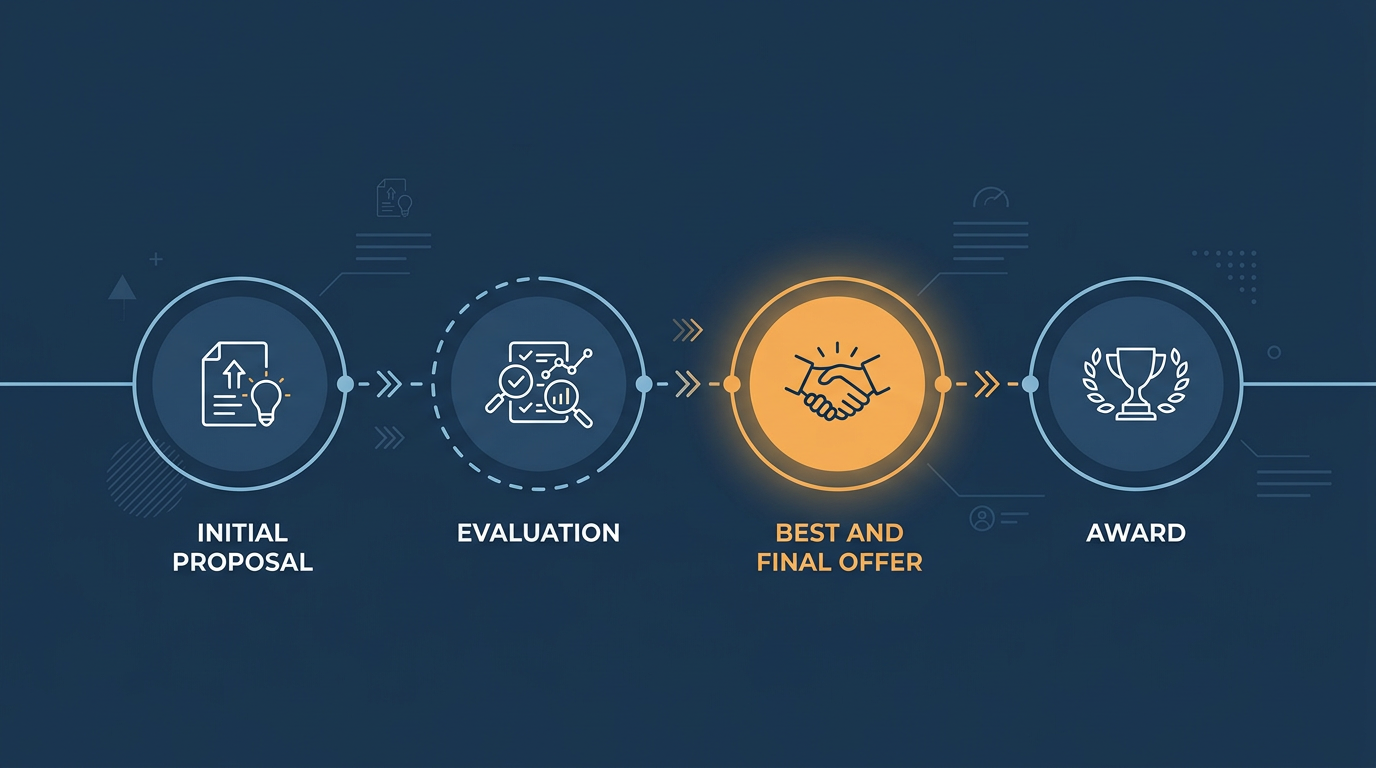
A best and final offer, often abbreviated BAFO, is the final round of a competitive procurement. After buyers evaluate initial proposals and hold clarifications or negotiations with the leading vendors, they ask each finalist to submit a last revision. The BAFO typically locks pricing, resolves any open scope questions, and becomes the basis for the award decision. Once you submit it, you generally cannot revise again.
The term comes from public-sector procurement. In U.S. federal contracting, the formal mechanism is now called final proposal revisions under FAR 15.307, though the older BAFO label persists in state, local, and commercial procurement and remains the phrase most buyers and vendors actually use. See the Federal Acquisition Regulation on final proposal revisions for the government framing, which mirrors how most private buyers run the round.
The table below shows what changes between your initial proposal and your best and final offer, so you know exactly which levers are still in play.
| DIMENSION | INITIAL PROPOSAL | BEST AND FINAL OFFER |
|---|---|---|
| Purpose | Show you meet the requirements and belong on the shortlist | Give the buyer the strongest, final version to compare against other finalists |
| Pricing | Your opening, defensible number | Your sharpest sustainable number, often with revised assumptions |
| Scope | Full proposed solution | Refined scope reflecting clarifications and negotiated changes |
| Revisions allowed | Usually one or more rounds of clarification | Typically the last revision before award |
| What buyers compare | Fit, capability, and compliance | Final value: price, terms, and remaining discriminators |
When do buyers issue a BAFO request?
Buyers use a best and final offer when two or more finalists are close enough that the initial proposals do not produce a clear winner. Rather than award on the first submission, they narrow the field to a competitive range and ask those vendors to improve their offers. A BAFO round is most common on high-value contracts, in regulated and public-sector procurement where a documented, defensible process matters, and when pricing or scope shifted during negotiations and needs to be captured in writing.
A BAFO request is a strong buying signal. You would not receive one if you were out of contention. That reframes the round: the goal is not to buy the deal with the lowest possible price, but to remove any remaining reason not to choose you.
How to respond to a best and final offer
Treat the BAFO as a fresh, focused proposal rather than a discount form. Work through four moves in order.
Reconfirm the requirements and evaluation criteria
Reread the BAFO instructions and the original scoring model before you change a single number. Buyers often signal what they want improved: a specific line item, a delivery date, a service level, or a contractual term. If price is weighted at 30 percent and technical fit at 40, a deep price cut buys you less than a stronger technical response. Map your revision to the RFP evaluation criteria so every change moves a scored dimension.
Sharpen price without gutting margin
If you do adjust price, adjust the logic behind it, not just the total. Re-scope optional items, extend the term for a volume rate, remove low-value inclusions, or trade a concession for a faster payment schedule. A price change tied to a real change in assumptions is defensible and sustainable. An unexplained discount tells the buyer your first number was padded and invites another squeeze. Protect the floor you can actually deliver against.
Strengthen your discriminators, not just the number
Use the BAFO to restate why you win. Reinforce your discriminators, quantify outcomes, and tighten your executive summary so the value is impossible to miss. Proposal professional bodies such as the Association of Proposal Management Professionals stress that the final round is decided on value, not price alone. Remind the buyer what only you bring.
Answer from your approved content library
BAFO deadlines are short, often 48 to 72 hours, so speed matters as much as strategy. Pulling approved, current language from a content library lets you revise scope and reconfirm compliance without rewriting from scratch or risking a stale disclosure. This is the same reuse discipline behind the Consortium for Service Innovation and its Knowledge-Centered Success (KCS) methodology, which treats a maintained, trusted answer library as institutional knowledge you capture once and reuse under pressure.

BAFO mistakes that cost the award
The most common best and final offer errors have nothing to do with your solution and everything to do with how you handle the round:
- Cutting price with no rationale, which signals your original bid was inflated.
- Ignoring the non-price feedback the buyer gave you during negotiations.
- Missing the submission deadline or format, which can disqualify you outright.
- Introducing new, unrequested changes that reopen risk the buyer thought was settled.
Respond to every BAFO faster with RocketDocs
A best and final offer rewards teams that can revise with precision on a tight clock. RocketDocs helps regulated teams pull approved answers, reconfirm compliance, and reformat a final submission fast, so your BAFO is sharper without being reckless. Explore RFP response automation or book a demo to see how your team can win the final round without racing the deadline.
Looking for the platform behind this? See the RocketDocs platform or book a demo.


