
How to Write an RFP Executive Summary That Stands Out
An RFP executive summary is the one to two page overview that opens your proposal and convinces the issuer to keep reading. It is often the only section every stakeholder on the evaluation committee actually reads in full, which makes it the highest leverage page in your entire response.
A strong executive summary does three things at once: it proves you understand the issuer's problem, it states your solution in plain language, and it gives the reader a reason to trust your organization before they ever reach the detailed sections. Get this page wrong, and a technically excellent proposal can still lose. Get it right, and you set the tone for everything that follows.
What Is an Executive Summary in an RFP Response?
An executive summary is the hook that pulls the issuer into the rest of your RFP response. Its contents directly address the prospect's problems and desired outcome, then summarize how your organization delivers the best solution. This high level overview should be concise and front load the most compelling information, with supporting detail living in the pages that follow.
Think of it as the answer to a simple question the evaluator is silently asking: "should I keep reading this, or move on to the next vendor?"
Why the Executive Summary Decides So Much
Reading through dozens of RFP responses is a tedious but necessary part of vendor selection. For stakeholders and decision makers who do not have time to read every fifty page response cover to cover, the executive summary is often what determines whether your proposal advances or gets set aside.
This makes it the ideal place to differentiate your organization from competitors. A well written summary signals that you understand the issuing company's big picture concerns, not just the line items in their requirements document. Many evaluators form an initial impression of fit within the first few paragraphs, so this section carries more weight than its length suggests.
Who Should Write the Executive Summary
Like most parts of an RFP response, the executive summary is a team effort, not a solo task. It is typically led by the proposal manager but draws on input from sales, subject matter experts, and senior leadership.
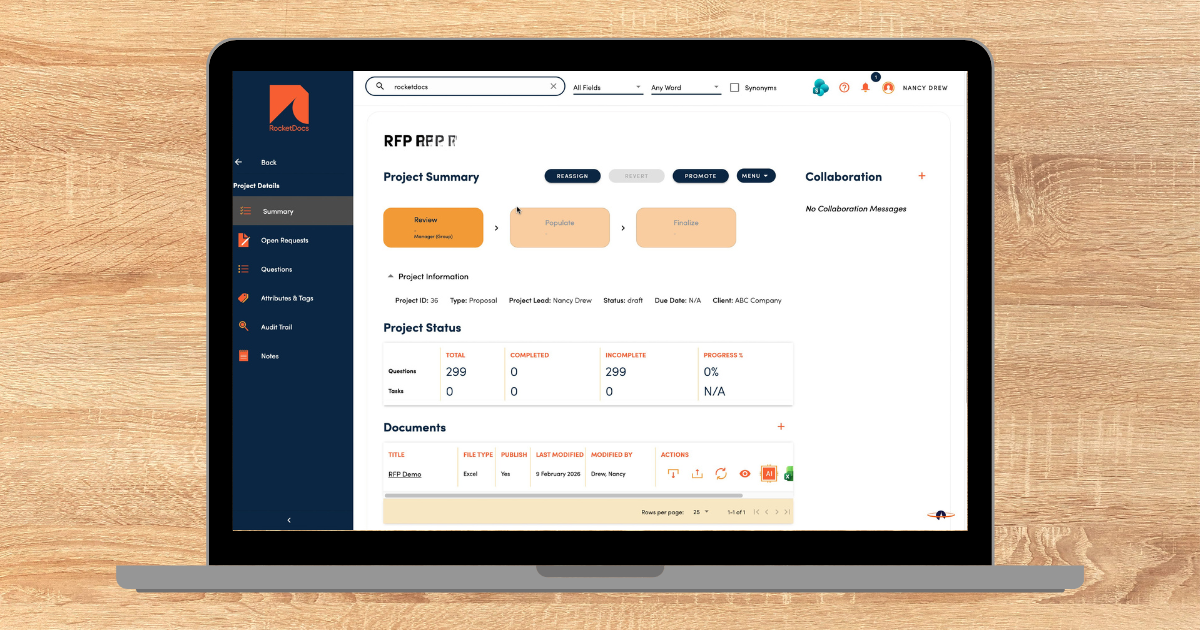
A repeatable creation and approval process, supported by RFP software with project management features, makes this collaboration far more manageable. Custom due dates, clear assignments, and defined workflows keep the summary moving instead of stalling while people wait on each other.
| ROLE | RESPONSIBILITY |
|---|---|
| PROPOSAL MANAGER | WRITES THE FIRST DRAFT AND COORDINATES INPUT FROM THE REST OF THE TEAM |
| SALES, MARKETING, OR BUSINESS DEVELOPMENT | REVIEWS THE DRAFT TO CONFIRM IT ALIGNS WITH CUSTOMER AND PROJECT NEEDS |
| SUBJECT MATTER EXPERTS | VERIFIES ACCURACY AND ADDS TECHNICAL OR INDUSTRY CONTEXT |
| SENIOR EXECUTIVES | CONDUCTS THE FINAL REVIEW AND APPROVES THE MESSAGING |
When Should You Write the Executive Summary
The executive summary often becomes a casualty of rushed deadlines. Many teams put it off until the very end of the process because of competing priorities or because no one has clearly taken ownership of it. The result is a summary that loses impact, or in worse cases never gets finished at all.
A better approach is to prioritize the executive summary first, or at minimum work on it actively alongside the rest of the response. The summary should guide your proposal and shape the sections that follow, not be reverse engineered from them once everything else is written. Giving it proper time and attention early builds a stronger foundation for the entire RFP response.
How to Write a Strong RFP Executive Summary
Once you know who writes it and when, the actual writing comes down to four habits worth keeping in mind every time.

Center the Message Around the Customer
The purpose of your summary is to make the issuer feel heard and understood, and to reassure them that you can solve their specific problem. You build that trust by demonstrating real familiarity with their business and industry, not generic vendor language.
Before you write a word, know the answers to questions like these about the issuing company: what trends or pressures are they facing in their industry, what specific pain points stand in the way of their success, and are they currently working with a competitor they are dissatisfied with.
Pull From Your Content Library Strategically
Of all the content available to you, use only what showcases your strongest differentiators and is directly relevant to this issuer's stated needs. Selective, relevant content sets you apart from competitors who pad their summary with generic claims.
Avoid blanket statements and unverifiable metrics. They damage credibility quickly once an evaluator starts asking follow up questions. RFP software with content library management, including custom attributes, expiration dates on content, and SME content assignments, helps ensure your team is always pulling from accurate, current material rather than an outdated boilerplate response.
Keep It Concise
The executive summary is a high level overview, not the place for technical depth. Use simple, direct language and avoid the overused phrases and jargon that dilute your message. The full detail belongs in the rest of the response.
Remember that this section sets expectations for the entire partnership. You do not want the language that won the deal to become the source of a misaligned relationship later. Keep the tone positive, relatable, and professional throughout.
Follow the Issuer's Instructions
Pay close attention to any formatting or length guidelines the issuing company specifies, and stay within them. Overshooting or undershooting their expectations signals a lack of attention to detail before the evaluation even begins.
Respecting these instructions from the outset shows the issuer you value their time and process, which can be a meaningful differentiator on its own and sets a positive tone for the relationship going forward.
Turning a Better Executive Summary Into a Higher Win Rate
Writing a standout executive summary involves cross-team collaboration, an accurate and current content library, and a process that gives this section the time it deserves. The right RFP software brings all three together, helping your team produce higher-quality executive summaries and stronger responses overall.
To see how this works inside RocketDocs, you can explore our RFP response software or schedule a free demo with our team.
Looking for the platform behind this? See the RocketDocs platform or book a demo.


