
Civil Engineering Proposal Management: How RocketDocs Empowers AEC Firms to Win More Projects
Winning a major infrastructure contract takes more than engineering expertise. For civil engineering and architecture firms, the ability to produce accurate, compelling, and timely RFP responses is just as important as the technical work that follows. In a competitive landscape where evaluators review dozens of submissions, firms that can communicate their expertise clearly and efficiently gain a real advantage.
This post examines the specific proposal challenges facing AEC firms and explains how a purpose-built response management platform like RocketDocs transforms the way those firms approach civil engineering proposal management.
Why AEC Firms Struggle with RFP Responses
Civil engineering proposals are not like most other business documents. They carry a level of technical complexity, regulatory requirement, and multi-disciplinary coordination that generic word processors and shared drives simply cannot support at scale.
The most common friction points include complex technical specifications that must be accurate for engineers yet readable for non-technical evaluators, regulatory compliance documentation spanning environmental impact assessments and safety protocols, and coordinating input across structural engineers, environmental specialists, project managers, and finance teams. Every project also demands a tailored response. Unlike industries where a standard pitch deck covers most ground, AEC proposals require genuine customization for each RFP.
The result: proposal teams can spend hundreds of hours on a single submission, pulling the same information from old files, chasing subject matter experts for updated content, and scrambling to meet deadlines. That time compounds across an annual bid pipeline and represents a significant drag on firm resources.
How RocketDocs Supports Civil Engineering Proposal Management
RocketDocs is a private, AI-powered response and proposal management platform built for teams that respond to complex, high-stakes questionnaires and RFPs. Here is how its core capabilities address the specific needs of AEC firms.
Centralized Knowledge Base for Technical Content
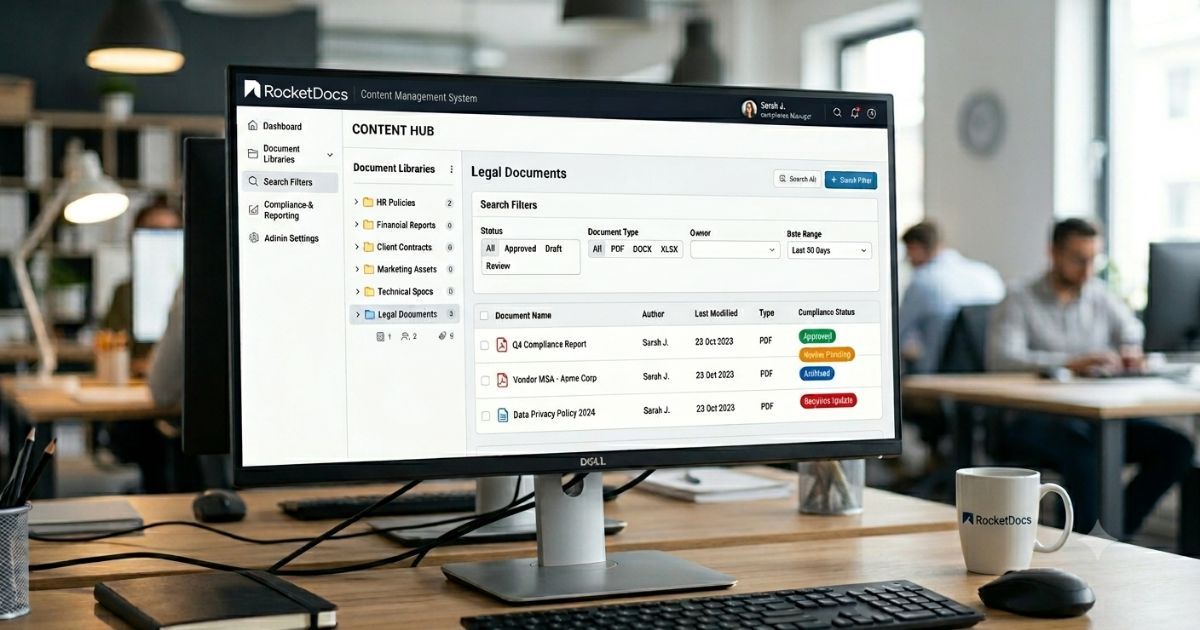
One of the highest-leverage changes an AEC firm can make is moving from scattered shared drives to a centralized content library. In RocketDocs, all approved content lives in one searchable repository, including standard structural engineering methodologies, environmental compliance documentation, QA protocols, equipment specifications, material testing procedures, and safety certifications.
When a new RFP arrives, proposal managers search the library and pull pre-approved, accurate content rather than reconstructing it from scratch. Content records track when materials were last reviewed and flag items approaching expiration, which is particularly valuable for compliance documentation that must reflect current building codes and regulatory standards. Learn more about how RocketDocs manages this through its Enterprise-Grade Content Library.
AI-Powered First Drafts That Stay Secure
RocketDocs uses a hybrid AI engine to accelerate the drafting phase without compromising the proprietary information civil engineering firms depend on to compete. The first layer of the system autofills high-confidence responses directly from your content library. Where library matches do not exist, a generative AI layer uses your existing content to draft a first response for human review.
Unlike public AI tools, RocketDocs keeps all data on its own servers. Your pricing strategies, project methodologies, and client data never leave the platform. Every AI-generated response requires human review before it enters a final proposal, preserving technical accuracy and firm voice. For a deeper look at how private AI compares to generic tools, see The AI ROI Reality Check.
Collaboration Across Engineering Disciplines
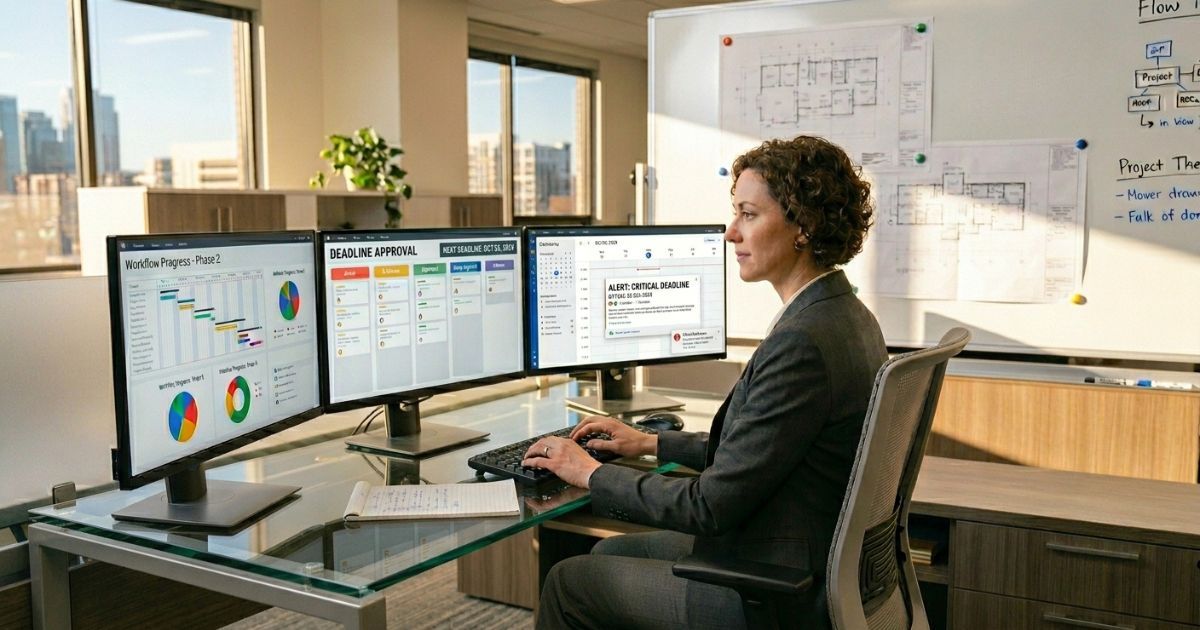
Civil engineering proposals require sign-off from multiple specialists, and the coordination overhead is where proposals frequently stall. RocketDocs addresses this with configurable workflows that assign sections to the right subject matter experts, set deadlines, and track progress across the entire team.
Version control keeps everyone working from the most current information. Customizable approval processes respect the expertise hierarchy within your firm, making sure that critical technical sections receive review from the appropriate specialist before they advance. Collaboration notes and commenting stay attached to individual questions, preserving context throughout the review cycle rather than scattering it across email threads. For practical guidance on working with SMEs in proposal development, the RocketDocs blog post on strategies for engaging subject matter experts is a useful companion read.
Project-Type Templates for Infrastructure Proposals
Different infrastructure categories require different proposal approaches. RocketDocs allows AEC firms to build and store templates calibrated for specific project types.
| PROJECT TYPE | TYPICAL PROPOSAL |
|---|---|
| Transportation (highways, bridges, tunnels) | Load calculations, traffic impact, phased construction |
| Municipal utilities (water, sewage systems) | Environmental compliance, capacity modeling, lifecycle costs |
| Commercial building projects | Code adherence, materials specifications, finish schedules |
| Environmental remediation | Contamination assessment, regulatory reporting, risk mitigation |
| Public works and government contracts | Federal/state compliance, MWBE documentation, bid bonds |
Each template pre-loads the appropriate compliance language, methodology sections, and project management frameworks for that category, so teams are not starting from a blank page every time.
Compliance Documentation That Stays Current
Regulatory compliance is not a one-time task in AEC proposals. Certifications expire, building codes update, and environmental standards shift. RocketDocs tracks expiration dates for compliance documentation, flags outdated regulatory references, and maintains accurate histories of safety records. This systematic approach reduces the risk of submitting a proposal with a lapsed certification or a reference to a superseded standard, both of which can disqualify a submission outright.
Comparing the Old Way to the RocketDocs Approach
| ACTIVITY | WITHOUT ROCKETDOCS | WITH ROCKETDOCS |
|---|---|---|
| Sourcing technical content | Manual search across shared drives and old proposals | Instant search of a structured, version-controlled library |
| First draft creation | Written from scratch by subject matter experts | AI-generated draft from library content, reviewed by SMEs |
| Compliance tracking | Manual calendar reminders and spreadsheets | Automated expiration tracking and flagging |
| Cross-team collaboration | Email threads and file versioning by handWorkflow-driven assignments with built-in version control | Workflow-driven assignments with built-in version control |
| Template management | Copy/paste from prior proposals with manual cleanup | Stored templates by project type, ready to deploy |
The Competitive Advantage That Compounds
Infrastructure demand is growing. Federal investment in roads, bridges, water systems, and environmental projects has expanded the volume of RFPs in circulation, but it has not reduced competition. Firms that respond faster, more accurately, and with more consistent quality will win a disproportionate share of that work.
Proposal management technology compounds over time. Every RFP cycle adds approved content to the library, refines templates, and builds a stronger institutional memory. A firm that builds this infrastructure now will be able to respond to more opportunities with less strain on senior technical staff, which is a structural advantage that only grows as the bid pipeline expands.
The Association for Proposal Management Professionals (APMP) has documented the link between process maturity and win rate improvement, and the National Society of Professional Engineers offers guidance on competitive positioning that underscores how proposal quality shapes client perception long before a project kicks off. The data consistently points in the same direction: process investment in proposal management is a business development investment with measurable returns.
For AEC firms ready to move from reactive proposal production to a repeatable, scalable process, RocketDocs offers a platform built for exactly that transition.
Ready to build on your proposal management process and empower your civil engineering firm to win more projects? Schedule a demo today to learn how RocketDocs can be customized to meet your firm's specific needs.
Looking for the platform behind this? See the RocketDocs platform or book a demo.


