
Compliance in asset management has never been a finish line. Regulations shift, oversight tightens, and the consequences of falling behind compound quickly. For firms managing client capital across multiple jurisdictions, the question is not whether to invest in compliance but how to do it in a way that holds up under scrutiny and scales with the business.
This guide breaks down the strategies, tools, and organizational habits that separate firms that react to compliance pressure from those that stay ahead of it.
Understanding the Compliance Landscape
The regulatory environment governing asset management has grown measurably more demanding over the past decade. Bodies like the SEC, FCA, and ESMA have expanded their oversight mandates, and the pace of new rulemaking shows no sign of slowing. Firms operating across borders face overlapping frameworks that require not just awareness but active tracking and interpretation.
What makes this especially challenging is the lag between when a regulation is issued and when it fully filters into daily operations. Firms that treat compliance as a reactive function, responding only when an audit or enforcement action forces the issue, consistently find themselves underprepared.
A realistic compliance posture starts with mapping the specific regulatory environment the firm operates in. That means identifying the governing bodies with jurisdiction over the firm's activities, understanding the reporting timelines and documentation requirements each imposes, and building internal systems that surface the right information at the right time.
Effective Compliance Management Strategies
Start With a Risk Assessment That Goes Beyond Financials
Most asset managers are fluent in financial risk. Regulatory risk gets less structured attention. An effective compliance program begins by identifying where the firm is most exposed from a regulatory standpoint, not just a market one.
This means asking questions like: Which product lines carry the most reporting complexity? Where do our data practices create documentation gaps? Are our counterparty relationships surfacing any flags in current regulatory guidance?
That assessment becomes the foundation for compliance policies that are actually matched to the firm's real-world risk profile, rather than generic templates that check a box.
Build Compliance Into the Culture, Not Just the Policy Manual
A compliance culture is not built by distributing a handbook. It is built by making compliance expectations visible, specific, and consistently reinforced at every level of the organization.
Senior leadership sets the tone. When executives treat compliance obligations as a genuine operational priority rather than a legal overhead cost, that signal travels down through teams. Regular training programs keep staff current on regulatory developments and help employees understand how compliance requirements connect to their specific roles, not just the firm's abstract obligations.
Accountability structures matter here too. Clear ownership of compliance tasks, documented escalation paths, and regular internal reporting on compliance status all contribute to a culture where adherence is a shared responsibility rather than a siloed function.
Review and Audit Regularly
Compliance programs drift. Policies written to address last year's regulatory environment may not fully account for this year's. Regular internal audits, supplemented by periodic external reviews, are the mechanism for catching that drift before regulators do.
These reviews should assess whether existing controls are functioning as designed, identify any procedural gaps that have opened up, and confirm that documentation practices are meeting current standards. The output should feed directly into updates to compliance policies and workflows.
Leveraging Digital Tools for Enhanced Compliance
Technology has fundamentally changed what compliance management looks like in practice. Firms that still rely on spreadsheets and manual tracking to manage regulatory obligations are carrying a level of operational risk that modern compliance software largely eliminates.
Automation and Real-Time Monitoring
Compliance software built for asset managers can handle transaction monitoring, flag anomalies, generate required reports on defined schedules, and automatically update rule libraries when regulations change. That removes entire categories of human error from the compliance process and frees compliance staff to focus on judgment-intensive work rather than data entry.
Real-time monitoring capabilities are particularly valuable. Rather than discovering a compliance gap during a quarterly review, firms using automated monitoring tools can catch issues as they develop and address them before they become reportable incidents.
Centralized Documentation
A centralized compliance document repository ensures that every member of the team, regardless of location or department, is working from the same current version of policies, procedures, and regulatory guidance. This matters especially for multi-office or multi-jurisdiction firms where version drift in compliance documentation is a persistent risk.
Centralizing documentation also simplifies audit preparation. When a regulator requests evidence of compliance, a well-organized repository makes it possible to produce that evidence quickly and accurately rather than reconstructing records from scattered sources.
Advanced Analytics
Data analytics tools give compliance teams the ability to identify patterns and potential issues before they escalate. Monitoring trading activity, client communications, and transaction flows through an analytics layer allows firms to spot the early indicators of compliance problems while there is still time to intervene.
Tailoring Compliance Solutions to the Firm
There is no universal compliance solution that works equally well for a boutique domestic equity manager and a global multi-asset firm. The regulatory obligations, data volumes, operational structures, and risk profiles are too different.
Effective compliance solutions are built around the specific characteristics of the firm. A firm with significant international exposure needs compliance infrastructure that accounts for multiple overlapping regulatory frameworks. A firm with a complex product lineup needs monitoring capabilities calibrated to the specific documentation and reporting requirements of each product type.
Integration matters too. Compliance tools that sit outside the firm's existing technology stack create friction and duplication. When compliance software integrates with CRM platforms, portfolio management systems, and reporting infrastructure, compliance tracking becomes part of the operational workflow rather than a parallel process that teams have to maintain separately.
Firms managing responses to due diligence questionnaires and regulatory requests also benefit from platforms that connect compliance documentation to response workflows. Tools like RocketDocs' Content Library and DDQ Completion solution are built specifically for this, allowing teams to draw from a vetted, centralized knowledge base rather than rebuilding answers from scratch for every request.
Overcoming Common Compliance Challenges
Keeping Pace With Regulatory Change
Regulatory bodies issue updates, guidance, and new rules on a continuous basis. Firms that rely on informal channels to stay current will miss things. A structured process for monitoring regulatory developments, whether through direct subscriptions to regulator publications, membership in industry associations, or partnerships with specialized legal counsel, is not optional for firms with meaningful compliance exposure.
Ensuring Organizational Consistency
Compliance requirements that are clearly understood at the compliance officer level but poorly understood on trading desks or in client service teams create real risk. The gap between policy and practice is where most compliance failures originate. Consistent training, clear communication, and visible accountability structures close that gap.
Managing Data Volume and Quality
The volume of compliance-relevant data that asset management firms generate is substantial. Transaction records, client communications, risk assessments, and regulatory filings all need to be retained, organized, and retrievable. Data management infrastructure that meets regulatory standards for retention and security is a foundational requirement, not an optional upgrade.
Integrating Risk and Compliance Management
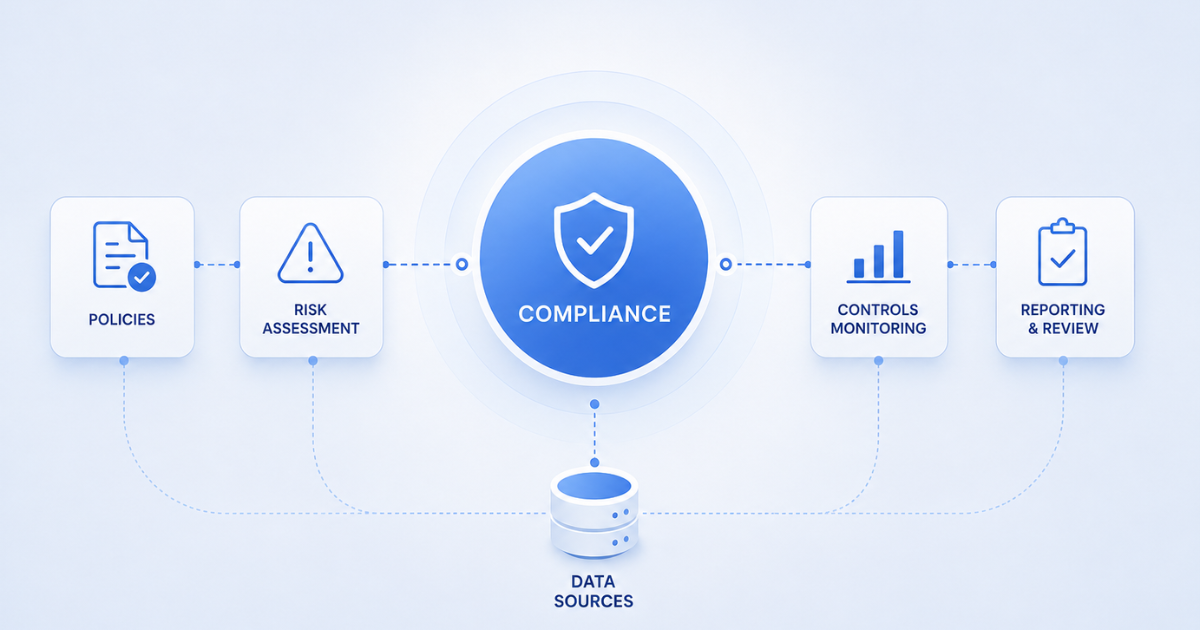
Risk management and compliance management address overlapping concerns but often operate as separate functions. The firms that manage both most effectively treat them as integrated parts of a single operational framework.
When launching a new product, for example, the risk assessment process should include regulatory compliance analysis alongside market and operational risk review. When updating compliance policies, the risk implications of proposed changes should be evaluated alongside the regulatory compliance benefit. This integration produces better decisions and reduces the likelihood that a compliance-driven change creates unexpected risk exposure elsewhere.
Continuous education keeps both functions current. Compliance and risk professionals who are actively engaged with industry developments, regulatory guidance, and peer networks are better positioned to anticipate challenges rather than respond to them after the fact.
For more context on how compliance challenges play out in practice, the GIPS standards published by CFA Institute and regulatory guidance from the SEC's Division of Investment Management are authoritative starting points for asset managers building or refining their compliance frameworks.
Best Practices for Compliance in Asset Management
Establish a Compliance Culture From the Top Down
Compliance culture starts with visible commitment from senior leadership. When executives treat compliance as a strategic priority, it becomes embedded in how the organization operates rather than treated as an administrative burden. That shift in framing changes behavior at every level.
Use Purpose-Built Compliance Tools
Generic tools create gaps. Compliance software built specifically for asset managers handles the data volumes, reporting formats, and regulatory frameworks that matter to the industry. The efficiency gains are significant, and the reduction in manual error risk is measurable.
Conduct Regular Audits
Scheduled internal audits, supported by periodic external reviews, are the mechanism for catching compliance drift before it becomes a regulatory problem. Audit findings should feed directly into policy and process updates, creating a continuous improvement loop rather than a one-time assessment.
Connect Compliance to Response Management
Firms that receive regular DDQs, RFPs, and security questionnaires from institutional clients face a specific compliance challenge: ensuring that every response accurately reflects current policies and practices. A response management platform that connects to compliance documentation keeps those answers accurate and audit-ready. Learn more about how RocketDocs supports financial services firms managing this challenge at scale.
Looking for the platform behind this? See the RocketDocs platform or book a demo.


