
Color team reviews are structured proposal review stages, named by color, that catch gaps and weaknesses before a bid is submitted. Each color, Pink, Red, Gold, and White, checks a different dimension of the proposal, from early strategy through final pricing, so evaluators never see an unpolished draft.
Proposal teams that skip these reviews ship drafts full of blind spots: missed requirements, weak win themes, and pricing that does not match the story. Color team reviews build quality control into the schedule so problems surface while there is still time to fix them. This guide breaks down each color, what it checks, and how to run the reviews without burning out your team.
What are color team reviews?
Color team reviews are named checkpoints in the proposal development process, each simulating a different lens on the draft. The convention comes from structured capture and proposal methodologies popularized by Shipley Associates and reinforced by the Association of Proposal Management Professionals. Rather than one rushed read at the end, the team runs several focused reviews, each with a clear purpose and a fresh set of eyes.
The colors are a shared vocabulary. When a capture manager schedules a Pink team for week three and a Red team for week six, everyone knows exactly what maturity the draft should be at and what the reviewers will judge.
The color team review stages at a glance
Not every bid uses every color. A short RFP might run only a Pink and a Red team, while a major government pursuit runs the full sequence. The table below summarizes the standard stages and what each one is responsible for.
| COLOR TEAM | STAGE | WHAT IT CHECKS | WHO LEADS |
|---|---|---|---|
| Blue team | Pre-proposal strategy | Win strategy and solution approach | Capture manager |
| Pink team | First full draft | Structure, compliance, and win themes | Proposal manager |
| Red team | Near-final draft | Evaluator-style scoring of the full bid | Independent reviewers |
| Gold team | Final review | Executive sign-off and final polish | Executive sponsor |
| White or Green team | Pricing and cost | Price-to-win and cost realism | Pricing lead |
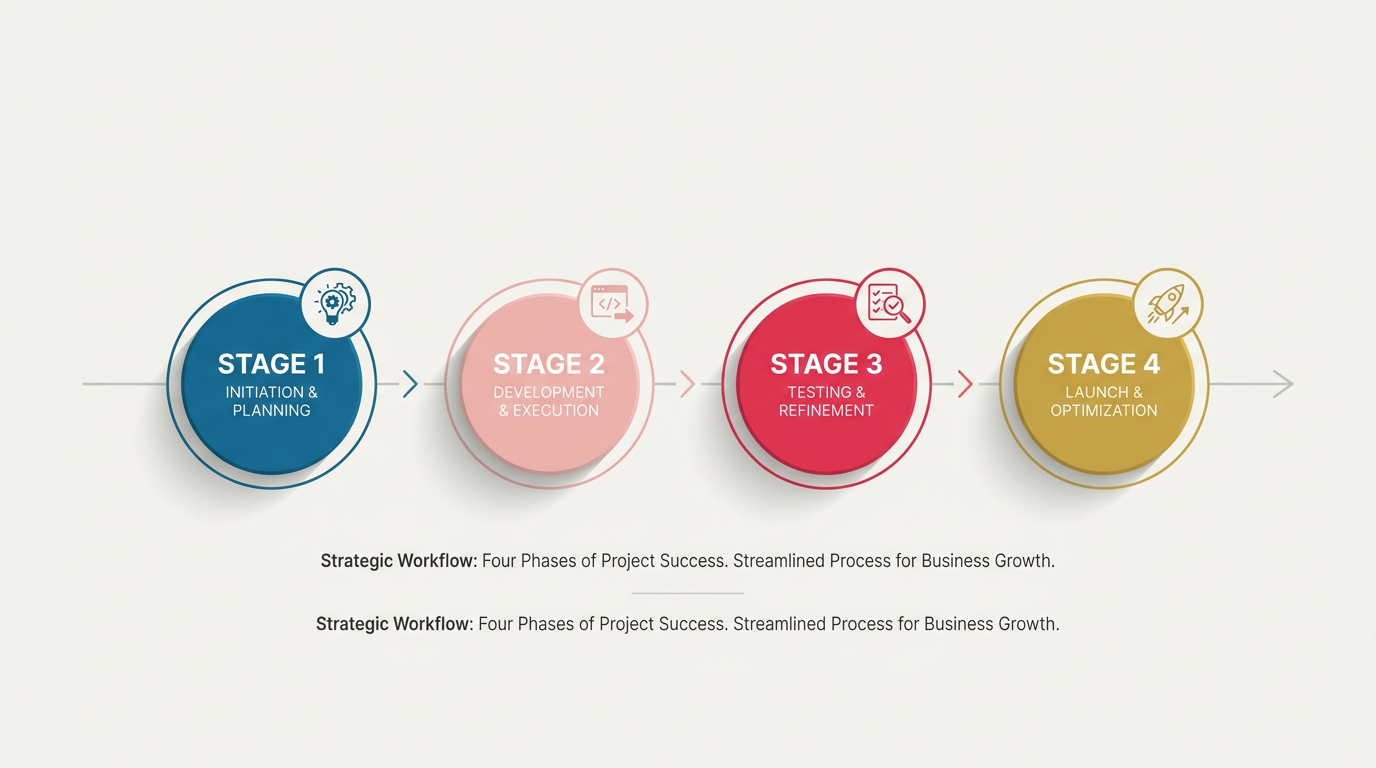
Treat the sequence as a progression. Each review assumes the last one happened, so a Red team only works if the Pink team already fixed the structural problems.
Blue team: set the strategy before you write
The Blue team review happens before serious writing starts. It validates the win strategy, the solution, and the bid decision itself, so the team does not spend weeks drafting around a flawed approach. The output is a clear direction: themes, discriminators, and the story the proposal will tell. Aligning here is far cheaper than rewriting later. For where this sits in the wider timeline, see our guide to the RFP response lifecycle phases.
Pink team: pressure-test the first full draft
The Pink team reviews the first complete draft, usually around 60 to 80 percent maturity. Reviewers check that the structure follows the RFP, that every requirement is addressed, and that the win themes actually land. It is deliberately early, so there is time to restructure sections, not just fix typos. A strong Pink team catches compliance gaps before they harden into the final version, which is exactly when they are cheapest to fix.
Red team: score the bid like the evaluator will
The Red team is the most important review for win rate. Independent reviewers who did not write the proposal score it against the actual RFP evaluation criteria, exactly as the customer panel will. They read for responsiveness, clarity, and proof, and they assign scores rather than vague comments. The goal is to find weaknesses while you can still fix them. To run this well, reviewers need the same rubric the buyer uses; our guide to RFP evaluation criteria shows how buyers assign points.

Gold team and pricing reviews: final polish and price-to-win
The Gold team is the executive sign-off. Senior leaders confirm the bid is on-strategy, the risk is acceptable, and the offer is competitive before it goes out the door. In parallel, a White or Green team reviews pricing and cost realism, checking that the price supports the win strategy rather than undercutting the story. By this stage the content should be final, so Gold is polish and approval, not rewriting.
How to run color team reviews without slowing down
The most common failure is treating reviews as a formality. Reviews only add value when reviewers are briefed, given the RFP and the scoring criteria, and held to a real schedule. Three practices keep them efficient:
- Recruit reviewers who did not write the section, so the feedback stays fresh and honest.
- Score against the buyer criteria, not personal preference or house style.
- Feed every approved fix back into your reusable content so the next bid starts stronger.
That last point is where most time is recovered. When approved answers, win themes, and boilerplate live in a governed content library instead of scattered documents, reviewers spend their time on strategy rather than re-editing the same paragraphs bid after bid. This mirrors the principle behind Knowledge-Centered Success (KCS®), the methodology from the Consortium for Service Innovation that treats reusable, continuously improved knowledge as a byproduct of the work itself. The KCS methodology and its practices guide lay out the full framework. RocketDocs applies the same idea to proposals: capture what your best reviews approve once, then reuse it. Our guide to RFP content management shows how to build that library.
Color team reviews turn a chaotic final week into a series of controlled checkpoints, and the teams that run them consistently win more. RocketDocs helps proposal teams move faster through every review stage, with a single source of approved content and version control that keeps Pink, Red, and Gold teams working from the same truth. See the RocketDocs platform to run your next review cycle with less friction.
KCS® is a service mark of the Consortium for Service Innovation™.
Looking for the platform behind this? See the RocketDocs platform or book a demo.


