
Cybersecurity in RFPs and RFIs: Essential Questions and Best Practices
Cybersecurity is no longer a back-office concern. For any organization that shares data with vendors, exchanges proposals, or relies on a third-party supply chain, security decisions start at procurement. That means RFPs and RFIs are your first line of defense, and the questions you ask, or fail to ask, shape the risk profile of every vendor relationship that follows.
According to Cybersecurity Ventures, the global cost of cybercrime is projected to reach $10.5 trillion annually, up from $3 trillion a decade earlier. That trajectory makes one thing clear: procurement teams that treat cybersecurity as an afterthought are leaving their organizations exposed before a contract is even signed.
This guide covers the essential cybersecurity questions to include in your RFPs and RFIs, best practices for vendors responding to those questions, and how purpose-built platforms like RocketDocs help both sides of the table handle security content with speed and accuracy.
Why Cybersecurity Belongs in Every RFP and RFI
The procurement process is a high-value target
RFPs and RFIs involve the exchange of sensitive organizational information, budget data, compliance requirements, and system details. Without security vetting baked into the process, a vendor with weak controls can become an attack vector into your own environment.
Common threat scenarios in procurement include:
- Data breaches caused by vendors with inadequate access controls
- Ransomware attacks that propagate through a shared supply chain
- Phishing campaigns targeting proposal teams with access to internal systems
Embedding cybersecurity requirements into your procurement documents is not a compliance exercise. It is a practical filter that removes high-risk vendors before they ever touch your data.
What you gain by asking upfront
Proactively addressing cybersecurity in RFPs and RFIs produces three concrete benefits. First, it establishes a minimum security baseline that all bidders must meet, which raises the overall quality of your vendor pool. Second, it reduces the likelihood of costly incidents by surfacing weaknesses before a contract is signed rather than after a breach occurs. Third, it shortens the later-stage due diligence process because security has already been documented and evaluated.
For teams that respond to a high volume of RFPs, having strong, pre-approved answers to security questions also shortens cycle times and reduces the burden on subject matter experts. RocketDocs helps response teams build and maintain a verified content library that keeps security answers current and ready to deploy. Learn more on the RocketDocs platform page.
Essential Cybersecurity Questions to Include in Your RFPs and RFIs
Foundational security posture
The questions below give you a broad view of how a vendor manages security at an organizational level.
| QUESTION | WHAT IT REVEALS |
|---|---|
| What cybersecurity policies and procedures do you have in place? | Whether security is documented, enforced, and owned by a responsible team |
| Can you describe your incident response plan? | How the vendor detects, contains, and recovers from security events |
| How do you comply with applicable regulations such as GDPR, HIPAA, or PCI-DSS? | The vendor's awareness of and investment in regulatory compliance |
| What certifications do you hold, such as ISO 27001 or SOC 2? | Independent validation of security controls by a third party |
Data protection and access controls
Once you understand a vendor's overall posture, go deeper into how they handle the specific data your engagement will generate.
| QUESTION | WHAT IT REVEALS |
|---|---|
| What encryption methods do you use for data at rest and in transit? | Whether sensitive information is protected against interception or unauthorized access |
| What are your data retention and destruction policies? | How data is managed across its full lifecycle, including disposal |
| How do you handle data breaches, and what is your notification timeline? | Whether the vendor has a defined process and a commitment to timely disclosure |
| What controls govern data access and auditing within your systems? | The transparency and traceability of data within the vendor environment |
Supply chain and third-party risk
A vendor's security is only as strong as the weakest link in their own supply chain.
| QUESTION | WHAT IT REVEALS |
|---|---|
| How do you assess and manage the security posture of your subcontractors? | Whether third-party risk is actively managed or ignored |
| Do you conduct regular third-party security audits or penetration testing? | The frequency and rigor of independent security validation |
For organizations managing large volumes of security questionnaires, the RocketDocs security questionnaire solution provides a structured workflow for both asking and answering these questions at scale.
Best Practices for Responding to Cybersecurity Questions in RFPs
Be specific, not generic
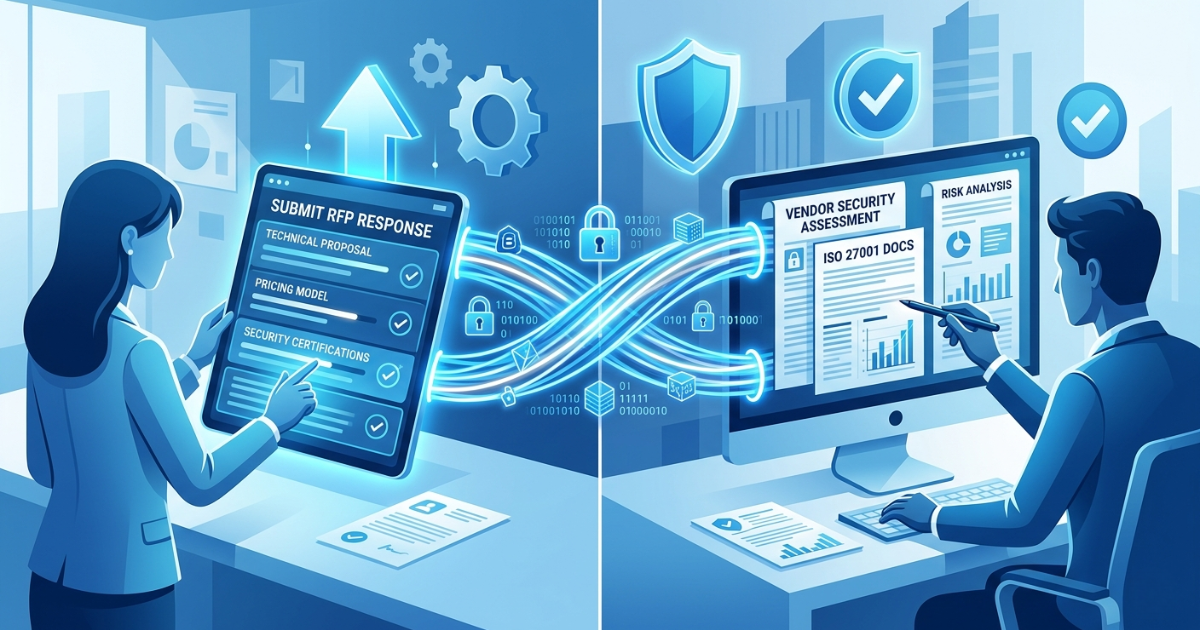
Evaluators read hundreds of responses. Answers that say "we take security seriously" without evidence will not pass scrutiny. Reference specific tools, frameworks, certifications, and incident outcomes. If you achieved ISO 27001 certification, say when. If your incident response plan follows NIST guidelines, name them.
Make technical answers accessible
Decision-makers reviewing RFPs are often not security specialists. Write answers that a procurement manager or legal reviewer can evaluate without a technical background. Lead with the business implication, then provide technical detail for those who want it.
Involve your security team before submission
Every security response should be reviewed by someone who owns that function within your organization. A single outdated answer about encryption standards or breach notification timelines can cost you a deal or, worse, create contractual exposure after the fact.
Keep your answers current
Security practices evolve, and so do the questions evaluators ask. Organizations that rely on a centralized content library for their RFP responses can update a single approved answer and have it reflected across all future submissions. This is especially valuable for compliance-heavy industries like financial services and healthcare. RocketDocs customers in those verticals can explore tailored resources for financial services and healthcare.
Treat security questions as a competitive differentiator
Vendors who respond to cybersecurity questions with depth and transparency signal maturity. In regulated industries where buyers face their own compliance audits, a vendor that makes security easy to evaluate stands out. Frame your answers to demonstrate capability, not just compliance.
How RocketDocs Supports Cybersecurity in RFP Responses
Private AI that keeps data in-house
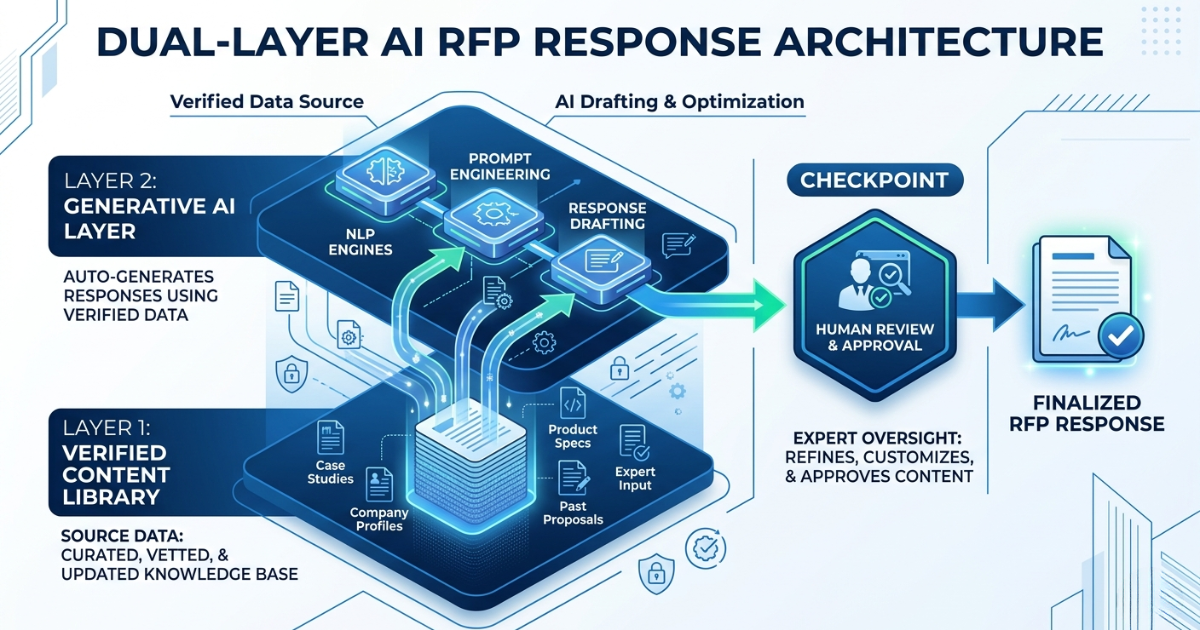
RocketDocs uses a dual-layer AI architecture specifically designed for organizations that cannot afford to share sensitive data with external systems. The first layer, a non-generative model, draws only from your pre-approved content library to surface verified answers. The second layer, a generative AI, handles gaps and drafts new responses that are flagged for human review before being approved and added to the library.
No data leaves your environment. That architecture is especially important for responding to the kind of security questions covered in this post, where the accuracy and confidentiality of your answers carry real risk if mishandled.
Automated content maintenance
Security requirements change. New regulations emerge. Certifications expire and get renewed. RocketDocs automates the process of flagging outdated content and routing it for review, so your security answers are never based on policies that no longer reflect how your organization actually operates.
Collaboration across security, legal, and sales teams
Effective responses to cybersecurity questions require input from multiple functions. RocketDocs enables security, compliance, legal, and sales teams to collaborate on response content within a single platform, eliminating the version control problems that come with managing sensitive content across email threads and shared drives.
For organizations evaluating how to build or improve their response management function, the RocketDocs content library overview is a good starting point.
A Final Word for Procurement and Sales Teams
Cybersecurity in RFPs and RFIs is not a formality. It is the mechanism by which organizations protect themselves before exposure becomes possible. For procurement teams, the questions you ask set the floor for every vendor relationship. For sales and response teams, your answers to those questions are a credibility signal that evaluators weigh alongside price and functionality.
Both sides benefit from a structured, repeatable approach to security content. That is exactly what RocketDocs is built to deliver.
Looking for the platform behind this? See the RocketDocs platform or book a demo.


