
How to Respond to an RFI: 6 Best Practices
Receiving a Request for Information (RFI) from a prospect is often the opening move in a competitive sales cycle. It is your organization's first introduction to a potential client, and how you handle it can determine whether you make the shortlist or get filtered out before the real competition begins.
This guide covers what an RFI is, how it differs from an RFP, and six best practices for crafting an RFI response that earns the follow-up.
What Is an RFI?
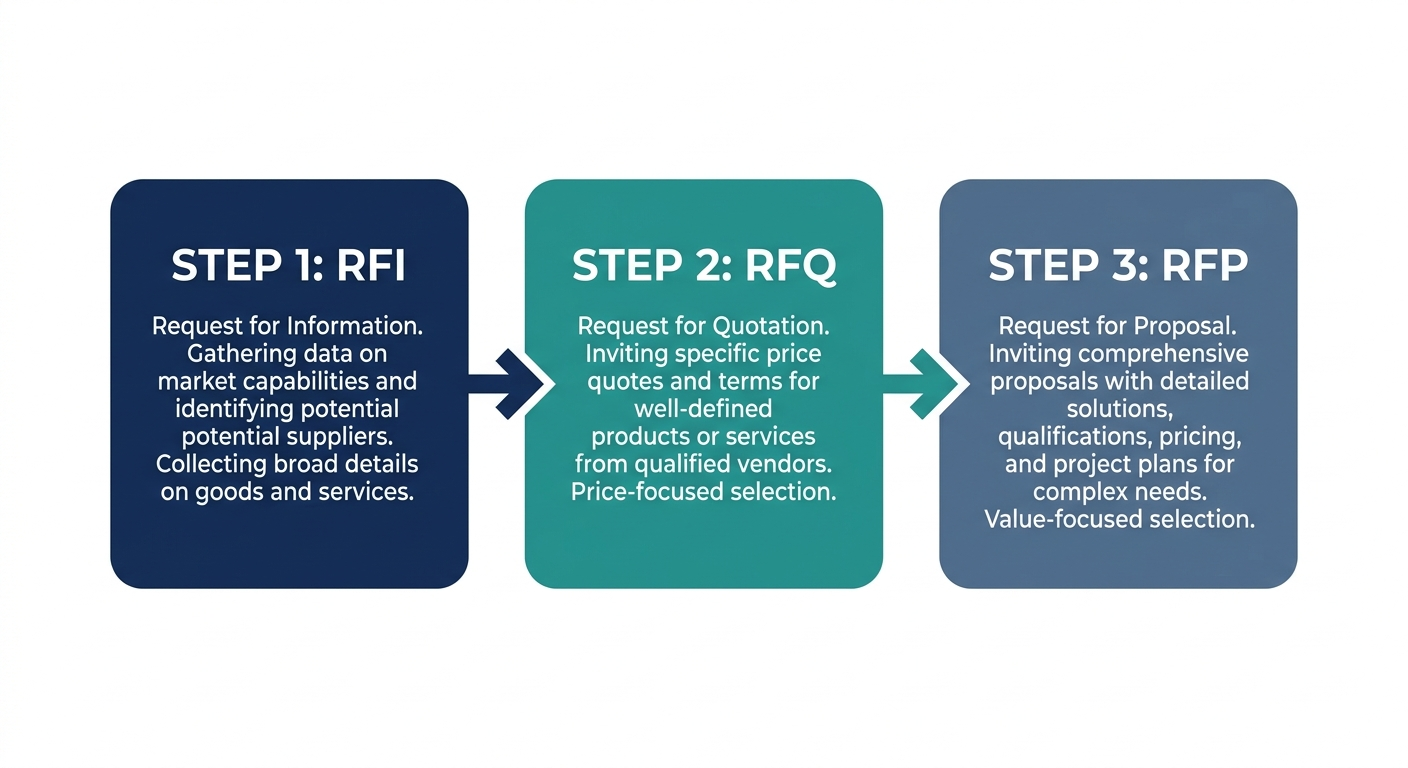
An RFI, or Request for Information, is a document organizations use to survey the market before committing to a procurement process. It is typically the broadest and earliest of a sequence of requests that may also include a Request for Quotation (RFQ) and a Request for Proposal (RFP).
The goal of an RFI is to help the issuing organization understand which vendors exist, what solutions are available, and which ones are worth inviting into a deeper evaluation. Questions tend to be general, focused on capabilities, company background, and market positioning rather than pricing or implementation specifics.
Because the RFI casts a wide net, many vendors underestimate its importance. In reality, a strong RFI response is what earns you a seat at the table when the RFP arrives.
RFI vs. RFP: What Is the Difference?
Understanding where an RFI sits in the procurement sequence is essential to responding to it correctly.
| DOCUMENT | STAGE | PURPOSE | LEVEL OF DETAIL |
|---|---|---|---|
| RFI | Early exploration | Survey the vendor landscape | Low |
| RFQ | Mid-process | Collect pricing data | Medium |
| RFP | Late-stage evaluation | Evaluate fit and secure a partner | High |
An RFI is sent while the issuing organization is still in discovery mode. An RFP comes later, once they have narrowed their list and are ready to make a serious evaluation. Because of this, RFI responses should convey credibility and capability without exhausting every detail you would save for the RFP. The goal is to intrigue, not to over-disclose.
For more on how RFPs work and how to craft winning responses, see the RocketDocs guide to RFP response management.
6 Best Practices for Your RFI Response Process
1. Review the RFI Requirements Before Anything Else
Before assigning work or pulling content, your team needs a clear picture of what the RFI is asking for. Do an initial read-through with your core team so everyone understands the scope, the subject matter, and any requirements that might be harder to fulfill.
Pay close attention to the submission deadline. RFI timelines are often tight, and surprises mid-process cost time your team does not have. A disciplined first review prevents scrambling later and gives you the clarity to decide whether this opportunity is worth pursuing at all.
If the opportunity does not align with your organization's strengths or the prospect's needs do not match your offering, it is better to pass than to respond poorly.
2. Assemble the Right RFI Team
A focused, capable team makes the difference between a response that reads as generic and one that resonates. If your organization has a dedicated proposal team, engage them early. If not, draw from sales, marketing, and relevant subject matter experts (SMEs) based on the RFI's topic areas.
When possible, include someone with direct experience in the issuing organization's industry. Their perspective can sharpen the relevance of your response from the first draft.
Once the team is in place, define roles and responsibilities clearly. Establish milestones that keep the work on track for submission and set up a communication channel so no one is waiting on a response from a colleague when the clock is running.
3. Gather and Centralize Your Content
RFIs often ask questions that overlap significantly with RFPs. If your team is hunting through email threads, shared drives, and old proposals every time a new request comes in, you are burning time and risking inconsistency.
A centralized content library, maintained with accurate and up-to-date information, lets your team pull approved answers quickly and confidently. This is one of the core capabilities RocketDocs is built around, and it pays dividends not just in RFI responses but throughout the entire response lifecycle.
For a deeper look at how content management supports proposal quality, see the post on RFP content management.
4. Manage Your SMEs Effectively
Some RFI questions will fall outside your core team's expertise. That is where subject matter experts come in. The key is to engage them efficiently so you get what you need without creating friction that discourages future participation.
Three things that improve SME engagement:
- Send requests that are specific and scoped, not open-ended asks
- Make it easy to respond by providing context and the exact question being addressed
- Store approved SME responses in a shared library so you do not have to go back to the same expert for the same question next time
The habits you build around SME management for an RFI will serve you even more when the follow-up RFP arrives. The Association of Proposal Management Professionals (APMP) has published guidance on SME engagement in proposals that is worth reviewing if this is a recurring pain point for your team.
5. Put Your Best Foot Forward, Without Overplaying Your Hand
Your RFI response is a first impression, and it needs to make the issuing organization want to learn more. Lead with your strongest capabilities, your most relevant experience, and your clearest differentiators.
At the same time, resist the temptation to put everything into the RFI. You want the prospect to come away impressed and curious, not fully briefed. If your RFI response covers the same ground as your eventual RFP response, you lose the opportunity to deepen the story at each stage of the process.
Strike the balance: be compelling, be specific, and leave room to build on what you have started.
6. Review and Revise Before Submitting
A polished response signals professionalism. A sloppy one signals risk. Before submission, check for each of the following:
- Missing or incomplete answers
- Consistent formatting throughout
- Tone and voice aligned with your brand
- Grammatical and spelling errors
Given how much time and coordination goes into an RFI response, a failure to review is the one mistake that is entirely avoidable. Build the review step into your timeline, not as an afterthought but as a scheduled phase with enough runway to make real edits if needed.

How RocketDocs Supports Your RFI Process
Every best practice covered here is something RocketDocs is designed to support. From a centralized content library that keeps your approved answers organized and current, to workflow tools that keep your team aligned and on deadline, the platform is built for teams that respond to RFIs, RFPs, DDQs, and security questionnaires at scale.
To see how it works in practice, schedule a demo or explore the RocketDocs platform.
Looking for the platform behind this? See the RocketDocs platform or book a demo.


