
AI RFP Software: Better Responses Without Losing the Human Edge
There is a version of the AI-in-RFPs conversation that has become exhausting: breathless claims that automation will replace proposal professionals, followed by equally breathless rebuttals that AI will never understand the nuance of a complex bid. Both positions miss the point.
The teams consistently winning more business are not debating whether to use AI. They are using it, deliberately, for the parts of the RFP response process where speed and pattern-matching matter most. And they are keeping human judgment exactly where it belongs: at the level of strategy, relationship, and accountability.
This post examines where modern AI RFP software delivers genuine value, where it reaches its limits, and what a well-designed human-AI workflow actually looks like in practice.

Where AI RFP Software Creates Real Leverage
Parsing and Routing at Intake
Every RFP response cycle has a painful early phase: someone has to read through a 150-question document, figure out which sections belong to which internal owner, and get the right content in front of the right people before deadlines compress the timeline. This is high-effort, low-skill work, and it is exactly what AI handles well.
Modern AI RFP software can parse an incoming document, identify question types, match them against historical response categories, and surface the most relevant prior answers from a content library, often in minutes rather than hours. The time saved at intake compounds across every subsequent step in the process.
See how RocketDocs automates RFP intake, from parsing the incoming document to matching questions against your approved content.
Drafting First-Pass Responses
AI-generated drafts are not finished responses. Experienced proposal managers already understand this. What a strong AI draft does is move the starting point. Instead of a writer staring at a blank field and trying to remember how the team answered a similar question two quarters ago, they are editing, improving, and customizing content that is already directionally correct.
This matters most for high-volume response environments where the same functional questions appear across dozens of RFPs each year. Security posture, compliance frameworks, implementation methodology, data handling practices: these are questions where approved, reviewed content already exists, and where the value of human time lies in customization, not reconstruction.
Confidence Scoring and Content Flagging
One of the more underrated capabilities in AI RFP software is confidence scoring: the ability for the system to surface a suggested response alongside a signal indicating how closely it matches the incoming question. A high-confidence match on a boilerplate question about company history requires a light review. A low-confidence match on a question about a new product capability requires a subject matter expert, a fresh draft, or both.
This tiered signal helps proposal teams triage their attention. Not every question deserves the same level of effort, and AI that surfaces match quality lets teams allocate human time toward the answers that actually differentiate.
Where Human Expertise Remains Irreplaceable
Strategic Qualification and Go/No-Go Decisions
AI does not know whether this RFP is worth pursuing. That judgment requires understanding the buyer relationship, the competitive landscape, the organization's capacity, and the strategic value of the account. Experienced proposal managers and sales leaders make better go/no-go decisions when they have the right information quickly, and AI can help surface that information, but the decision itself is a human one.
Related reading: how to qualify RFPs and win more business.
Win Theme Development and Differentiation
A response that repeats approved content accurately is not the same as a response that wins. Buyers evaluating competitive bids are looking for differentiation: a clear point of view on their problem, evidence that the vendor understands their context, and language that maps solutions to outcomes. AI does not develop win themes. Proposal professionals do.
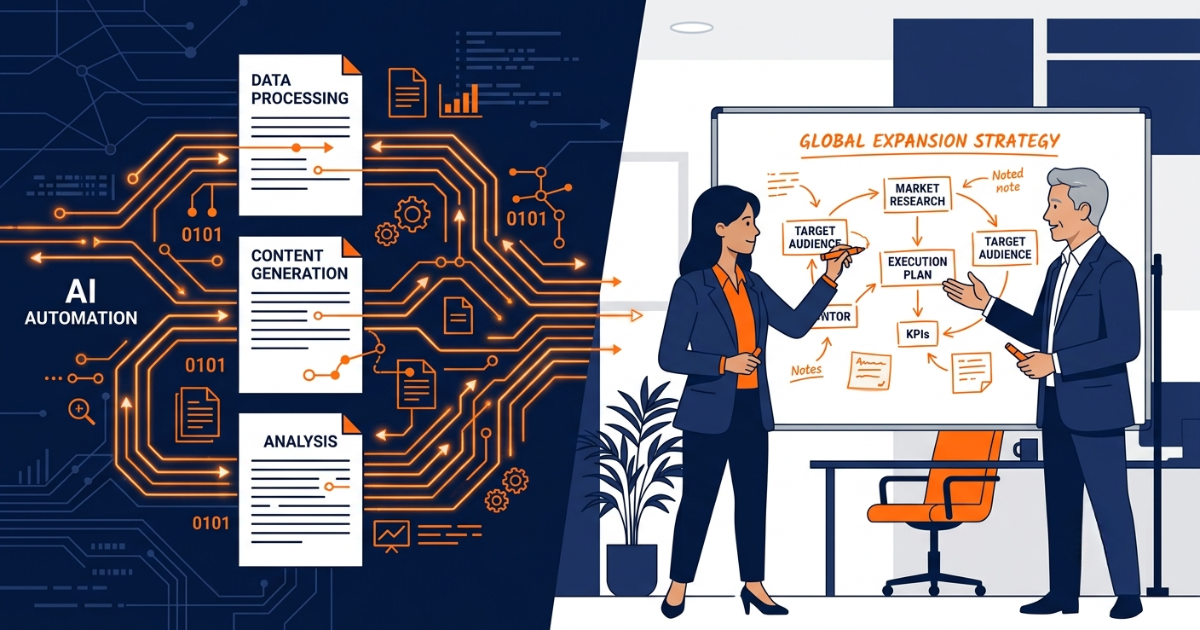
The most effective use of AI RFP software is to handle the factual, repeatable, and structural elements of a response so that proposal writers have more time for the strategic framing that actually persuades evaluators. Research from the Association of Proposal Management Professionals (APMP) consistently points to tailoring and strategic alignment as among the highest-impact factors in win rate improvement. AI accelerates the table-stakes content so human effort can concentrate there.
SME Coordination and Quality Review
Subject matter experts are the most constrained resource in most RFP workflows. They have deep knowledge, limited time, and little patience for administrative process. AI can reduce the number of questions that require SME input by surfacing existing approved content. But for novel questions, technical accuracy reviews, and final sign-off on regulated or sensitive content, human accountability is not optional.
A well-designed AI RFP software workflow reduces SME burden without removing SME responsibility. That distinction matters, especially in regulated industries where the accuracy of a response carries legal and compliance weight.
Related reading: how to work with SMEs on RFP responses.
How the Best Teams Structure the Human-AI Workflow
The following table reflects how leading proposal teams are dividing responsibility between AI-assisted automation and human expertise across the core phases of an RFP response cycle.
| PHASE | AI ROLE | HUMAN ROLE |
|---|---|---|
| Intake and parsing | Document analysis, question categorization, routing | Go/no-go decision, deadline and priority setting |
| Content drafting | First-pass responses from content library, confidence scoring | Win theme development, customization, differentiation |
| SME coordination | Flagging low-confidence items, reducing unnecessary requests | Technical review, accuracy sign-off, new content creation |
| Final review | Consistency checking, format validation | Strategic alignment review, compliance approval |
| Post-submission | Win/loss data capture, content tagging for future reuse | Analysis, debrief, process improvement |
The pattern that emerges is consistent: AI compresses time on the horizontal work (volume, speed, consistency), while humans concentrate on the vertical work (judgment, strategy, differentiation). Neither is optional.
What to Look for in AI RFP Software
Not all AI implementations in RFP software deliver equivalent value. When evaluating platforms, the most important questions are not about the AI itself, they are about how the AI integrates with your content, your workflow, and your governance requirements.
Does the platform learn from your approved content, or does it pull from a generic model that has no relationship to your actual responses? Can it score confidence at the question level, not just surface a match? Does it support the review and approval workflow that keeps human accountability intact? And critically, does it handle sensitive content, including regulated data and proprietary information, in a way that meets your security requirements?
According to Gartner research on intelligent document processing, the highest-performing implementations combine AI-assisted automation with structured human review loops rather than attempting to remove human oversight entirely. That framing aligns precisely with how mature proposal teams are deploying AI RFP software today.
Forrester has similarly noted that workflow automation tools deliver the most durable ROI when they are embedded in a defined process rather than layered on top of an undefined one. For RFP teams, that means the AI amplifies a solid content management and review process, it does not substitute for one.
The Right Frame: AI as a Proposal Team Multiplier
The most useful way to think about AI RFP software is not as a replacement for expertise, but as a multiplier of it. A proposal manager who was previously spending 60 percent of their cycle time on first-pass drafting and administrative routing can redirect that time toward the strategic, creative, and relational work that produces differentiated responses. A subject matter expert who was fielding 40 questions per RFP may now be asked to weigh in on 12, with the others handled through approved, AI-surfaced content.
The competitive advantage does not come from using AI. It comes from using AI well, with the right human judgment applied at the right points in the process.
If you want to see how RocketDocs combines AI-assisted response automation with structured human workflows, explore the platform's AI features and see how they integrate with your existing content library and review process.
Looking for the platform behind this? See the RocketDocs platform or book a demo.


