
Win themes are concise, benefit-focused statements woven throughout a proposal that connect your strengths to what the buyer values most. Each win theme pairs a customer priority with proof, showing why your solution beats the alternatives. Strong win themes give evaluators a reason to remember your bid and score it higher.
Most proposals list features. Winning proposals repeat a small set of win themes that tie every capability back to the buyer's goals and to a genuine point of difference. Done well, they lift your evaluation score without adding page count. Below is what separates a win theme from a plain feature, how to write one, and where it belongs in your response.
| ELEMENT | FEATURE-FOCUSED STATEMENT | WIN THEME STATEMENT |
|---|---|---|
| Focus | Describes your product | Describes the buyer's outcome |
| Evidence | Little or none | Quantified proof point |
| Competition | Ignores rivals | Ties to a discriminator |
| Reader takeaway | What you offer | Why it matters to them |
| Example | Our platform automates responses. | Your team cuts response time in half and bids on more deals without adding staff. |
What makes a win theme different from a feature
A feature says what you have. A benefit says what that feature does for the buyer. A win theme goes one step further: it links a benefit to something only you can credibly claim, then backs it with evidence. Proposal frameworks from the Association of Proposal Management Professionals and Shipley Associates call that unique edge a discriminator, and it sits at the center of every strong win theme.
Without a discriminator, a win theme collapses into a claim your competitors can copy word for word. With one, the evaluator sees a clear reason to prefer you. For more on turning claims into persuasive copy, read our guide to writing persuasive RFP proposals.
The anatomy of a strong win theme
Every effective win theme combines three ingredients. Miss one and the statement weakens.
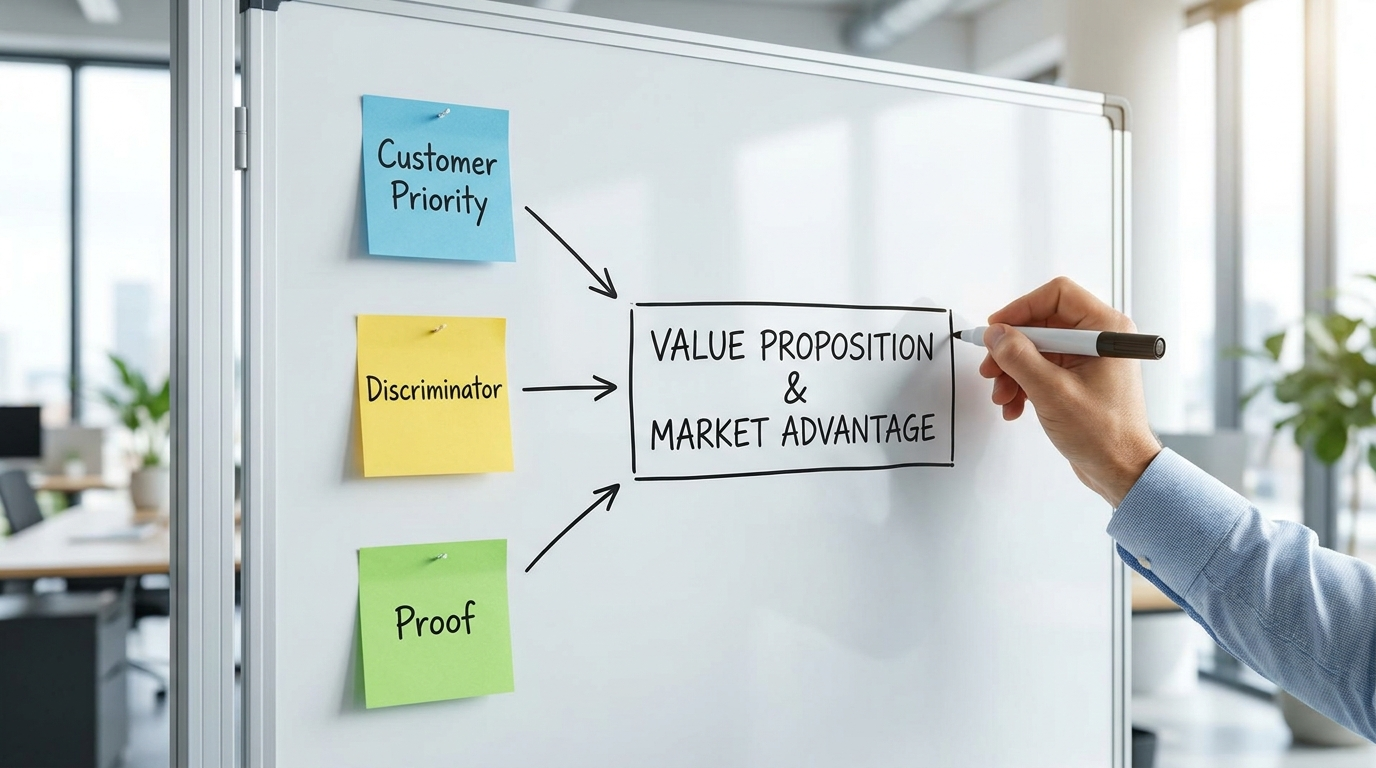
Start with the customer's hot buttons
A hot button is an issue the buyer cares about deeply: cost, risk, speed, compliance, or continuity. You uncover these during capture, well before the RFP drops, by talking to stakeholders and studying the evaluation criteria. Our guide to capture management covers how to gather that intelligence early.
Anchor to a discriminator
Next, connect the hot button to a discriminator: something you do measurably better than the field. A faster implementation, a certification competitors lack, or a support model no one else offers. If a rival can claim it too, it is not a discriminator.
Back it with proof
Finally, prove it. Use a metric, a client outcome, a certification, or a named reference. Proof turns an assertion into a scored strength and protects you when evaluators compare bids side by side.
How to write win themes in four steps
Use a simple, repeatable process so every contributor writes to the same standard.
- List the buyer's top three to five hot buttons from the RFP and your capture notes.
- For each one, name the discriminator that addresses it better than any competitor can.
- Attach one concrete proof point: a number, an outcome, or a reference.
- Draft a single sentence in the buyer's language, leading with their benefit, not your product.
A finished statement reads like this: Your team cuts questionnaire turnaround from three weeks to five days with prebuilt, approved answers, so revenue-critical deals never wait on the response team.
Where to place win themes in your proposal
Repetition is what makes win themes stick, so place them where evaluators look first. Lead your executive summary with your top two or three, then echo them in section introductions, callout boxes, and graphic captions. Our guide to writing an RFP executive summary shows how to open with the themes that matter most.
Keep the wording consistent across the document. When the same theme appears in the summary, the technical response, and the pricing narrative, the evaluator internalizes it and carries it into the scoring meeting.
Reuse win themes with a content library
Strong win themes are reusable assets, not one-off copy. Store approved statements in a content library, tagged by hot button, industry, and discriminator, so writers can adapt proven language instead of starting from scratch on every bid.
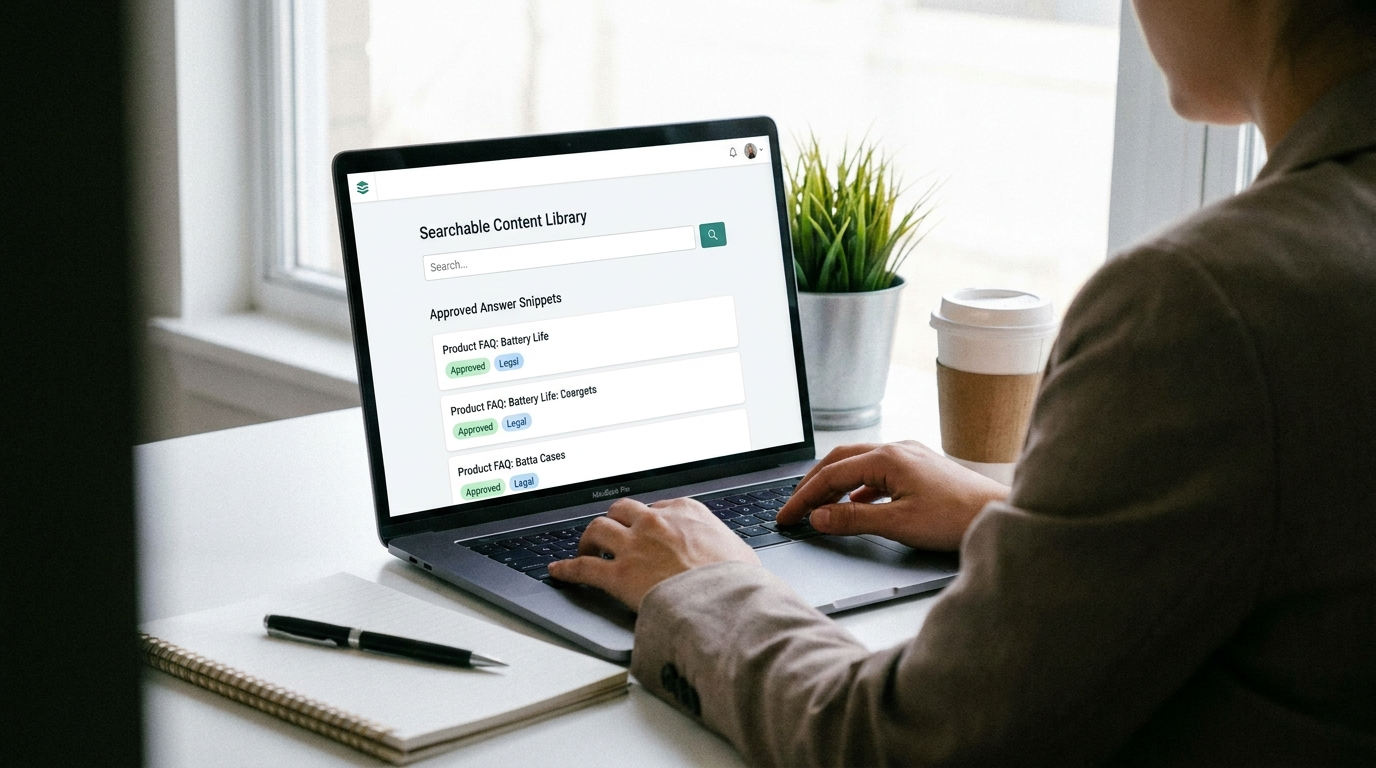
This mirrors the answer-reuse discipline behind Knowledge-Centered Success, a methodology from the Consortium for Service Innovation that treats reusable, well-maintained knowledge as a core team asset. Its KCS practices and knowledge-base guidance make the same case for proposals: capture a win theme once, keep it current, and reuse it everywhere it fits. See our guide to mastering RFP content management for how to structure that library.
RocketDocs helps response teams store, tag, and reuse approved win themes and answers so every proposal leads with the messaging most likely to win. See how the platform keeps your best content current and one search away.
Looking for the platform behind this? See the RocketDocs platform or book a demo.


