
How to Empower Your RFP Team and Solve Their Biggest Pain Points
Every organization has a team that works behind the scenes yet plays an outsized role in revenue outcomes. For many B2B companies, that team is the RFP group. They respond to requests for proposals, manage due diligence questionnaires, coordinate subject matter experts, and maintain the content that represents your company to prospective clients.
And yet, despite that scope of responsibility, RFP teams are frequently under-resourced and underrecognized. The result is predictable: burnout, turnover, and proposals that fall short of what the team is capable of producing.
This post draws on expertise from RFP practitioners with over a decade of hands-on experience to outline the genuine value that proposal teams deliver, and the practical interventions that remove the friction holding them back.
Why Your RFP Team Deserves a Seat at the Strategy Table
Proposal teams are not a back-office function. They are one of the few groups inside any organization that regularly touches every department, from legal and finance to product and engineering. That cross-functional reach gives them a perspective on the business that few other roles can match.
RFP Teams Are a Unique Source of Institutional Knowledge
Because proposal professionals work with stakeholders across the company, they accumulate a detailed understanding of your products, your competitive positioning, and your organizational strengths. They know which team members can answer which questions, where the gaps in your narrative are, and how your offer stacks up against the alternatives buyers are evaluating.
That knowledge is not incidental. It is the foundation of a competitive RFP response. A team that understands product nuance and competitive differentiation can frame your capabilities in terms a prospect genuinely cares about, rather than recycling generic language that every vendor uses.
A well-maintained content library acts as the organizational memory for this knowledge, giving the entire company a single source of truth for approved, current messaging.
Strong Leadership Lives Inside the Proposal Function
RFP managers coordinate deadline-driven work across multiple stakeholders who have competing priorities. They negotiate for time and attention from SMEs who are not rewarded for RFP contributions. They balance quality against speed under conditions where asking for an extension can cost you the opportunity.
Those are advanced project management and communication skills. Organizations that recognize this often find that proposal managers are well-suited to lead initiatives across marketing, sales enablement, and content governance, not just the RFP queue.
RFP Teams Connect People and Information Across the Business
No other function touches the entire organization through its daily work the way proposal teams do. That reach makes them natural connectors, capable of identifying who knows what, bridging silos, and surfacing institutional knowledge that would otherwise stay locked inside individual contributors.
According to the Association of Proposal Management Professionals (APMP), organizations with structured proposal management practices consistently outperform those without them on win rate and response quality. The team responsible for that structure deserves investment commensurate with the return.
The Three Pain Points That Undercut RFP Team Performance
Understanding the value RFP teams deliver makes it easier to see how specific obstacles erode that value. Three pain points show up consistently across proposal operations of every size.
Pain Point 1: Deadlines That Leave No Margin for Error
RFP deadlines are fixed. Unlike internal projects that can be negotiated or deprioritized, most proposal deadlines are enforced by the issuer, and requesting an extension signals organizational disorganization. For the RFP team, this means that every hour spent searching for content, chasing approvals, or reformatting answers is an hour not spent on the strategic customization that actually differentiates a response.
The practical solution is a structured content library with customizable attributes that let teams surface the right answers quickly, without starting from scratch on every engagement. When practitioners can spend less time finding content and more time tailoring it, the quality of the overall response improves in ways that are visible to the evaluator.
Pain Point 2: SME Coordination Without Reliable Accountability
Proposal managers frequently describe the process of tracking down subject matter experts as the single most time-consuming and unpredictable part of the RFP cycle. SMEs have their own workloads and their own managers. Without a structured mechanism for assigning, tracking, and escalating contributions, the proposal manager is left sending follow-up emails and hoping for the best.
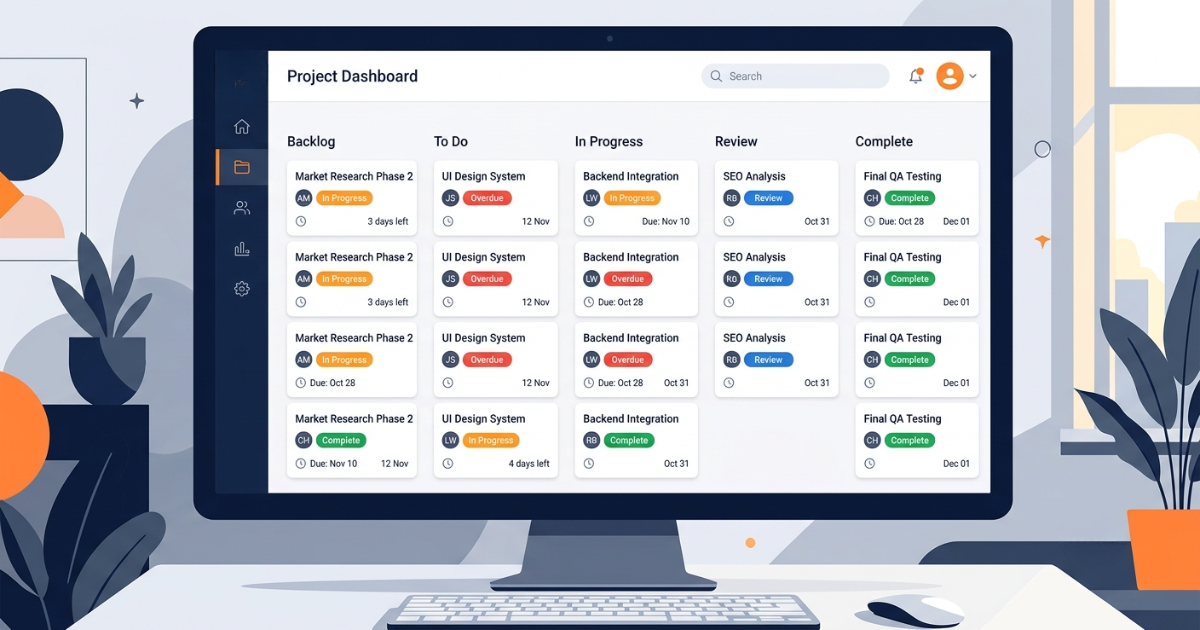
The features that address this pain point share a common logic: replace informal communication with structured accountability. That means expiration dates on task assignments, automated email notifications tied to workflow stages, role-based permissions that route the right questions to the right contributors, and an interface simple enough that SMEs can participate without requiring training.
When SMEs can update content directly inside the platform, the proposal manager shifts from manual coordinator to process owner, which is a fundamentally more scalable operating model. See how Rocketdocs Workflows.
| FEATURE | WITHOUT STRUCTURE | WITH STRUCTURED WORKFLOW |
|---|---|---|
| SME accountability | Email follow-up loops | Automated task assignment with deadlines |
| Visibility | No central tracking | Real-time status per contributor |
| Escalation | Manual manager intervention | Automated alerts on overdue items |
| Audit trail | None | Full activity log per question |
Pain Point 3: The Recurring Questionnaire Burden
DDQs, security questionnaires, and other recurring document types represent a significant and often underestimated portion of the proposal team's workload. These documents do not generate the same excitement as a competitive RFP win, but they protect existing revenue. A poorly executed DDQ can raise concerns with a current investor or client that take months to resolve.
The challenge is that recurring questionnaires are highly repetitive but not identical. Questions evolve, regulatory requirements shift, and client-specific language matters. Teams that handle this manually spend hours on work that should take minutes.
A refresh functionality, where previously approved answers are automatically surfaced and updated at the question level, collapses that time investment significantly. Paired with content segmentation using customizable metadata, teams can filter their library by attribute, find the right answer for the specific context, and confirm accuracy rather than reconstruct the response from memory.
Research from Broadridge Financial Solutions consistently highlights operational efficiency as a top concern among financial services firms responding to investor due diligence requests, a signal that this pain point extends well beyond the proposal function itself.
Building the Operating Environment Your RFP Team Needs
Empowering your proposal team is not primarily a technology question. It is a structural one. That said, the right software makes the structure easier to build and easier to sustain.
The organizations that get the most from their RFP teams do a few things consistently: they invest in a content library that reflects current, approved messaging; they build workflows that create accountability without creating overhead; and they treat recurring questionnaire management as a strategic function, not a clerical one.

If your team is spending most of their time on search and coordination rather than on the strategic judgment that makes a proposal competitive, that is a solvable operational problem. RocketDocs is built to solve it. Schedule a demo to see how teams reduce response time and improve proposal quality without adding headcount.
Looking for the platform behind this? See the RocketDocs platform or book a demo.


