
RFP Stakeholder Engagement: How to Align Your Team and Win
Every proposal team knows the feeling: the RFP drops, the clock starts, and within hours you are chasing down approvals from people who did not know this was coming. Requirements get missed. Reviewers weigh in at the last minute. The final document ships with inconsistencies because no one had a clear picture of what everyone else was writing.
None of that is a content problem. It is a stakeholder problem.
Effective RFP stakeholder engagement is one of the most reliable predictors of proposal quality. When the right people are involved early, requirements are better defined, responses are more consistent, and review cycles are shorter. When they are not, you spend the back half of every pursuit in damage control.
This guide covers who your stakeholders actually are, why their involvement matters at each stage, and the practices that make coordination work in the real world.

Who counts as an RFP stakeholder?
The temptation is to define "stakeholder" narrowly: the proposal manager, maybe a subject matter expert or two, and whoever signs off at the end. That definition leaves out the people whose involvement (or absence) determines whether the response is credible.
A more useful framing splits stakeholders into two groups.
Internal stakeholders include the people who shape, write, review, or approve the response. That typically means:
- Proposal managers and writers who own the document
- Subject matter experts (SMEs) who provide technical and functional content
- Legal and compliance reviewers who catch risk before it ships
- Procurement or finance leads who own the commercial terms
- Executive sponsors who add credibility to certain sections or must sign off before submission
External stakeholders are less directly involved in writing but inform the strategy behind it. They include the issuing organization (whose stated and unstated priorities should shape every answer), industry partners whose capabilities you may be citing, and occasionally customers or reference contacts whose perspective adds evidence to your claims.
Identifying this full roster before an RFP response begins is not overhead. It is the foundation that keeps the rest of the process from collapsing.
Why stakeholder engagement shapes proposal outcomes
Engaged stakeholders do not just make the process smoother. They make the output demonstrably better.
Requirements get captured correctly
When internal teams are brought in late, they tend to flag requirements that were misunderstood or missed entirely. Catching those gaps during review is expensive. Catching them during kickoff costs almost nothing. Early engagement surfaces the nuances that turn a generic response into one that actually addresses what the issuer asked.
Responses reflect institutional knowledge
No proposal manager has every answer. SMEs hold the technical depth, implementation experience, and proof points that make a proposal credible. When engagement is structured and early, that knowledge flows into the document. When it is reactive and rushed, you get thin answers and late-breaking rewrites.
Review cycles get shorter
A stakeholder who has been part of the process from the beginning has less to push back on during review. They have already shaped the approach. The feedback they give is more specific and actionable. Contrast that with a cold reviewer encountering a draft for the first time: their comments tend to be broader, slower to resolve, and more likely to require structural changes.
Ownership drives internal support
When the team that will implement a solution has been part of writing the proposal, they are more invested in winning and more prepared to deliver if you do. Proposals written in isolation by a small group and handed off internally after the award tend to encounter friction that could have been avoided.
Best practices for RFP stakeholder engagement
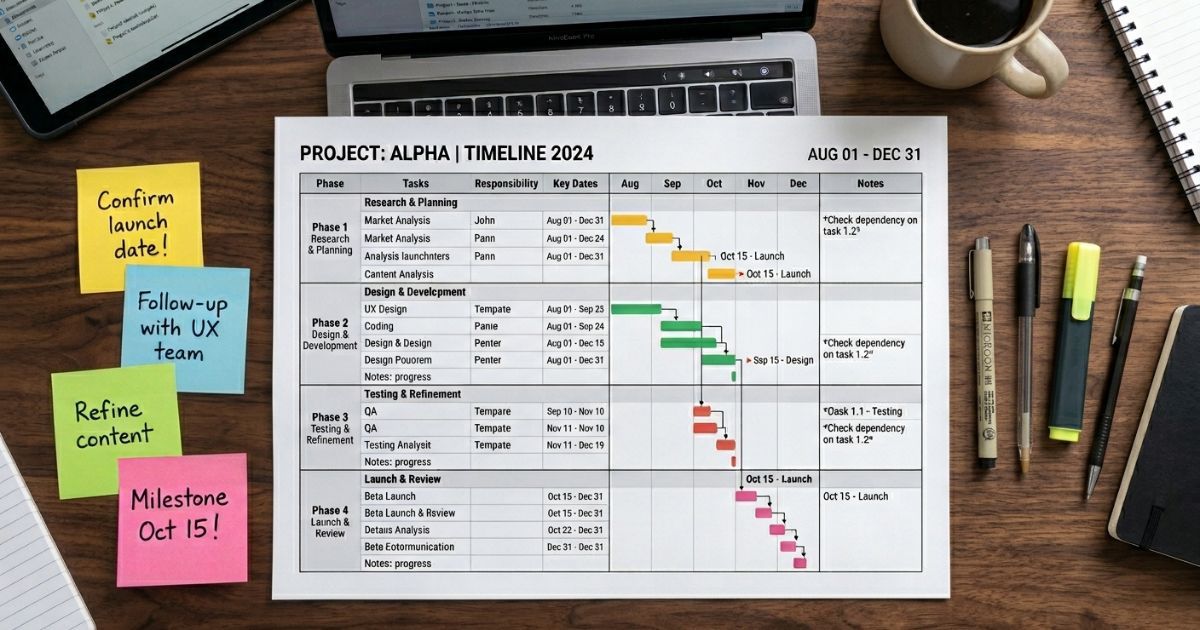
Knowing who your stakeholders are and why they matter is the easy part. Getting that group to engage consistently, on deadline, across a compressed timeline is where most teams struggle. These practices make it more reliable.
Involve stakeholders before the document arrives
The best time to align your team is before the RFP drops, not after. Identify who will be needed for a given pursuit type during the go/no-go stage. Pre-brief them on the opportunity so they are not starting from zero when you assign questions. Teams that treat stakeholder identification as part of the opportunity qualification process consistently outperform teams that treat it as an afterthought.
Be explicit about roles and deadlines
Ambiguity is the enemy of stakeholder participation. "We need your input soon" produces different behavior than "You own questions 14 through 22 and your draft is due Thursday at noon." Assign ownership at the question level, set concrete due dates, and confirm that stakeholders understand both their scope and the consequences for the rest of the team if they miss it.
Create structured feedback loops
Stakeholder engagement is not a one-way information transfer. Proposal managers need to hear from SMEs when a requirement is unclear or when a draft answer is technically inaccurate. Building in a channel for that feedback, whether through commenting tools, structured review rounds, or brief synchronous check-ins, keeps errors from compounding.
Use collaborative tools that reduce friction
Email chains and shared drives work against you at scale. The more stakeholders involved and the more questions in play, the more coordination overhead compounds. Purpose-built response management platforms let stakeholders work directly in the tool, see what others have written, leave comments in context, and track their own assignments without the proposal manager acting as the constant intermediary. RocketDocs Workflows and collaboration features are built specifically for this pattern.
Communicate progress, not just problems
Stakeholders who receive updates only when something is wrong are less likely to engage proactively. Regular visibility into overall completion, outstanding items, and submission timeline keeps everyone oriented and creates natural accountability. It also gives proposal managers an early signal when assignments are at risk, before the deadline forces a scramble.
Overcoming common engagement obstacles

Even well-designed engagement processes run into friction. Here are the obstacles that come up most often and how to address them.
Stakeholders who are chronically unavailable
Subject matter experts, in particular, carry their own workloads that do not stop for your proposal deadline. The solution is structural: minimize the time you ask of them by front-loading the context they need, drafting a starting point they can react to rather than building from scratch, and making their task as narrow and specific as possible. RocketDocs AutoFill uses AI to pre-populate answers from your content library, which means SMEs are reviewing and refining rather than writing cold. That distinction matters when their calendar is already full.
Resistance to new process
Teams that have run proposals the same way for years sometimes push back on structured engagement workflows. The most effective approach is showing, not telling. Demonstrate concretely what the current process costs: hours per response, revision cycles, last-minute scrambles. Then show what a structured workflow changes. Framing engagement improvements in terms of time saved and stress reduced tends to land better than framing them as process compliance.
Unclear requirements creating disagreement
When the RFP itself is ambiguous, stakeholders can end up pulling the response in different directions because they are each resolving the ambiguity differently. Address this at kickoff by reviewing requirements as a group and agreeing on interpretation before anyone starts writing. Document those decisions so they can be referenced when later drafts diverge.
Tight deadlines compressing coordination
Compressed timelines are a structural feature of the RFP process, not an anomaly. The answer is not to reduce engagement but to make it faster. Assign roles before kickoff, use pre-populated content wherever possible, and set internal submission deadlines that leave buffer before the actual due date. Teams that treat the issuer's deadline as their team's deadline consistently find themselves with no room to recover from the inevitable late input.
Stakeholder engagement and your content library
One structural advantage that proposal teams often overlook: a well-maintained content library dramatically reduces what you need from stakeholders on any given pursuit.
When frequently asked questions, standard capability descriptions, and past project summaries are current and accessible, SMEs spend less time writing and more time validating. The response is faster to build, and the engagement burden on each individual is lighter.
RocketDocs Content Library is designed for exactly this purpose: a centralized, searchable repository that keeps approved content available across every project. When integrated with AutoFill, it means a significant portion of questions can be pre-populated before stakeholders ever open the document.
You can explore the Content Library and RFP-specific workflows.
What good stakeholder engagement looks like in practice
Here is a simplified view of how engagement maps to each phase of the RFP response cycle.
| PHASE | KEY STAKEHOLDERS | ENGAGEMENT FOCUS |
|---|---|---|
| Go/no-go decision | Executive sponsor, proposal manager, finance | Confirm fit, resource availability, strategic priority |
| Kickoff | All assigned contributors, legal, SMEs | Clarify requirements, assign ownership, set deadlines |
| Drafting | SMEs, proposal writers | Content production, technical accuracy |
| Internal review | Legal, compliance, executive sponsor | Risk review, consistency check, approval |
| Final submission | Proposal manager, executive sponsor | Quality check, format, on-time delivery |
| Post-submission | Full team | Debrief, content library update, lessons captured |
Each phase has a different set of stakeholders and a different kind of engagement. Treating all of them the same way is one of the most common mistakes proposal teams make.
External resources
Understanding stakeholder engagement within the broader context of proposal management is worth grounding in recognized frameworks. The Association of Proposal Management Professionals (APMP) publishes body-of-knowledge guidance on proposal team structure and stakeholder roles. Project Management Institute (PMI) research on stakeholder communication applies directly to the coordination challenges of complex RFP responses.
Looking for the platform behind this? See the RocketDocs platform or book a demo.


