
Why Do Companies Require a Letter of Intent in an RFP?
Anyone who has managed a large vendor selection knows the problem: dozens of organizations express interest, but only a fraction are serious enough to invest real effort in a proposal. A letter of intent in an RFP exists to solve exactly that problem, separating genuine bidders from casual lookers before either side spends real time on the process.
What Is a Letter of Intent in an RFP
A letter of intent, often shortened to LOI, is a short document a vendor submits to confirm it plans to respond to a request for proposal. It typically appears early in the RFP timeline, often tied to a specific deadline before the full proposal is due.
Industry guidance on LOIs in procurement notes that the document is intentionally non-binding on core commercial terms. The buyer is communicating intent, and the vendor confirming it, but neither side is making a legal commitment to a deal. Specific clauses inside the letter, particularly around confidentiality or exclusivity, can still carry legal weight even when the document as a whole does not. Steerlab
In a government contracting context, the same logic applies. An LOI lays out preliminary commitments and key terms such as scope, timeline, and resource allocation, while the formal contract is still being finalized on both sides. Rfpverse
Why Issuing Companies Require an LOI
For the company running the RFP, the letter of intent does three things. It filters out organizations that are not seriously committed to bidding. It signals which vendors are willing to allocate resources toward a real proposal. And it gives the procurement team an early read on how many serious responses to expect, which shapes how much time they need to budget for evaluation.
This matters more on large or complex RFPs. A letter of intent to bid is most useful for sizable contracts, the kind with multiple phases, vendor conferences, and extended question and answer periods, where the issuing company genuinely benefits from knowing who is still in the running before the clock runs out on the full submission window. The Bid Lab
An LOI can also flow the other way. A vendor that proactively sends one, even when not required, demonstrates organization and intent. That said, the practice is more common in certain sectors than others. It shows up most frequently in government, legal, education, and construction RFPs, though nothing prevents its use elsewhere. Responsive
What Belongs in a Strong LOI
A letter of intent does not need to be long. It needs to be clear. The strongest LOIs share a few common elements.
| Element | Why it matters |
|---|---|
| Project scope acknowledgment | Confirms the vendor read and understood the RFP requirements |
| Relevant experience | Builds early credibility before the full proposal is reviewed |
| Timeline and resourcing notes | Signals operational readiness to the issuing company |
| Point of contact | Keeps communication moving during the gap before full submission |
| Next steps or meeting request | Shows proactive engagement, not just passive interest |

Avoid jargon, and avoid vague language. The issuing company is reading dozens of these, and clarity is what separates a memorable LOI from one that gets filed and forgotten.
Common Pitfalls to Avoid
The most frequent mistake is treating the LOI as a guarantee. Because most letters of intent are non-binding, submitting one and having it accepted does not secure the contract. Teams that overcommit at this stage, promising timelines or resources they later struggle to deliver, often damage their credibility well before the formal proposal is even due.
Miscommunication is the second common failure point. Because the LOI sets early expectations, any ambiguity here can resurface later as a dispute during contract negotiation. Vague scope language or unclear resourcing commitments tend to cause more problems down the line than they save in drafting time.
Finally, treat the legal review seriously. While the document is mostly non-binding, individual clauses, especially around confidentiality, can be enforceable on their own. A quick legal pass before submission is worth the time it takes.
How Technology Simplifies the LOI Process
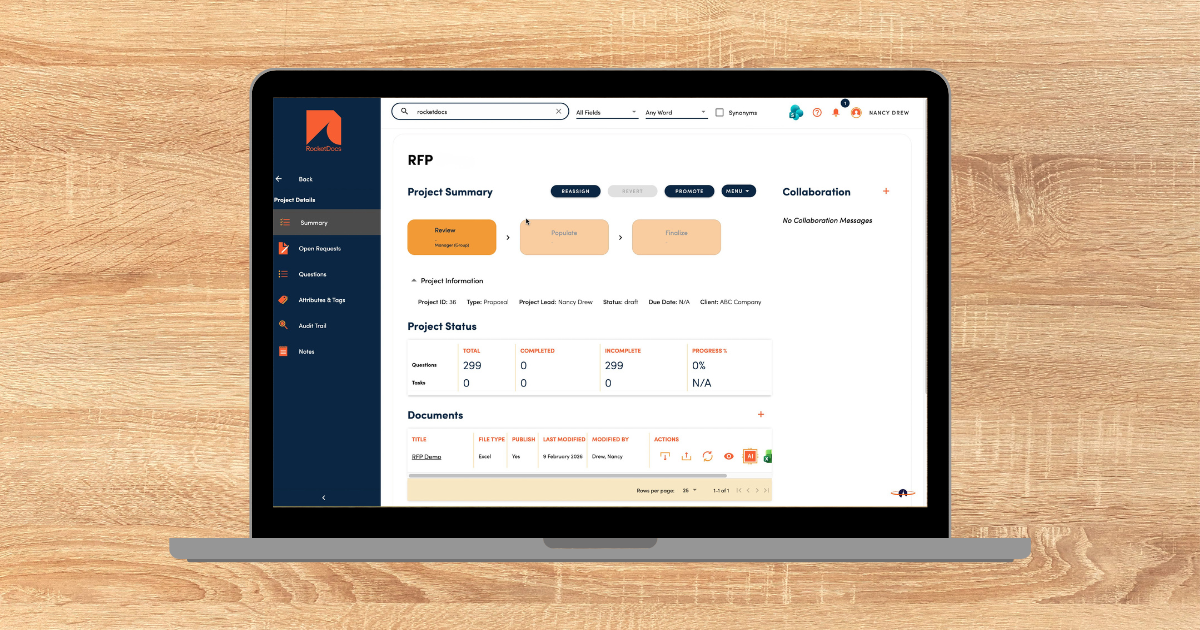
For proposal teams managing multiple RFPs at once, drafting a custom LOI for each opportunity by hand adds up fast. Centralized content libraries and reusable templates remove most of that repetition. A team using a proposal management platform can pull verified scope language, past performance summaries, and boilerplate sections from a single source of truth, rather than rebuilding each LOI from scratch or hunting through old email threads for the last version that worked.
This matters even more for teams juggling RFPs across multiple industries or business units, where the RFP bidding process already involves a lot of moving parts before the LOI stage even begins.
Conclusion
A letter of intent might look like a formality, but it does real work in the RFP process. It filters serious bidders from casual interest, gives both sides an early signal of commitment, and sets the tone for the proposal that follows. Teams that treat it as throwaway paperwork tend to regret it later. Teams that treat it as a first impression tend to win more often.
For a broader look at how the rest of the proposal stage works, see our guide on the RFP vetting process and how issuing companies narrow down a vendor pool after LOIs come in.
Looking for the platform behind this? See the RocketDocs platform or book a demo.


